Sign in. It’s quick, free and it’s up to you.
An account is an optional way to support the work we do. Find out more.
Sign in. It’s quick, free and it’s up to you.
An account is an optional way to support the work we do. Find out more.
LAST UPDATE | 9 Jun
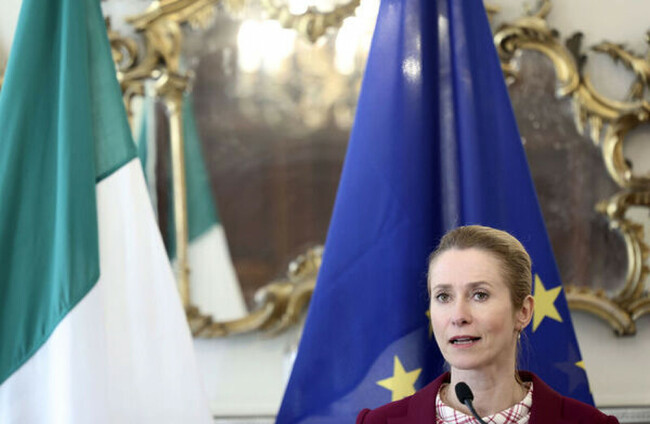
THE EUROPEAN UNION foreign affairs chief has said that a new series of sanctions will include metals and alloys exports, but Aughinish Alumina is not included as the Irish government must complete an investigation first.
Kaja Kallas, who is in Dublin for meetings with the Irish government today, made the announcement in an X thread and said the bloc was intensifying its targeting of Russian businesses.
Kallas told reporters in Cyprus yesterday that the issue of the Russian owned Aughinish Alumina refinery in Foynes would be discussed with the Irish Government.
The Limerick factory is owned by Rusal which is in turn owned by Putin ally Oleg Deripaska – it has been claimed that the Irish product has been used to manufacture arms used in Ukraine by the Russian military.
At a joint press conference this afternoon both Foreign Affairs Minister Helen McEntee and Kallas confirmed that the Russian company was not on the new sanctions list.
“Alumni is not currently covered by the EU sanctions. Europe must close all loopholes, tighten sanctions enforcement, and ensure our commitment are backed by these.
“No European products should end up with bombs and missiles that kill Ukrainian civilians,” Kallas said.
The EU foreign affairs head said that it was important to allow the investigation conclude and to get “the facts straight”.
“I think this case shows that we should also look into this, that the material that Russia needs to continue with its war, whether it’s different types of metals, or it’s the oil refinery products that they need, we need to look, and we have to be creative in coming up with next sanctions, because our aim means that this war will end, and it will also end if the aggressor runs out of money or material to continue,” she added.
Helen McEntee said at the press conference that once the Irish investigation into the company concludes that it would provide the information to the EU Commission.
“We will ensure that any decisions that need to be taken to put pressure on Russia, that they will have the full support of Ireland,” she added.
In the series of posts she said that the EU was going after Russia’s ability to manufacture arms and targeting the metals industry.
“We are also targeting companies providing support to Russia military-industrial complex.
“The new listings will cover more than 30 designations in the drones manufacturing as well as new export control measures on 50 companies, including entities based in China, Türkiye, Kyrgyzstan, Kazakhstan, UAE and India.
“We will also restrict export of additional materials and technologies, such as nickel powders, metal and high-performance alloys to further disrupt Russia’s production capacity.
“Import of new items, including car parts, several precious-metals ores and chemicals will also be restricted,” she said.
We are also targeting companies providing support to Russia military-industrial complex.
— Kaja Kallas (@kajakallas) June 9, 2026
The new listings will cover more than 30 designations in the drones manufacturing as well as new export control measures on 50 companies, including entities based in China, Türkiye,…
Kallas said that the new tranche of sanctions was the largest in over two years and included 170 proposals – it was focused on the financial sector, energy and the production of drones.
“This comes on top of 81 listings that the Foreign Affairs Council will adopt next week, targeting Russia’s shadow fleet, its military-industrial complex, human rights violators, and propagandists,” she added.
The financial measures include orders freezing the assets of 90 banks and additional transactions bans on over 30 banks in Russia and other countries.
The EU is also imposing a ban on crypto-asset services to “certain third countries, add new designations, and ban transactions on 11 crypto platforms”.
There will also be a focus on energy sales and to cut the cashflow generated by sales of oil and gas by the Putin regime. This is particularly focused on the Russian Shadow Fleet.
The EU sanctions focus includes a temporary freeze of the Russian oil price. There will also be restrictions on the resale of LNG tankers.
“Our work on curbing the operations of Russia’s shadow fleet continues, with 30 new vessels sanctioned, proposals for new designations of enablers, and the expansion of our criterion for vessels listings.
“Any ship supplying or refuelling blacklisted ships will be exposed to sanctions itself,” she added.
Sanctions will be imposed also on two Russian ports and four airports and there will be a visa ban on people who fight for Russia.

To embed this post, copy the code below on your site











have your say