Sign in. It’s quick, free and it’s up to you.
An account is an optional way to support the work we do. Find out more.
Sign in. It’s quick, free and it’s up to you.
An account is an optional way to support the work we do. Find out more.
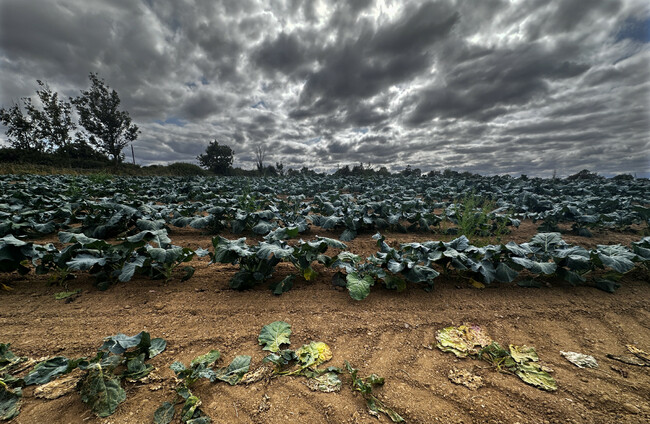
PEARSE STOKES CRADLED the tiny, motionless frog in his hand. Looking dried of all life, it was a victim of one of the several blazes that have ripped through Ireland’s mountain forests this summer.
The much-shared video by Kildare Wildlife Rescue laid bare the often little-seen effects of the blazes.
Scorched woodland, arid crops and overheating homes have all combined to bring the worsening reality of climate change to Ireland this summer.
Last month was Ireland’s driest July on record, with 20 Met Éireann weather stations across the country recording ‘absolute droughts’.
It’s been even worse across Europe – thousands of acres have been destroyed in recent weeks across France and Spain, with almost 12,000 heat-related deaths recorded in Germany this summer.
Closer to these shores, fires reached a housing estate near Birmingham on Thursday, leading to 19 people hospitalised.
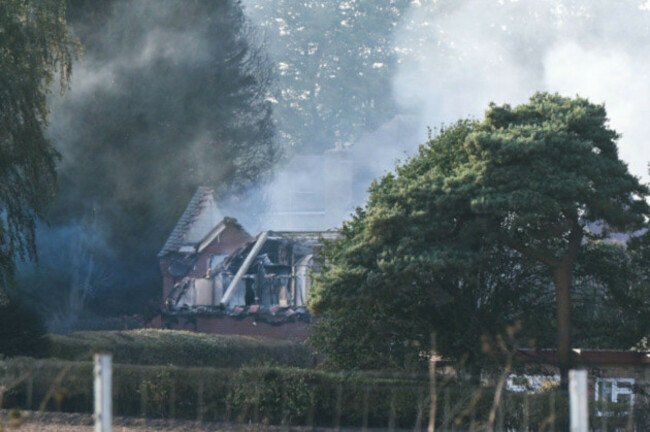
John Gibbons, environmentalist and writer, didn’t think Ireland’s climate would get this bad this quickly.
Gibbons said that five hot spells in one summer would have been thought impossible until “maybe in the 2030s”, but that’s not the case after these past few months.
It started in May when temperatures hit 31 degrees in parts of the country and has continued since.
The changing climate now appears to be in a “phase shift,” said Gibbons, accelerating faster than expected and potentially placing us in what is “effectively a permanent state of extreme heat” during the summer months, and potentially the weeks either side.
“The shoulders of summer are spilling out,” Gibbons said. “Where perhaps we would have seen July-August as periods that could see extreme temperatures, it’s now spilling backwards to May.
We were only designed to cope with occasional spells of extreme heat – what we’re seeing now is locked in rolling heatwaves.
An Irish Times poll in 2019 found a majority of people viewed climate change as the “most serious issue facing the world”.
While this question or versions of it are often asked in polls to capture the mood on the issue, it’s now regularly ranked far down Irish voters’ concerns – just 8% viewed it as in their top-two issues in a July poll by Ireland Thinks.
But from farming to the homes we live in, this summer’s sweltering heat has often meant unbearable conditions for people.
It’s not yet clear whether we will see a revival in the mood to tackle our climate, or if there are fresh ideas to try and ease these effects, let alone reverse them.
From wildfires to air conditioning at work, will the topics we debated throughout this long hot summer lead to any action from political leaders in the months and years to come?
If heatwaves keep intensifying and begin to breach 30 degrees, then Ireland will face tricky questions over what to do about its workforce in the 2030s.
According to UK think-tank Verdant, for each one degree Celsius temperature increase above 30 degrees in Europe, a 3% reduction in average output per hour has been observed.
In a prolonged heatwave, the group warned, these hits to productivity add up to significant economic losses.
But the summer months are also when builders and the likes of county councils take advantage of the longer days and school holidays and intensify their works.
This week, the Irish Planning Institute argued that Ireland may need to accept the “necessary evil” of electricity-intensive air-conditioning – a move that was immediately rejected by the Sustainable Energy Authority of Ireland.
There is a growing debate in France over the use of air-con, where 25% of homes currently have the cooling system.
A stand-off beckons in different sectors as unions push for a national maximum working temperature, both for indoor and outdoor workers.
The Labour Party is urging for legislation that could set this at between 25 and 30 degrees, depending on the intensity of the work.
But if you’re not one of the local residents witnessing the harshest impacts of climate change up close – via the thickening smoke and wildfires licking closer and closer to their land – then it can mean that it can be business as usual for the many people who have not faced these impacts.
But that might be starting to change.
There have been mounting complaints over the conditions in various A-rated homes, as research by TU Dublin last year estimated that up to 10% of the country’s housing stock is at risk from overheating, with the number expected to climb.
A home’s rapidly rising temperature can be due to a variety of factors that go beyond an energy rating – from whether a house is west-facing, putting it in the line of fire of the sun for most of the day, to whether an apartment is single-aspect and lacking ventilation.
The situation is viewed as of enough seriousness that officials at the Department of Housing are working on a new report examining the risk posed by the extreme heat.
The high-quality energy ratings are part of an effort to make Irish housing less reliant on fossil fuels, but their trademark quality — making sure heat doesn’t escape a home – is backfiring in intensely hot weather.
Approved housing body Cluid told The Journal that this summer means it will be including guidance in “our upcoming resident newsletter on how to keep homes cool during periods of warm weather” – a first for the charity.
And as reported elsewhere this morning, we can see the impact the long hot summer has already had on people sleeping rough in tents.
It will likely intensify focus on the standards in new housing and apartments, at a point when question marks are being raised over the expenditure for high-quality homes, leading to some projects being quashed by the government.
At the same time, architects and politicians have challenged government moves to reduce requirements for new homes.
Gavin Lawlor, president of the Irish Planning Institute, told The Journal that he believes fears around the quality of homes are overstated.
“I estimate about even 70% of planning applications that come across my desk go well beyond the minimum requirement,” he said.
Lawlor believes we may see a push by the construction sector to allow lower energy rated homes for new homes, with the decision to upgrade it to an A-rating being left to the homeowner.
This would likely go down as a lead balloon with climate advocates who would fear it will continue our dependence on fossil fuels.
Debates around how to manage this will further intensify in different ways.
A key plank of the government’s platform is to switch large swathes of empty land to housing; these are often green spaces, which architects and others argue are crucial to keeping new homes cool.
Rising temperatures may yet become part of the battleground over what to do with green sites.
Several fires have wreaked havoc on mountains and parks across counties including Kerry, Tipperary and Wicklow these last few weeks.
As previously reported by The Journal Investigates, the danger is that many of these areas worst hit by the flames are also important nature habitats.
Since 2021, more than 300 fires have been recorded on Coillte lands, impacting over 2,500 hectares.
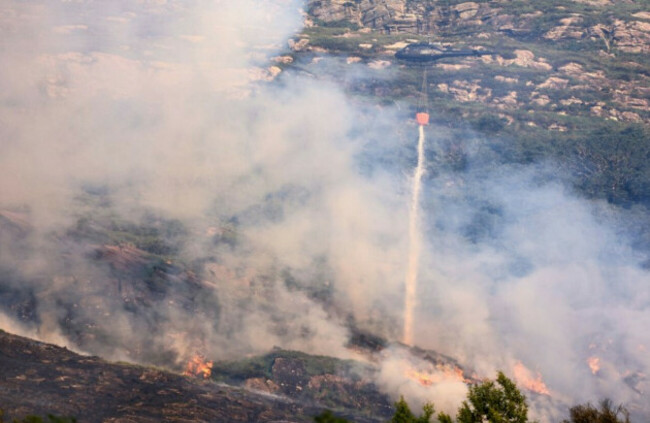
As for what comes next, the Green Party has urged immediate moves to ensure that emergency services have enough equipment, including helicopters, to be able to respond to fires.
Looking longer-term, environmentalists have urged that Coillte avoid replanting its burned plantations in the likes of Slievenamon in Co Tipperary with Sitka spruce, on the basis that the non-native trees are more likely to add to the flames.
Coillte disputes this argument, but told The Journal that it was still to assess the impacted areas before it embarked on any replanting plan.
The president of the country’s largest farming body has been touring farms in the worst-affected parts of the south and south-east in light of a severe drought.
Irish Farmers’ Association (IFA) head Francie Gorman told The Journal that ongoing dry and hot weather conditions, coupled with soaring input costs, are putting significant pressure on crop growers, particularly field vegetables and potato growers.
Given this, Gorman said the government needs to recognise that growers are under major pressure to manage crops and maintain supply to their customers.
IFA president @gormanifa visiting South Tipperary farmers this evening to discuss the ongoing drought. With another week forecast with minimum rain the consensus from farmers is action is needed from Government immediately before the situation worsens. @IFAmedia pic.twitter.com/CLugHOsBEO
— Darragh Scott (@DarraghScott) August 13, 2026
He said the weather could lead to a fodder crisis similar to one seen in 2018, which saw some farmers lose out on significant money when it came to sales later in the year.
Gorman said farmers are hopeful that concrete aims will come a re-convening by Agriculture Minister Martin Heydon of the fodder and food security committee next week, but he is also pushing for unspent funds from the government’s €500 million intervention following this year’s fuel protests to be diverted to schemes for farmers.
Further ahead, he rejected criticism from environmentalists such as Gibbons about what role the farming lobby has had for Ireland’s climate targets.
Gibbons has long been a strident critic of Irish farming’s practices, claiming that the “agri-industrial lobby is our equivalent of the fossil fuel lobby” that dominates in other countries.
Instead, Gorman viewed such criticisms as being “anti-farming rather than pro doing the right thing for the planet”.
“But if this is going to be the norm, we have to try and see how we can adapt our farming practices to cope with it better,” the IFA leader added.
Gorman nonetheless agreed with one point by Gibbons, that the sector may need to start looking at growing more crops domestically so that it can avert future crises in severe weather.
Earlier this week, farmers told The Journal that the cost of producing tillage has increased by around 35% this summer. Their harvest yield has gone down as the heat has caused crops to ripen before maturity.
The Department of Agriculture has said that dry weather conditions have shortened the growing season and impacted crop yields.
It said that “significant support” has been provided to tillage farmers in recent years, with “further targeted support” for farming “dependent” on allocations in budget talks.
To Gibbons, there is “no doubt” the farming sector has won and in the process green politics have been “wiped off the agenda” in Ireland.
“Green politics have taken a beating,” Gibbons admitted.
In political terms, this has been borne out by the fortunes of the Green Party.
It saw its Dáil numbers cut from 12 to a single seat in 2024 after its time in government, but it has also lost ground in areas beyond Dublin and Cork where it made significant breakthroughs in 2019-20.
After having representation at local, national and European level in Galway, Waterford and Clare, it now has no elected members in any.
Gibbons believes there is “no strong political counter force” in the current coalition, meaning “they are doing exactly what the lobby tells them, whether that’s data centres, in farming or wherever”.
He pointed to current government moves on data centres, deferring the carbon tax and Jack Chambers’ weakening of key climate commitments for major infrastructure projects as examples of this.
Gibbons added that a “strong presence” is needed to articulate green politics in Ireland, citing Zack Polanski’s ability to revitalise the Greens in the UK, partly done through a pitch to voters based on affordability pressures.
Without that emerging, Gibbons expects we’ll be breaching 30 degrees regularly soon enough.
Measures including a moratorium on data centres and a revision of Irish farming to focus it far more on crops are all part of the way out of the deepening crisis.
“We’ve got to pivot like hell because we’re in for hellish conditions on this island in a short few years. Politicians, media, and the public need to brace for impact.”
Unsure of what exactly is happening with the earth’s climate? Check out our FactCheck Knowledge Bank for essential reads and guides to finding good information online.

To embed this post, copy the code below on your site












have your say