Sign in. It’s quick, free and it’s up to you.
An account is an optional way to support the work we do. Find out more.
Sign in. It’s quick, free and it’s up to you.
An account is an optional way to support the work we do. Find out more.
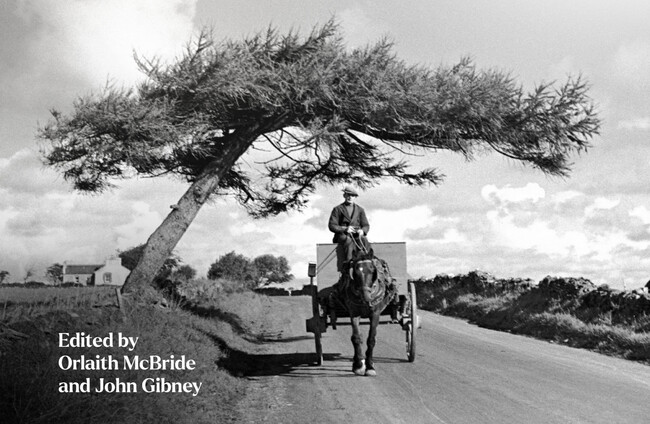

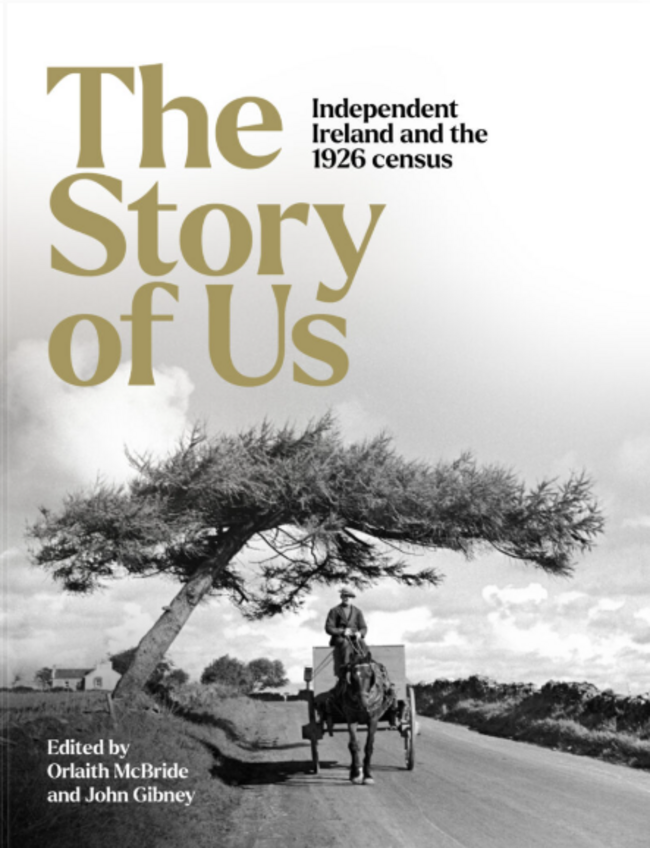
THE SUBJECT MATTER of The Story of Us is in the subtitle: independent Ireland and the 1926 Census.
That census, released in April by the National Archives after 100 years, was the first census of the Irish Free State (Saorstát Éireann), and as such marks a significant moment in the development of an independent Ireland (partition meant that it only covered the 26 counties).
The release of the 1926 census offers a glimpse of lives lived across the Irish Free State on 18 April 1926, and The Story of Us, along with its accompanying exhibitions, was intended to illuminate the backdrop to those lives in words and contemporary images (plenty of which are reproduced within its cover).

There had been attempts to make sense of the Irish population since at least the Down Survey of the 1650s, and from 1821 a census was taken every 10 years. The 1841 census established a format that would be followed and would evolve over time: the 1926 census, for example, omitted the question about literacy contained in its predecessors, which was presumably a given by 1926, and it was the first to contain a bilingual option.
It had been postponed during the War of Independence in 1921 (though it went ahead in Britain). Traditionally, police officers had the task of ‘enumerating’ the census – distributing and collecting the census forms – but for obvious reasons, the political climate of April 1921 was too dangerous to allow this.
This meant that the census enumeration of 1926 came at a 15- rather than a 10-year interval; and, as the officials who collated its findings noted with admirable understatement, there had been some ‘abnormal’ events during those years.
The post-independence Cumann na nGaedheal government of W. T. Cosgrave was intent on projecting to the world an image of a new Irish state that was up and running in the aftermath of the revolution that created it and the civil war that created it; and conducting a census almost exactly three years after the end of that civil war was part of the process.
Newspapers across the Irish Free State carried articles about the census as part of the official publicity drive conducted to explain to the inhabitants of the state what they were supposed to do on the night of 18 April.
But the census also served its traditional function of collating information, providing the Cosgrave government with a statistical picture of the new Irish state and its people (the handwritten green coding marks visible on census forms were used to categorise the information they contained, which was then collated in Dublin Castle by a staff of 83 officials working for the Department of Industry and Commerce: 62 clerks, and 21 ‘girls’, as the official report would have it).
The 1926 census recorded a population of 2,971,992 people in the Irish Free State on 18 April 1926. This was a decrease of 5.3% (approximately 168,000 people) since the 1911 census within the same 26 counties. Digging deeper, one learns that 31.2% of that population were under 16, 51% were male and 49% were female; 61.1% lived outside towns and villages, and 63.5% lived within 20 miles of the coast. And, as that might suggest, the census recorded an overwhelming agricultural society. Only 5% of the workforce were in transport and communications, for example, but 51.4% worked in agriculture.
While 18.3% of the population claimed to speak Irish, of the 562,633 household returns that were completed and collected by the Gardaí, only 5,793 were filled out in Irish. But as one correspondent to the Connacht Tribune had noted, you didn’t have to be a native speaker to record that you had Irish. Perhaps those contrasting figures reflect an aspiration to fluency that had been fostered during the revolutionary era.
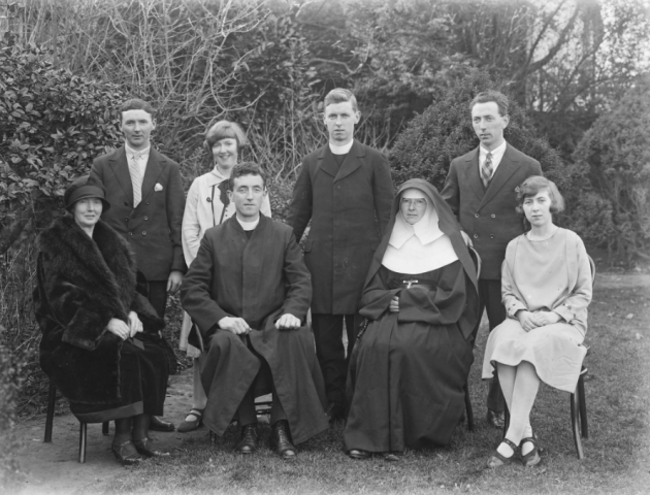
These are some of the basic facts and figures that were collated from the individual census returns completed on the night of 18 April. But they are drawn from the recorded details of millions of lives. The new state and the society it governed had distinct and often surprising complexions in the mid-1920s; and the granular detail of these are contained in the hundreds of thousands of census returns completed in the 26 counties in April 1926, and some of the lives noted in The Story of Us reflect the endless complexities of Irish life a century ago. Solomon Danker was born in Riga and ran a mattress business in Cavan. Brian O’Flynn of Headford, Co Galway, would later serve in the US military across the Pacific theatre in the Second World War.
Máire Nic Suibhne (Mary MacSwiney) was a teacher in Cork and the sister of Terence MacSwiney, the Lord Mayor of Cork, who died on hunger strike in London’s Brixton Prison in October 1920. She filled out her census form in Irish and added the following inscription: ‘An fáisnéis seo ‘á tabairt agam fé órdú Rialtais Na Poblacta. Máire Nic Suibhne T.D.’.
A translation in pencil was provided underneath by Garda John Fahy: ‘This information is given by order of the Government of the Republic.’ Nic Suibhne had opposed the Anglo-Irish Treaty of 1921, and five years later her census form reflected her ongoing dissent from the new regime.
The vast majority of those who came before us remain silent, but the census records in which they register reveal something. The National Archives led this remarkable project to make them freely and publicly available, undertaking the cataloguing, conservation, digitisation and transcription of the returns to enable free and universal access upon the census being released.
Dedicated funding from the government enabled the National Archives to undertake the volume of work associated with delivering this massive project in-house over a three-year period.
Documents can carry an emotional resonance for many people, being a concrete documentary record of where they have come from and a reflection of the individual lives that have gone before their own. Most human lives leave only the barest trace in the historical record, but when they do register, it is often through the records left by officialdom.
The census returns reveal who the Irish population of 1926 was, where they lived, what they did and, very occasionally, offer an insight into some of the interior lives of the millions who were alive and present in the Irish Free State on 18 April 1926.
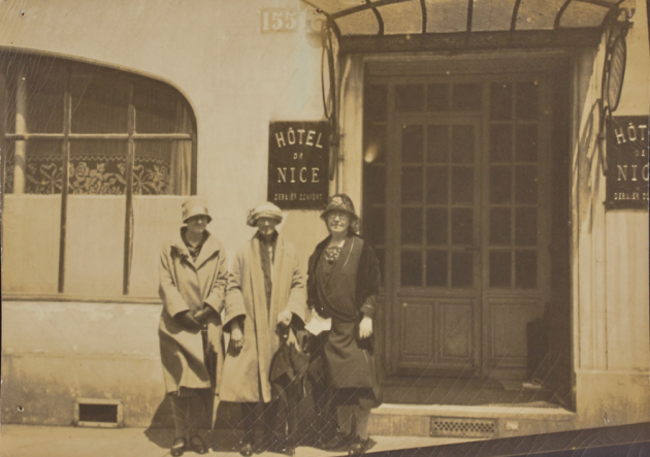
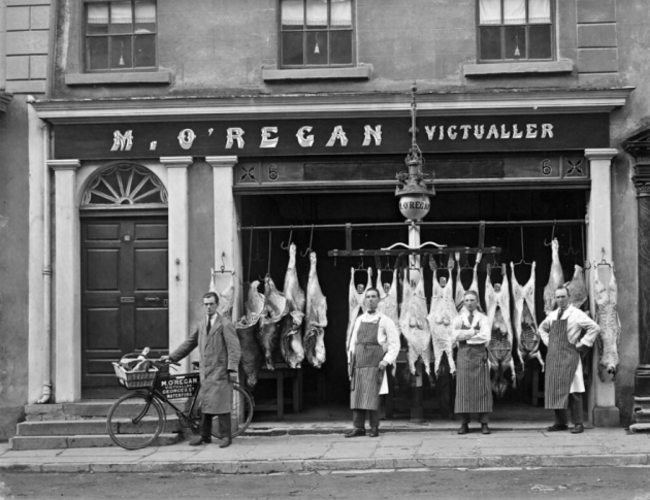
But there was also a necessity to explain something of the world in which the lives recorded on the census were lived: in towns, cities, the countryside and the islands, from urban tenements to the mansions of the aristocracy, and from sports and entertainment, to infrastructure, the arts and housing.
The Story of Us drew together a wide range of authors, accompanied by an equally diverse range of documents and photographs, to reveal what life was like in the newly independent Ireland of 1926.
Now let the readers decide.
Orlaith McBride has been Director of the National Archives/An Chartlann Náisiúnta since April 2020. John Gibney is Assistant Editor with the Royal Irish Academy’s Documents on Irish Foreign Policy programme. The Story of Us: Independent Ireland and the 1926 Census is nominated for Best Irish-Published Book, a category sponsored by The Journal in the An Post Irish Book Awards 2026.
To embed this post, copy the code below on your site








have your say