Sign in. It’s quick, free and it’s up to you.
An account is an optional way to support the work we do. Find out more.
Sign in. It’s quick, free and it’s up to you.
An account is an optional way to support the work we do. Find out more.
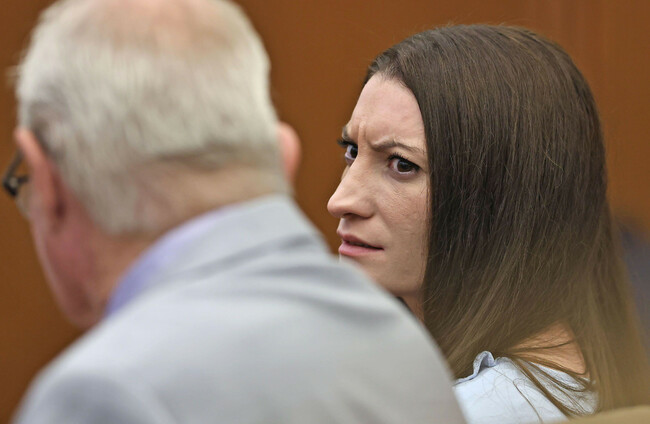
THE JUDGE IN the Lindsay Clancy triple murder trial in Massachusetts sent jurors back to try again to reach a verdict after they failed to deliver one for a second time.
The jury had already told Judge William Sullivan on Tuesday that they could not unanimously agree on whether she was criminally responsible for killing her three children.
Then on Wednesday they again told the judge they were deadlocked.
Clancy (36) does not deny strangling her children Cora, five, Dawson, three and Callan, eight months, in January 2023.
She has pleaded not guilty by reason of insanity, saying she heard a voice ordering her to kill her children. Her lawyers say this was caused by postpartum psychosis.
US media reported that the judge issued the jurors a last-resort, so-called “dynamite charge” that encourages them to keep discussing in a bid to break the impasse and avoid a mistrial.
According to the Legal Information Institute at Cornell University Law School in New York, dynamite charges are controversial because some people say they “overly pressure parts of the jury to change their opinions and cave to peer pressure, especially minority opinions”.
Many states do not permit dynamite charges for this reason.
The jury has five verdicts available to them: not guilty, not guilty by lack of criminal responsibility, guilty of first-degree murder, guilty of second-degree murder and guilty of manslaughter.
Under Massachusetts law, the prosecution carries the burden of proof. This means that they must prove Clancy is guilty beyond a reasonable doubt. The defence does not have to convince the jury that the defendant is innocent.
In Massachusetts, jury verdicts in criminal trials must be unanimous. All 12 jurors must be in agreement on whether to convict or acquit a defendant.
If the jury remains deadlocked for a third time, the judge has the discretion to declare a mistrial.
Postpartum psychosis is a medical emergency that affects about one to two women in every 1,000 births, according to Sally Wilson, national training coordinator at the UK-based charity Action on Postpartum Psychosis.
Clancy’s case is “an incredibly distressing and rare outcome of postpartum psychosis,” Wilson told AFP last month.
With reporting from AFP
If you have been affected by any of the issues mentioned in this article, you can reach out for support through the following helplines. These organisations also put people in touch with long-term supports:

To embed this post, copy the code below on your site














have your say