Sign in. It’s quick, free and it’s up to you.
An account is an optional way to support the work we do. Find out more.
Sign in. It’s quick, free and it’s up to you.
An account is an optional way to support the work we do. Find out more.

In Calling 353, bestselling Motherfoclóir author and podcaster Darach Ó Séaghdha casts a linguistic eye on how we talk about what it means to be Irish, the signs we post to each other about Irishness – and what really lies beneath it all.
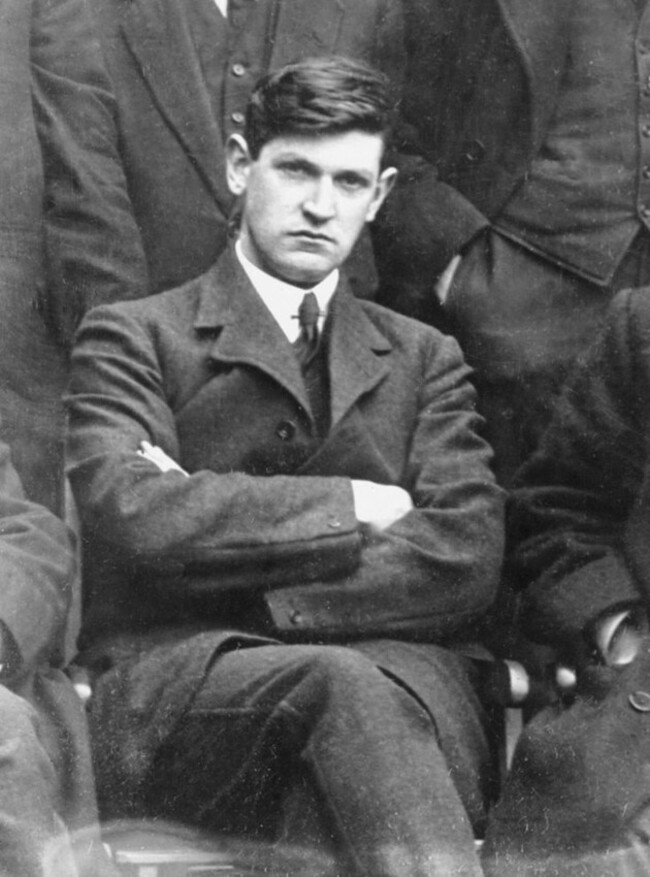
LAST SATURDAY MARKED the 104th anniversary of the shooting of Michael Collins, one of the major figures in the history of 20th century Ireland. He was only 32 when he died – younger than Saoirse Ronan is now – which makes the achievements accrued in his short life even the more remarkable.
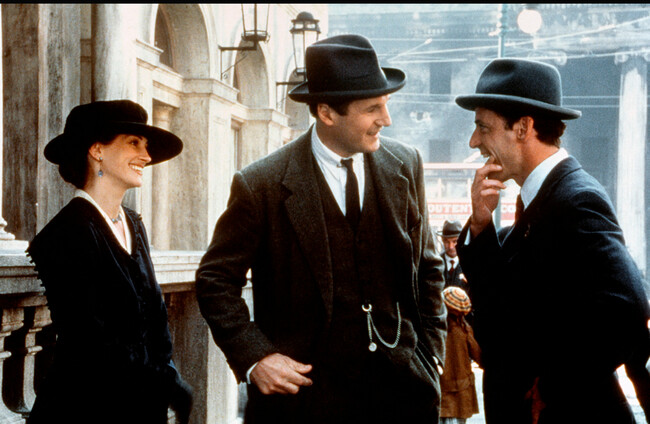
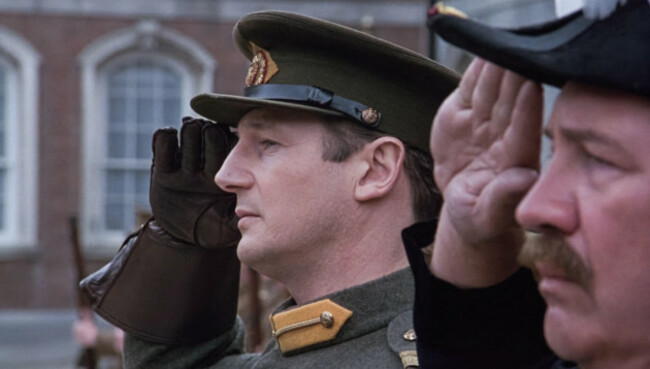
This autumn also marks the 30th anniversary of the release of the Neil Jordan movie Michael Collins, the biggest Irish box office hit ever at the time of its release and a staple of bank holiday TV schedules and school history classes ever since. Sometimes I think about events I lived through before the very online era and how they would have been different if social media had been around at the time.
The tribunals – some of which were reenacted at the time on late-night radio to surprising popularity – would have produced many viral moments. However, the discussions around the Michael Collins movie felt like an ongoing online discourse at the time and I can only imagine what thousands of tiktoks and tweets would have added to that national conversation.
If you weren’t born or were very young at the time, I cannot understate what a big deal this film was not just at the time of release but in the years leading up to it.
The lead-up to the film coincided with critical years in the peace process and the involvement of half the country in various crowd scenes as extras contributed to the massive buzz around the film.
Originally, it looked like a very different kind of project. In 1990, the Irish Independent announced that Kevin Costner was going to start filming a Michael Collins movie the following autumn based on a script by Eoghan Harris called “Mick”. Costner was at the peak of his stardom at the time, collecting awards and piles of money for Dances With Wolves and just piles of money for Robin Hood: Prince of Thieves.
Orion Pictures, who had produced Dances With Wolves with Costner, were about to release Silence Of The Lambs, giving them two Best Picture Oscar winners in a row. A period adventure movie starring Costner at the time looked like a winning ticket, especially with Meryl Streep attached to play Kitty Kiernan.
However, a Conservative MP called Teddy Taylor was one of a number of voices who declared that the movie was going to “provide ammunition for the IRA propaganda machine” and called on the British Home Office to intervene to stop the film (to be made in Ireland) from going ahead. This must have been very hurtful to Harris in particular, whose dislike of the republican movement was well known.
Whether or not these comments reached Costner or not is not known, but a year later
in 1991 the project was still at the “about to start filming” stage.
And there were two other Collins projects in the works: one by Michael Cimino with a screenplay by David Lean’s regular collaborator Robert Bolt, and one by Neil Jordan with Liam Neeson attached (the Evening Herald in 1991 compared Neeson playing Collins to “Shirley Temple playing King Kong”).
In October 1991, Costner said that he was planning to meet Ian Paisley and Loyalist leaders to get the broadest possible perspective on Irish history before beginning filming. Could this meeting, if it ever took place, have scared him off the entire project?
One man of the cloth who Costner probably didn’t meet was Father Tuohig of Mallow, who sent letters to every newspaper declaring his horror at the prospect of a Collins movie that was primarily concerned with bedroom antics rather than the details of the Treaty. It is unclear if Father Tuohig had been given a look at the screenplay or if he was just letting his imagination run riot.
So 1992 came and went and the Costner movie still hadn’t begun filming, although breathless news reports spotted the star scouting locations in Cork and Kerry. The financial failure of the Cruise-Kidman film Far And Away around this time may have cooled investor interest in the Ireland-related projects, and by 1993 the Beckettian wait for the film to begin had already become a punchline. The global success of The Crying Game and Schindler’s List gave the Neil Jordan/Liam Neeson pitch the boost in value it needed.
By April 1993, the Costner Collins movie was put on indefinite hiatus.
In some ways, the failure of the Hollywood version may have added to goodwill towards the Jordan project from people who dreaded the idea of Costner – a fine actor but never really an accent guy – pretending to be Irish.
But just like the previous project, the Jordan version was accused of being IRA propaganda before it even started filming. Eoghan Harris declared that it was going to be “Indiana Jones and the Treaty of 1922” rather than the fabulous script he had written himself.
Alexander Walker, the film critic with the London Evening Standard, bemoaned the film as the latest piece of “anti-Brit propaganda” from Hollywood and asked why Americans never turned this judgemental eye on their own history (which is a fair point but not exactly a denial that the events described in Michael Collins were real and bad).
The concern about propaganda turned into schadenfreude after the movie’s American release when it didn’t make a commercial impact and was dismissed as being the latest in a series of Julia Roberts flops – a number of British tabloids gloated that it was beaten at the box office by Mighty Ducks 3.
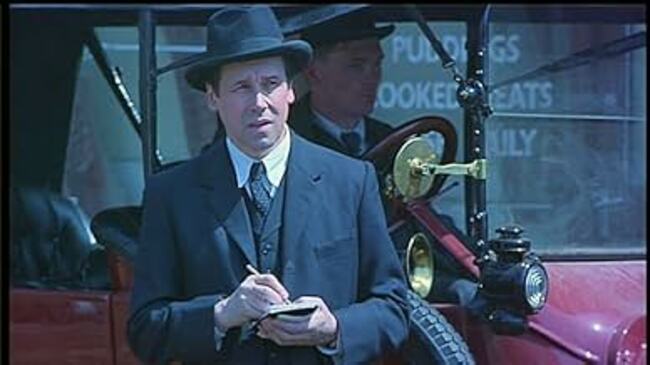
In the 30 years since its release, both Michael Collins the movie and Michael Collins the person have cast a long shadow in Ireland. The Ned Broy meme is a regular fixture on social media, much to the bafflement of Stephen Rea who features in it. A pair of wolf slippers owned by Collins broke the internet when they were revealed and featured on the Late Late Show that evening.
Thanks to @BrenMalone who spoke to @LJMUHistoryMA students this morning - live from the stores of the National Museum. And as an extra treat we got to see my favourite objects - Michael Collins’ wolf slippers. #museum #irishhistory #publichistory #artefacts pic.twitter.com/oq0WnaMuAe
— Prof. Gillian O'Brien (@gillianmobrien) February 23, 2021
And the idea that Irish history would have been fine and dandy if he had lived has grown legs.
I have my doubts about that, but what I am more sure of is that enough time has passed for a film or TV series to revisit this point of history with all the perspective we have gained since its release, especially now that Irish culture is having its moment and more work is being made here with the confidence to not have to compromise its storytelling for international audiences.
Darach will be back next Sunday with more thoughts on the words and Irish cultural phenomena that unite us.
To embed this post, copy the code below on your site









have your say