Sign in. It’s quick, free and it’s up to you.
An account is an optional way to support the work we do. Find out more.
Sign in. It’s quick, free and it’s up to you.
An account is an optional way to support the work we do. Find out more.
IT’S A DAY of rest, and you may be in the mood for a quiet corner and a comfy chair.
We’ve hand-picked some of the week’s best reads for you to savour.

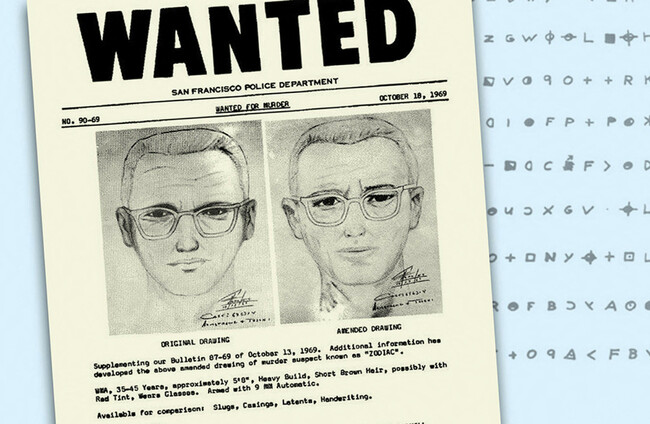
A former crime writer for The Los Angeles Times is convinced that World War Two veteran Marvin Margolis is the unidentified Zodiac killer who murdered at least five people in Los Angeles in the 60s. Michael Connelly also believes the Zodiac killer is responsible for the brutal murder of Elizabeth Short, posthumously known as the black Dahlia. But the true crime world is divided.
(The New York Times, approx. 14 mins reading time)
“That investigation resulted in Killer in the Code, a podcast whose second season returns on Wednesday with the first two episodes of six. The 10-episode first season, which debuted last December, roiled the true-crime community by arguing that a World War II veteran named Marvin Margolis was responsible for two of the most famous unsolved crimes in California history: the 1947 Los Angeles murder of Elizabeth Short, immortalized as the Black Dahlia, and the five killings committed by the Zodiac throughout the San Francisco Bay Area in the late 1960s.”
A small Caribbean island off the coast of Honduras has become a libertarian utopia where startups are swarming due to light regulations. Supporters of the island say it can decrease poverty, but critics say it’s an experiment gone wrong.
(ABC, approx. 14 mins reading time)
“Chen’s experiment is nothing out of the ordinary among the tight-knit group of biohackers, tech entrepreneurs and crypto bros who inhabit Próspera, a private city run by an American company. Próspera itself is a radical experiment, billed as ‘the future of human governance, privately run and for profit.’”
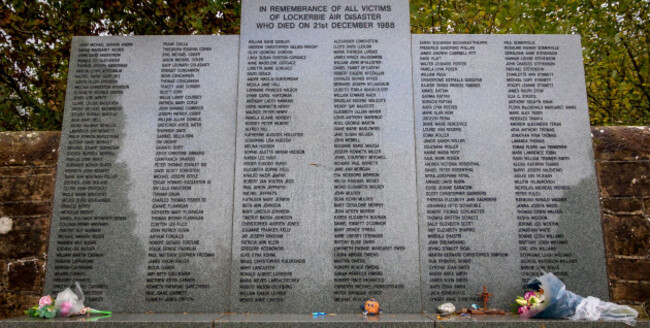
Joseph Bernstein’s father Michael spent much of his life prosecuting Nazi war criminals in the US. He was killed in another historical crime – the 1988 bombing of Pan Am Flight 103. In this personal article, his son grapples with what justice for his father’s life looks like.
(The New York Times, approx. 35 mins reading time)
“A confession like this was unheard-of within the Office of Special Investigations, the Department of Justice unit my father had worked for since 1985. The O.S.I. was established in 1979, amid a growing awareness of how many ex-Nazis had entered the country after the war. Its mandate was to bring together historians and lawyers to identify and expel from the United States anyone who assisted the Third Reich in persecuting civilians. That made its employees, colloquially, Nazi hunters. It’s a title that calls to mind the larger-than-life figure of Simon Wiesenthal, working a shadowy global network of spies and informants to stalk his notorious prey: Adolf Eichmann, Hermine Braunsteiner, Franz Stangl.”
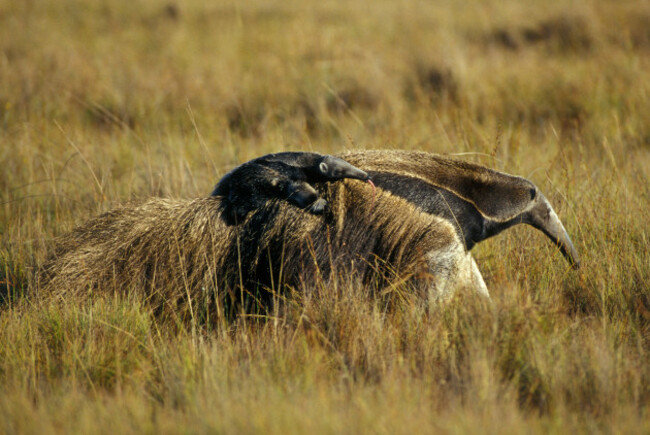
Brazil’s giant anteaters are increasingly under threat, largely due to an increase in the number of cars on the road. National Geographic’s Fernando Faciole spent three years with the animals to document the threats.
(National Geographic, approx. eight mins reading time)
“The dramatic increase in deaths has coincided with an agriculture boom that is clearing the anteaters’ natural habitat to make way for fields and the roads needed to transport crops. Anteaters—slow-moving wanderers by nature—are being struck by this new road traffic. These accidents have drastically reduced the species’ population and often leave behind orphaned anteater pups. Pups require specialised diets and may have health issues. Even in rehabilitation centres, pups may not survive.”

Carleton Gajdusek, who won the Nobel Peace Prize for his work on a fatal brain disease in Papua New Guinea, took 56 children from Melanesia and Micronesia back to the US. He was later arrested for child molestation. This article looks at the lives of the now-adults Gajdusek informally adopted, and how Gajdusek’s actions went unchecked.
(The New Yorker, approx. 55 mins reading time)
“The kuru experiments, which won Gajdusek the Nobel Prize in 1976, put him in a position in which people around him rarely said no. ‘The more brains he acquired,’ the historian Warwick Anderson wrote, ‘the more opportunities he had to build relationships with other scientists, to make them indebted to him.’ During Ivan’s first seven years in the U.S., Gajdusek adopted five more children, from Fais, an island in Micronesia with fewer than three hundred people, and from Ulithi, a nearby coral atoll—both places where he had gone to do medical research. Ivan didn’t understand why Gajdusek kept bringing new children home.”

In the 1970s, the Soviet Union drilled the deepest hole on earth. Rumours swirled at the time that the hole was so deep it entered hell. This wasn’t correct, and the Kola Superdeep Borehole didn’t actually get as deep as it was meant to. But, it did transform the way geologists see the subterranean world.
(Nautilus, approx. 10 mins reading time)
“When the Soviets lowered a remarkably heat-resistant microphone into an underground cavern discovered by their dig, so the story went, the Russians—to their horror and surprise—recorded the wailing of damned souls as they languished in temperatures exceeding 1,800 degrees Fahrenheit. Their lamentations were played on the air for a stunned audience. In later developments, the network reported that a winged, bat-like figure had been seen rising from the hole and blazing a trail across the Siberian sky. This was all the proof they needed to assert that, out there somewhere in the Siberian tundra laid the Well to Hell.”
In 2021, a former NFL player drove to the farmhouse of a family he never met with two submachine guns. He killed six people on the property before killing himself. There seemed to be no explanation for his actions. Then his brain was examined by neuropathologists.
(The New York Times, approx. 16 mins reading time)
“Dr. McKee announced that Adams had stage 2 C.T.E. She said that Adams’s 20 years in football caused the disease, explaining that stage 2 was associated with aggression, impulsivity, explosiveness, depression, paranoia, anxiety, poor executive function and memory loss.”

To embed this post, copy the code below on your site














have your say