Sign in. It’s quick, free and it’s up to you.
An account is an optional way to support the work we do. Find out more.
Sign in. It’s quick, free and it’s up to you.
An account is an optional way to support the work we do. Find out more.
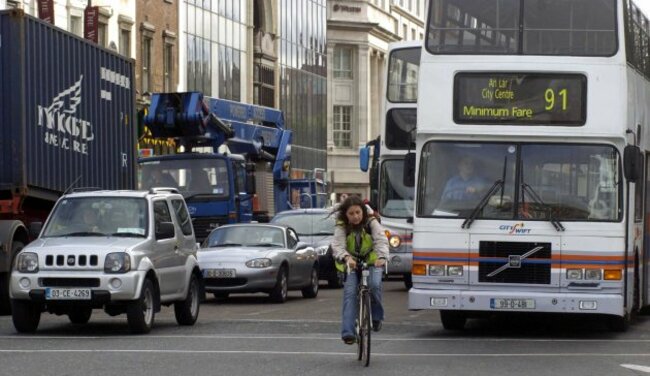
(Graham Hughes/Photocall Ireland)
A MAJOR OVERHAUL of how streets are designed in Ireland will take the focus off traffic corridors and focus on making streets serve the needs of pedestrians and public transport.
The new ‘design manual’ for streetscapes being launched today by transport minister Leo Varadkar focusses on designing streets to meet the needs of people travelling by foot, by bicycle or on public transport ahead of the needs of other vehicles.
While the manual’s designs will apply to the construction of future roads, it is also to be used as a basis for reconfiguring existing roads, taking into account best design practice and better planning priorities.
The manual has prepared by a project team comprised of officials from city and county councils in South Dublin, Fingal, Kildare and Cork City, and was overseen by the Departments of Transport and the Environment.
The new principles follow data from the 2011 census showing that the number of people cycling to work had increased, while the numbers commuting via rail was also up – but that bus passenger numbers had fallen as proportionally more workers drove themselves to work.
“If we want people to travel in a more sustainable way – by walking, cycling or using public transport – we need to make sure that the streetscape will persuade them to take the sustainable option,” Varadkar said in a statement.
He said streets needed to act not just as traffic corridors but also as a place where people wanted to live and spend time.
Varadkar said he recognised the ‘important’ role played by cars, however, and said the plan was mindful of the role that cars can sometimes play in reassuring pedestrians, particularly during darkness hours in remote areas.

To embed this post, copy the code below on your site














have your say