Sign in. It’s quick, free and it’s up to you.
An account is an optional way to support the work we do. Find out more.
Sign in. It’s quick, free and it’s up to you.
An account is an optional way to support the work we do. Find out more.
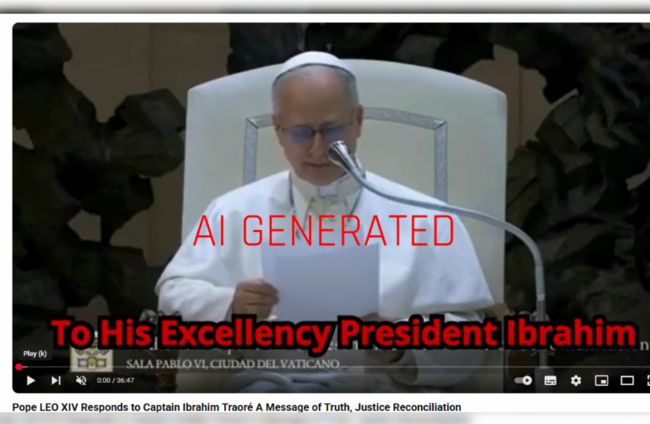
IT BEGAN WITH the “dope pope” meme featuring a deepfake Pope Francis in early 2013 – and it’s continuing today with fake sermons attributed to the new pope, Leo XIV.
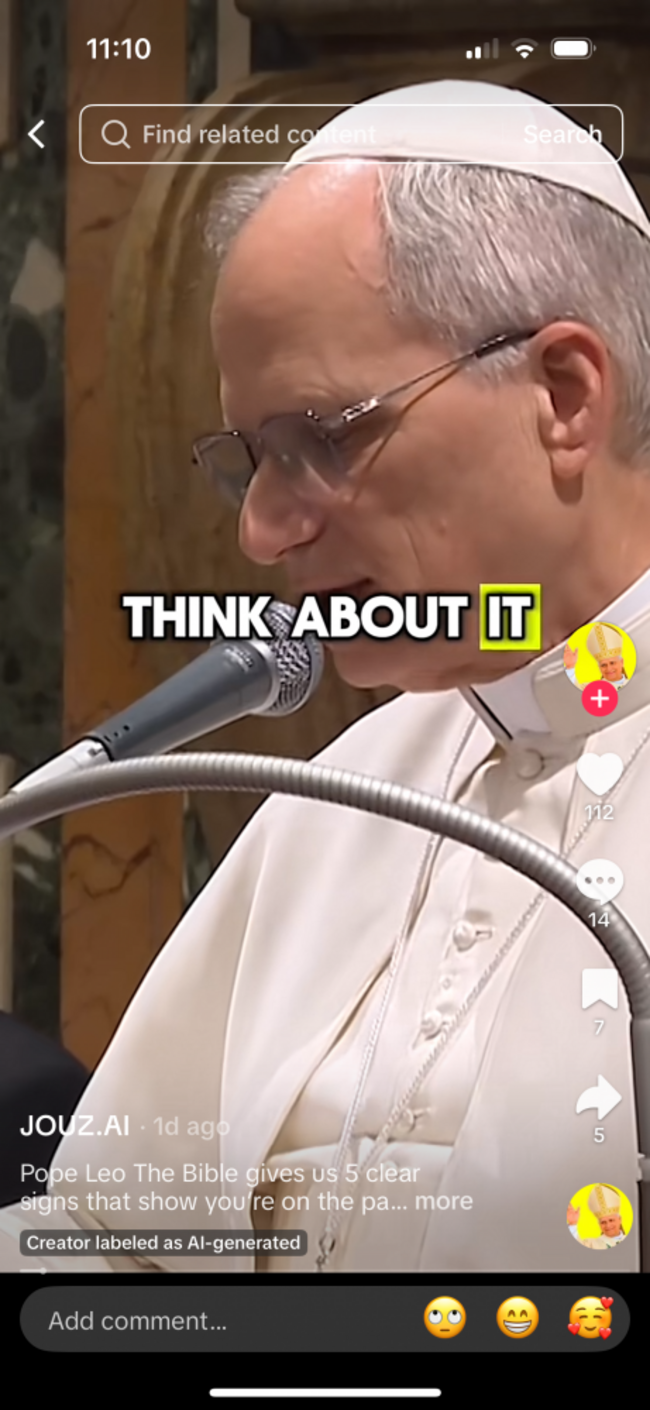
Bogus videos and audio of the pope have been racking up millions of views, while dozens of YouTube and TikTok pages have been churning out AI-generated messages delivered in the new pope’s voice.
It comes despite the pontiff stating from the earliest days of his papacy that he wants to stand up to the challenges AI poses to “human dignity, justice and labour”.
In April 2013, an image of Pope Francis in a white puffer jacket was uploaded onto X, formerly Twitter, and took the internet by storm.
This deepfake image, and many others like it such as Francis in a nightclub or on a motorcycle, were created by now widely-available Artificial Intelligence tools.
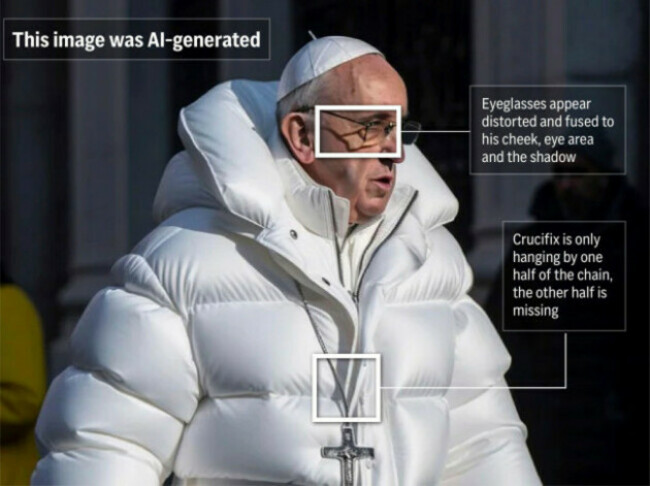
And yes, Francis saw the images in question.
He described such deepfakes as in his memoir as “images and voices that seem perfectly real but are false”.
In his memoir, he also hit out at the “concentration and exaggerated monetisation” of social media and how it has become “vulnerable to disinformation and the targeted distortion of facts”.
He added that an “information system based on social networks in the hands of extremely powerful oligarchs can only represent a further danger that we must keep an eye on”.
While the “dope pope” trend was benign, more nefarious ones would come Francis’s way.
When he was close to death after being hospitalised with bilateral pneumonia in February, fake images spread online of Francis in a hospital bed wearing a respirator mask.
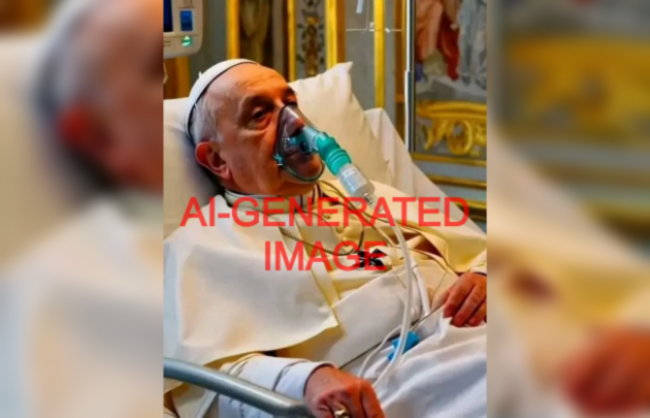
This image is known to be fake, not least because the laws of the Catholic Church ban such images of a pope on his sickbed.
Meanwhile, there appears to be no let up in AI-generated images and video when it comes to the new pope.
With titles such as “Pope Leo XIV Vision”, online posts have portrayed the pontiff supposedly offering a flurry of warnings and lessons he has never preached.
For example, a 36-minute long video was recently uploaded to YouTube on the account “Pan African Dreams”, in which viewers are led to believe that Leo delivered an entire public address to Burkina Faso’s President Ibrahim Traoré.
And while some of the videos are labelled as AI-generated, this disclaimer is often hard to find and overlooked by users.
On YouTube, a label demarcating “altered or synthetic content” is required for material that makes someone appear to say something they did not.
But such disclosures only appear toward the bottom of each video’s click-to-open description.
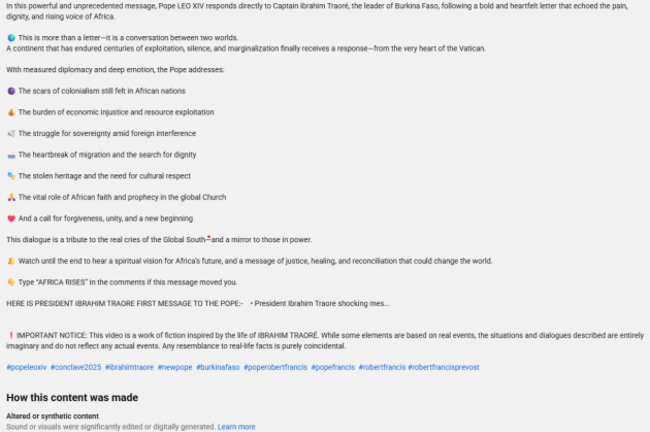
TikTok also requires creators to label posts sharing realistic AI-generated content, but this appears as a small disclaimer at the bottom of the screen.
In the latter years of his papacy, Francis warned about the misuse of AI and in January he published a document on the “relationship between artificial intelligence and human intelligence”.
He said the “concentration of the power over mainstream AI applications in the hands of a few powerful companies raises significant ethical concerns”.
He also voiced concern that AI could lead to “harmful isolation” and warned against “anthropomorphising AI”.
Meanwhile, Francis warned that AI in the workplace could “subject workers to automated surveillance, and relegate them to rigid and repetitive tasks”.
He also worried about AI in education and how it “provide answers instead of prompting students to arrive at answers themselves”, which can lead to a failure to develop critical thinking skills.
This concern over AI has been picked up by his successor, Pope Leo, the first pontiff from the United States.
In an address to Cardinals just two days after becoming pope, Leo said he chose this papal name “mainly because of Pope Leo XIII’s historic Encyclical Rerum Novarum, which addressed the social question in the context of the first great industrial revolution”.
This document, a response to the state of industrial society in the late 19th century, explicitly outlined worker’s rights to a fair wage, safe working conditions and the right to belong to a trade union.
Leo XIV told Cardinals that he sees himself “called to continue in this same path” because today, there is “another industrial revolution in the field of artificial intelligence that pose new challenges for the defence of human dignity, justice and labour”.
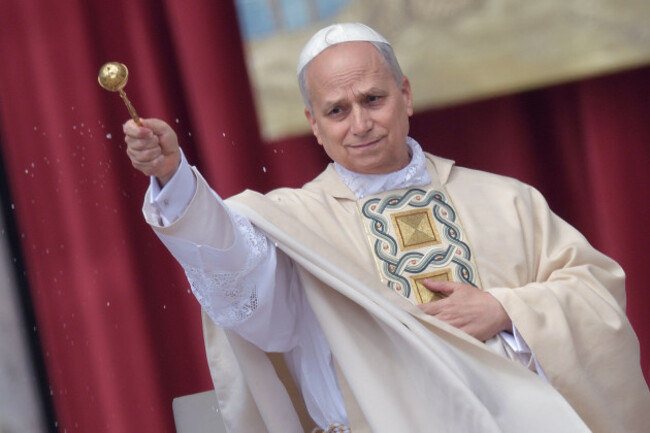
In an address to journalists a day later, Leo called on the news media to “disarm communication of all prejudice and resentment, fanaticism and even hatred”.
He added that the media’s “mission” of creating “spaces for dialogue and discussion” is “every more necessary” due to AI.
“Its immense potential requires responsibility and discernment in order to ensure that it can be used for the good of all, so that it can benefit all of humanity.
“This responsibility concerns everyone,” said Leo.
Later that week, Leo met with the Vatican’s diplomatic corps and he again called for people to be “truthful” and “ethical” in their use of AI.

To embed this post, copy the code below on your site













have your say