Sign in. It’s quick, free and it’s up to you.
An account is an optional way to support the work we do. Find out more.
Sign in. It’s quick, free and it’s up to you.
An account is an optional way to support the work we do. Find out more.
LAST UPDATE | 33 mins ago
THE TAOISEACH AND Tánaiste have talked up the latest pay deal on offer in a bid to quell public sector unrest, but public sector workers are still planning on striking.
Sunday saw a significantly enhanced pay proposal to public sector unions, which government sources argue would offer guaranteed rate increases of 10.5% or 11% cumulatively for every public servant.
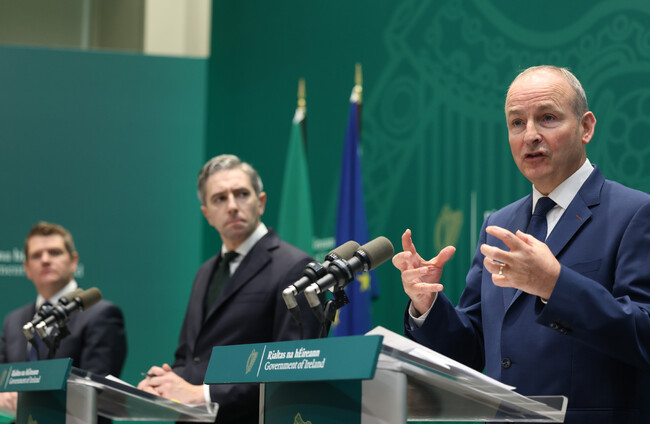
Taoiseach Micheál Martin told reporters today there is “a very fair offer” on the table, arguing that it is a much improved offer for unions.
Unions are preparing for a second day of national strike action on Thursday 12 November in a bitter dispute with the government over a new pay agreement, with the strike set to come on the same day as European and world leaders visit Dublin as part of Ireland’s EU presidency. Work-to-rule industrial action remains in operation.
Under the new offer, lower-paid public servants would see a bigger package and increases, some benefiting by up to 17.8%.
The proposal would include a significant additional back payment of €1,200 or 2%, whichever is higher, in 2026, bringing pay increases for 2026 to 4% for public servants.
In an email to Fórsa members today, seen by The Journal, deputy general secretary Katie Morgan noted that the public service trade union’s general secretary is “currently leading negotiations which are ongoing”.
Morgan told members that “out of respect for the process, we are not commenting publicly on the talks”.
“Instead, negotiators are focused on engaging under the Government Appointed Group,” added Morgan.
She said that should an agreement be reached at that level, “the parties will return to the Workplace Relations Commission”.
“Only in those circumstances could a deal be reached,” said Morgan. “Until we hear back from the negotiators on whether an agreement has been established, plans for the strike and rallies on Thursday must continue.”
Morgan encouraged members to inform Fórsa of which rally they plan to attend and noted that gardaí have asked unions to encourage their members to travel using public transport where available.
Speaking on Monday, Martin said the government needs a sustainable budget so that it can expand public services into the future.
“We want to be in a position in the future as well to have a sustainable budget that will allow us to continue to recruit teachers and nurses and special needs assistants, and many more gardaí and so forth,” Martin said.
Meanwhile, speaking in Brussels, Tánaiste and Finance Minister Simon Harris said “more effort” is needed to get a deal over the line.
“I don’t want to say anything that’s provocative or escalatory, while I’m asking others to de-escalate,” Harris said.
“But what I would say is the government has made a significant move by any fair objective. It is a significantly improved offer from the perspective of the unions and their members.”
Harris said there are “limitations to what any government can do, but we have moved”, and he hoped that comes through in Monday’s talks.
“There needs to be more effort put in today to trying to find a resolution than plan a strike,” the Fine Gael leader said.
Harris added that the talks are in a “very different space now” compared to when unions balloted members for industrial action.
“At the time, they sought and secured an overwhelming mandate for that action. You have to remember there hadn’t been formal offers, and perhaps there hadn’t even been formal substantive talks,” Harris said.
“When you have a government that was able to cut tax on your pay only a couple of weeks ago, that will take effect from January, and is now in a position of wanting to increase your pay as well. That people would try and respond in the spirit that that’s put forward.”

To embed this post, copy the code below on your site














have your say