Sign in. It’s quick, free and it’s up to you.
An account is an optional way to support the work we do. Find out more.
Sign in. It’s quick, free and it’s up to you.
An account is an optional way to support the work we do. Find out more.

THE HEATWAVE WITNESSED across Europe over the past week served as a hypnic jerk to millions, reminding us of the very real existential threat that the climate crisis poses to life as we know it.
On Sunday, the French public health agency reported at least 1,000 excessive deaths occurred as temperatures soared to 40 degrees Celsius in much of the country.
That figure is expected to rise. In Ireland we inched towards new record temperatures, though we haven’t yet surpassed that threshold, as some European countries have.
It was estimated that 191 million people in Europe would experience temperatures over 35 degrees over the course of last week’s heatwave, and headlines have outlined the consequences of this.
Thousands of schools closed. Sports events and Pride celebrations have been cancelled, while agricultural work had to take place at nighttime. French nuclear reactors had to shut down as the water used to cool them was too warm. Around Europe, dozens of drowning deaths were reported as people tried to cool off in high temperatures.
Throughout all of this, scientists have noted that this freak weather event would not have been possible without the climate crisis caused by excessive consumption of fossil fuels.
It’s clear that something needs to change immediately and we have no shortage of things that we can cut back on that the majority of the world don’t want or need, namely war.
Accelerating hostilities
At the beginning of June, a new study from Sweden’s Uppsala University, recorded that we’re currently witnessing the highest number of conflicts between states since World War II.
This is concerning for many reasons, but in large part, because militaries are responsible for 5.5% of the world’s emissions. Even during times of peace, armies are highly resource intensive.
Despite this, much of the dominant conversation regarding the environment today focuses on the development of new data centres.
It’s estimated that data centres are consuming 1.5% of the planet’s electricity, while costing us trillions of litres of fresh water. These are not two distinct issues, however.
There’s a great deal of overlap between our data centre crisis and the destruction that war wreaks on the planet.
As well as providing civilian infrastructure, data centres store the data analysed for autonomous weapons, intelligence and surveillance.
In 2024, Israeli intelligence sources revealed that AI had been used to target 37,000 individuals, many of whom were attacked with “dumb bombs”.
“You don’t want to waste expensive bombs on unimportant people,” one intelligence officer was revealed to have said.
The source said, “Because of the system, the targets never end. You have another 36,000 waiting.”
Alarming
The environmental and human cost of war is accelerating at an alarming pace with the introduction of AI.
Beyond the dystopian use of tech and data centres in war, conflict comes at a great cost to the planet as a result of the basic logistics.
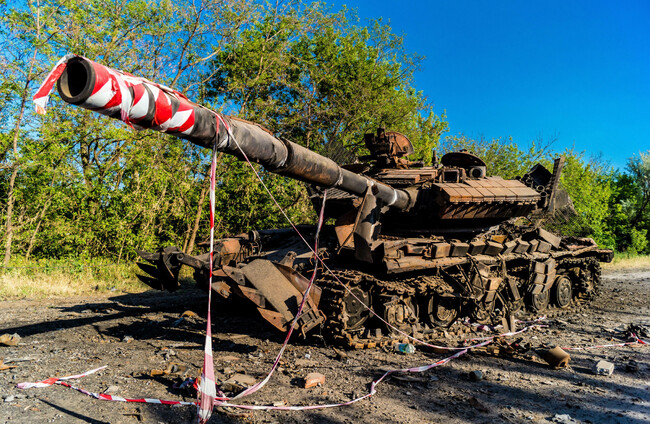
It’s not difficult to imagine the devastation caused by mining minerals for weapons, tanks and planes, as well as the environmental damage caused by fuel, bombing and reconstruction of cities and towns.
The damage goes farther than we even realise, with the industries associated with war generating a huge amount of emissions to keep soldiers dressed, fed and trained.
Even the production of combat boots has a massive environmental impact. A single pair of boots generates as much carbon as charging a phone battery once a day for 12 years.
Industry analysis suggests that most soldiers receive two pairs per year, giving just a small insight into the size of war’s carbon bootprint.
Environmental destruction
Within the first 15 months of Israel’s war on Gaza, the carbon footprint of the conflict exceeded that of over 100 individual countries.
Research suggests that 30% of greenhouse gases generated in that period came from the US sending 50,000 tonnes of weapons and supplies to Israel from stockpiles in Europe. That number has only continued to rise after those initial 15 months.
The Russo-Ukrainian war has also resulted in severe, long-term environmental damage, while contributing to rising emissions that impact the climate.
Heavy metals and chemicals are seeping into the ground, poisoning water sources, leaving four million without access to clean drinking water, while making agricultural land unusable.
In addition, 12,000 square kilometres of Ukrainian nature reserves have been damaged by the conflict, destroying decades-long conservation projects. In February 2023, the World Bank estimated it will take a minimum of $34 billion to clear landmines and unexploded ordnance in Ukraine. That figure has likely increased.
We’ve also seen Gaza’s sewage and wastewater infrastructure destroyed, while millions of tonnes of debris cover the city. This is contaminated with asbestos, hazardous substances and most disturbingly, human remains.
The Democratic Republic of Congo is being ransacked by countries engaged in conflict for raw materials to keep wars ticking over. This has greatly exacerbated the impact of the DRC’s own war with Rwanda, for which it has just filed a case with the International Court of Justice.
None of this is accidental. By design, armies often aim to make land uninhabitable for adversaries. One example (of many) is the Gulf War, when Saddam Hussein’s regime drained Southern Iraq’s wetlands in retaliation for an uprising, destroying 90% of the ecosystem. 35 years later, the wetlands still have not fully recovered.
The planet is on fire, literally and figuratively.
Despite the fact that the United States military accounts for 31% of all historical emissions on the planet, the impact of war generally goes under the radar in our conversations about pollution and the climate crisis.
Yet, there are still those among us who find ways to justify war and turn a blind eye to the catastrophic consequences of armed conflict.
It’s worth remembering that in recent years, the former Head of the Irish Defence Forces said that the single biggest threat to Ireland is climate change. With all of this in mind, the climate crisis is a battle that’s in everybody’s interest to fight.
Kelly Earley is a writer and podcaster from Coolock, who has a deep interest in culture, technology, community and social justice. She writes for The Journal every week.
To embed this post, copy the code below on your site














have your say