Sign in. It’s quick, free and it’s up to you.
An account is an optional way to support the work we do. Find out more.
Sign in. It’s quick, free and it’s up to you.
An account is an optional way to support the work we do. Find out more.


IN THE LATTER half of World War 2 when Germany’s back was to the wall from the combined Allied powers of the US, USSR and Britain, it introduced what it called wonder weapons – revolutionary, new technology such as the ME 262 jet fighter and the V1 and V2 rockets that it hoped would turn the tide of the war.
However, as well as draining scarce resources from more practical needs, the technology was too new, temperamental and too expensive to produce and maintain in sufficient numbers to have any real impact to alter the course of World War 2.
Godwin’s Law notwithstanding, I am reminded of this blind trust in technology and human ingenuity every time that I hear about or read about how new technology solutions will help solve the climate change crisis.
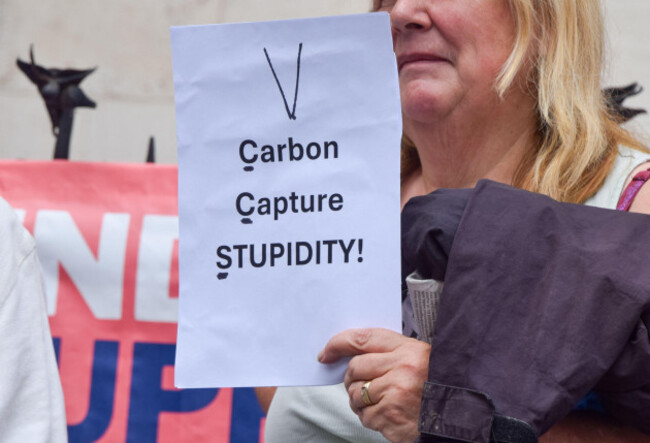
Technology was to the fore at the failed COP31 climate negotiations. Ignoring the fossil fuel elephant in the climate change room, it was proposed to urgently and rapidly scale up carbon capture – a largely new and unproven technology – rather than cutting our reliance on fossil fuels. In fact, the draft agreement presented to the summit for approval omitted any mention of fossil fuels.
This is not to discount the impact technology can have – advances in solar technology, wind power and battery storage can help move countries away from fossil fuel generated energy. The real problem is the desire by some people to place all of their hopes in some new or untried or untested technology to solve an existential crisis.
However, technology solutions are usually trotted out by people who don’t want to accept the reality of the dire situation they’re in. Or by people who don’t care and want to continue with business as usual rather than make the necessary changes required to deal with the problem. At the end of the day, it is a combination of a naïve belief in knowhow, a large dose of denial and quite a bit of indifference – not to mention the money to be made in the short term from business as usual.
Some at COP31 were pushing carbon capture and storage (CCS) as a possible answer to meeting climate targets. Basically, carbon from energy generation and industry is captured, transported and stored deep underground in old gas or oil fields. Some commentators say this could have the potential to move energy generation into negative emissions territory and allow us time to work on hard-to-decarbonise sectors such as agriculture and aviation.
This discussion is wrong on a number of levels. Firstly, there is the confident and unshakeable belief that a new technology is going to solve all of our problems.
The latest news that the Earth’s capacity for safely storing carbon might be 10 times smaller than previously predicted shows that this policy of putting all of our climate-solving eggs into the future technology basket is not all it’s cracked up to be.
The paper published in Nature has again highlighted the danger of relying on untried and untested technology to solve the climate crisis.
On top of that, according to desmogblog.com, the reality of CCS does not match up with the expectations of the technology, and as a result, has not been widely adopted, adding that there is a sense that CCS processes might be too complicated, expensive and technologically challenging to succeed.
Apart from relying on untried new technology, the idea of using it to give high-emitting sectors a dig-out from their commitments and a free pass is quite unsettling. Essentially, it sounds like an excuse for business as usual.
While investment in carbon capture may not be on the agenda in Ireland, we’re not immune to putting our faith in technological solutions to solve the climate and biodiversity crisis, especially in the areas of agriculture and aviation.
In agriculture, technology is being touted as the great hope, rather than making any meaningful changes.
In the world of aviation, ‘sustainable Aviation Fuels’ is the new buzz phrase. But a new report said that hopes for sustainable jet fuel are not realistic.
Essentially, sustainable biofuels face some of the same issues as Carbon Capture and Storage – costs, scalability to meet demand and the fact that some carbon is still emitted. On top of that, there is the issue of the need for land and crops to produce biofuels and the opportunity cost – the lost potential to pursue other ways to cut emissions.
The bottom line is that Sustainable Aviation Fuels are not developing fast enough to reach aviation decarbonisation goals and, added to this, they are less energy efficient than fossil fuels and therefore are more expensive.
It also sounds very much like continuing as normal and implies doing everything except the obvious – making the necessary systemic changes in how we live and how we measure economic success. When faced with an existential threat, I would rather place my faith in the tried and trusted methods of dealing with increasing CO2 emissions – letting nature do its work. As David Attenborough said, forests are the best technology for locking away carbon and they are also centres of biodiversity.
When the UN’s Environment Programme recently said that a rise in global temperatures of 1.5C will be surpassed, Lili Fuhr from campaign organisation CIEL said: “The only way to minimise harm is to cut emissions now… not to delay action with speculative techno-fixes.”
Speaking on Morning Ireland about the UN report, Peter Thorne, Director of the Icarus Climate Research Institute at Maynooth University, said the means to move to a much lower emissions or zero emissions future are available to us today.
“It’s not like we are waiting for something to be invented,” he said, adding later in the interview that we have the resources to generate and store energy and wean ourselves off fossil fuels.
“It needs the political will, it needs the economic will, it needs the government to wake up,” he said.
They are right. Nature restoration; rewilding; transforming our food systems; changing our energy, heating and transport systems; promoting a sustainable, circular, wellbeing, low carbon economy: and ending our reliance on fossil fuels are achievable within our current technological and scientific capabilities and do not depend on any future silver bullets.
We have it within our means now to cut emissions, but we don’t have the will.
Pursuing these objectives is not to discount the role that science and innovation can make in solving a lot of the world’s problems. However, relying on still-to-be-proven technological wonder weapons to solve an existential crisis, while carrying on business as usual, smacks of the arrogance that got us into the trouble in the first place.
Ciaran Brennan is the communications officer at the Irish Environmental Network.
To embed this post, copy the code below on your site












have your say