Sign in. It’s quick, free and it’s up to you.
An account is an optional way to support the work we do. Find out more.
Sign in. It’s quick, free and it’s up to you.
An account is an optional way to support the work we do. Find out more.


IN RECENT WEEKS, there was an intergenerational war regarding whether it’s “professional” to bring an iced coffee along to a job interview.
It has been a lucrative time for career coaches and recruitment consultants, who were invited to weigh in on the conversation in outlets like Forbes, BBC and the New York Times. Here on TheJournal.ie, readers were polled on their take – with an overwhelming number of them expressing disapproval of the idea.
If you must know my feelings on the matter, I simply don’t care.
Throughout the years, I have conducted many job interviews and let me tell you: I’ve seen much worse. Something strange has been developing in the post-pandemic years and the idea of what is permissible in an interview, never mind a workplace, has been completely warped.
To be fair, it’s harder to know what you’re getting yourself into when you do a job interview these days. Tech companies take the blame here, for rebranding their offices as “campuses” and gutting out all the formalities previously associated with high-paying jobs.
The result is that people can dress more casually for work. There’s a new ethos of “high trust” in many roles, which makes life easier for those of us who are allergic to micromanagement. On the flip side, office ping pong tables now inspire eye-rolling.
Social media offers an aspirational glimpse into this work-as-a-lifestyle culture. Young people are shown benefits like on-site gyms, international company off-sites, in-office childcare facilities and office baristas churning out free matchas.
The algorithmic propagation of this content has created an expectation that this is the norm, and that it has always been like this. But it hasn’t. Just ask a civil servant.
This has impacted how we approach interviews. We can’t know for certain that formal wear is appropriate any more, when hiring to uphold company culture is so vibes-based.
Candidates feel compelled to match the vibe, fearing that they’ll be perceived as a dweeb or a poor culture fit if they show up in traditional interview attire. Then there’s a danger of misreading the situation and dressing too casually. The incongruities between workplaces today create a minefield for jobseekers, which is reflected in the debates around interview etiquette.
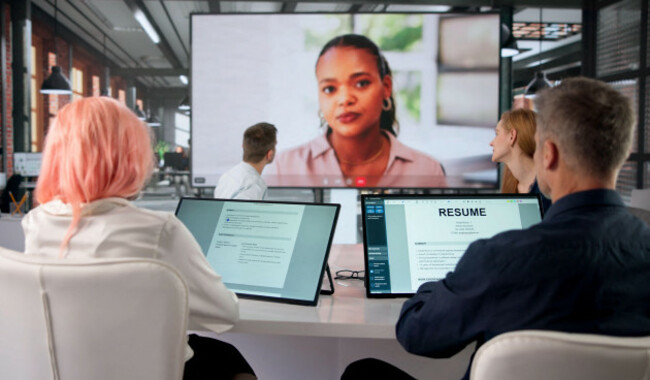
Remote work intensified all of this, blurring the boundary between work and home. Interviews via Zoom were a godsend for many. It was easier to feel confident from the comfort of your own home and most importantly, it saved people from booking time off of work to interview for jobs that they might not land.
An unintended consequence of this is that newer workers missed out on the rigmarole of preparing for an in-person interview. Things subsequently became even more casual than they had during the shift ushered in by Big Tech.
Six years on, the red flags are appearing before interviews even take place. I’ve heard plenty of stories about candidates sending in cover letters and CVs that feature hyperlinks, which still have the ChatGPT tracking tag in the URL. It’s hard to decide what’s worse: using ChatGPT for a job application, or displaying such little attention to detail by not bothering to cover up your tracks.
During remote interviews, I’ve witnessed some outlandish behaviour. Once, I interviewed someone who joined the call from a remarkably busy café. Sitting between what appeared to be a men’s shed coffee morning and another group of men in a heated debate, the interviewee’s voice was buried in the mix of café ambience and surrounding chatter.
I felt sorry for them at first, extending a bit of understanding. It’s a housing crisis, and we don’t all have the luxury of having a quiet place to do a remote interview without interruption. Maybe it was just a bit of bad luck that the café was so loud. The more we had to repeat ourselves, the more painful it became.
Myself and my colleague tried to give this individual an out: “We’re so sorry, but we can’t hear anything you’re saying. For the sake of giving you a fair shot here, we’d love to reschedule.” The interviewee refused and insisted on continuing. Their walkthrough of their work experience was completely inaudible. We suggested rescheduling once again, which was declined very firmly by the interviewee once again.
My co-worker glanced at me awkwardly, which the candidate noticed. I kid you not, this prompted her to stop in her tracks and ask us: “Are you guys mad at me?”
This was not the strangest of my encounters. Another candidate, who was actually quite decent, let themselves down by taking the interview outdoors on a football pitch near their existing job. It began to pelt down rain, and they continued answering our questions as if nothing was happening. We decided to cut the call short.
Besides the bizarre settings people opt for, I have also seen people eat during interviews. I’ve seen people relaying questionable psychological tricks recommended by TikTok career coaches and pick-up artists.
I’ve witnessed people drinking fizzy drinks during interviews, which is a little more jarring than an iced coffee. As a general rule of thumb, maybe people shouldn’t consume anything that wouldn’t be offered to them at an in-person interview.

It goes both ways, though. I’ve seen managers be as unreasonable as candidates. In one instance, an otherwise strong interviewee was turned down by a manager I know because she had too many teddy bears in her bedroom, where she took the call. Maybe the next rule of thumb should be to remove anything from the background that wouldn’t be in an office.
On another occasion, I saw a manager decide an interviewee was ruled out before an in-person interview began. Why? Because the candidate showed up 10 minutes early. The interviewer was inconvenienced by having to get up and let them in while in the middle of a task.
Maybe some more manners are needed on both sides of the hiring process.
Kelly Earley is a writer and podcaster from Coolock, who has a deep interest in culture, technology, community and social justice. She writes for The Journal every week.
To embed this post, copy the code below on your site














have your say