Sign in. It’s quick, free and it’s up to you.
An account is an optional way to support the work we do. Find out more.
Sign in. It’s quick, free and it’s up to you.
An account is an optional way to support the work we do. Find out more.

TÁNAISTE SIMON HARRIS has said that the €100 ‘culture card’ proposed for all 16-year-olds to spend on arts, cultural and music venues is not “dead in the water”.
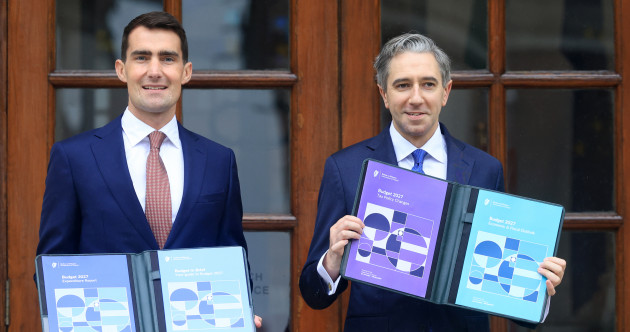
The Minister for Finance was speaking on his way into Government Buildings, where talks are taking place to finalise Budget 2027, which will be delivered on Tuesday afternoon.
He also said the government wants to help first-time buyers, but that his views on exempting them from stamp duty have not changed.
Submissions on housing and tax matters are understood to have been submitted to the Department of Finance, with some within the government hoping that some tinkering can be made on stamp duty for first-time buyers.
Harris has repeatedly said it will not be scrapped, but it is understood some are arguing for a cap on the charge. However, Fine Gael sources have said this is “unlikely” as of now, but Fianna Fáil sources state there’s still something on the table to consider.
Taoiseach Micheál Martin has said he has a “favourable disposition” towards scrapping stamp duty for first-time buyers.
But Harris has previously said abolishing stamp duty for first-time buyers would be a “bad measure” and a “tax cut for developers”.
Speaking to reporters today, he said: “I’ve made my views clear on that. I haven’t changed my views in relation to that.
“The government is ad idem here in terms of wanting to take measures to help people, including helping young people trying to buy a home.”
When pressed on whether discussions were still taking place on stamp duty or whether it was dead in the water like the culture card proposal from culture minister Patrick O’Donovan, Harris said:
“The culture card is not dead in the water. Just to be clear, the culture card is a good idea.”
He repeated that the government wants to help first-time buyers.
“We’re seeing a significant number of new homes being built, we’re seeing a significant number of people draw down their mortgage for their first-time home. The government, of course, wants to build on that.
“There isn’t commitments in relation to the Programme for Government or in stamp duty, but I’ve been very clear in all my comments in relation to this. Everybody’s acting in good faith in terms of trying to bring forward ideas.”
It’s understood O’Donovan clashed with public expenditure minister Jack Chambers over the culture card, with some reports that he walked out of a meeting following a heated discussion.
Some sources said they wouldn’t describe it as a walkout but that the arts minister was told his budget allocation request was “too high” and therefore there was no real basis for any further discussion on the voucher matter.
It is understood O’Donovan was asked to resubmit his idea with a reduced price tag.
However, other sources have indicated that the proposed measure might not happen at all now, though the minister is pushing for the voucher to be introduced in some form.
Introducing the €100 voucher could cost between €7 and €8 million.
Harris said the budget was coming at a time when the Irish economy is very strong, but the world economy is “extraordinarily uncertain”.
“That’s really something we’ve got to balance, making sure that we can deploy some of the strength of the Irish economy to help people in the here and now, while also never doing anything which mortgages the next generation’s future.”
He said the priorities were “making work pay and trying to help people in the here and now, delivering a meaningful change in relation to childcare and good progress in relation to the Programme for Government commitments that we want to deliver with the term of government”.
Harris also pointed to helping people with the cost of energy.
“There is no government in the world that can insulate people fully from global energy shocks. This government has had an ability to do more than pretty much any other in the European Union, and we will do more tomorrow.”

To embed this post, copy the code below on your site














have your say