Sign in. It’s quick, free and it’s up to you.
An account is an optional way to support the work we do. Find out more.
Sign in. It’s quick, free and it’s up to you.
An account is an optional way to support the work we do. Find out more.

The Housing Essay is a new weekly deepdive from a rotating variety of voices into issues impacting the property crisis in Ireland. Are there potential solutions that may be currently overlooked or traditionally ignored by policymakers?
Discuss Convent Lands.
Three words chalked on the walls of our ‘anois agora now’ art exhibition back in 2024. Three words we have pondered over and over since, wondering why we as a society have largely turned a blind eye to church land for so long. These three words led to us meeting with Mother and Baby Home survivors and campaigners, who showed us around many empty and decaying religious sites in Cork.
Through this, we’ve seen first-hand how convent lands, and wider church lands, have been left to rot while people go without a home or community space to socialise, play and create.
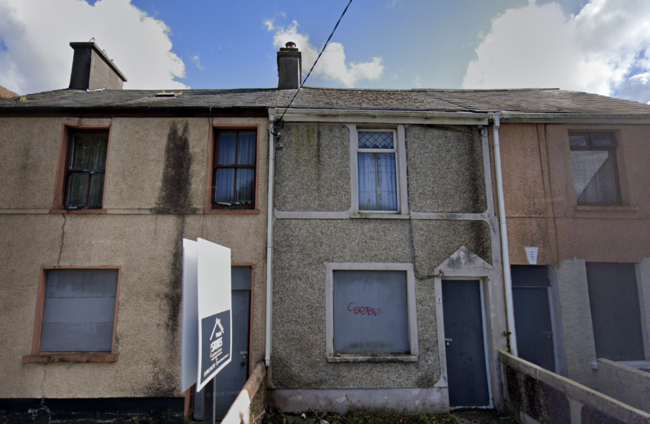
The wastage of these former church properties and land is another great example of why we urgently need compulsory sales and custodian squatting as we wrote in our “use it or lose it” essay. A perfect example of where these measures could be used, are the three derelict homes in Cork’s wealthy suburb of Blackrock, just in front of St Michael’s Church.
We don’t know how long these three homes have been left empty, but it’s been long enough for them to become derelict, which is not a quick process. Boarded up by 2021, these three homes were officially registered as derelict by Cork City Council in 2023, the same summer the owners, Diocese of Cork and Ross, said “they prioritised the houses”.
Prioritising seemed to mean putting the homes up for sale. Yet three years later these homes are still not sold. The church placed the blame for the delays on title issues.
Despite the church’s ambitions to sell these three homes, they recently announced they would object to Cork City Council’s Compulsory Purchase Order (CPO).
If the Diocese of Cork and Ross do not want the Council to own these three homes, who
do they expect will buy all three together? Hardly essential workers, first-time buyers or
pensioners looking to downsize. Surely the most likely outcome is that the church will
sell to a private developer who will most likely seek maximum profit over affordability
or community needs.
Naively, you would expect Christian orders selling buildings or land to prioritise caring for those in need of a home, over the money a sales asset will raise. Surely it would be more caring to gift these homes to the council who can renovate them into forever homes for three young families.
Unfortunately, history has shown us what institutes in Ireland are capable of doing. We were reminded of these ‘caring’ institutes at a National Rally on Saturday to stop the private development of the land of Bessborough, a former Mother and Baby home in Cork city. This is a prime example of religious orders prioritising greed over care.
It is estimated that 923 children and babies died at Bessborough under the ‘care’ of Sisters of the Sacred Hearts of Jesus and Mary. Some 859 of these are missing with no official records of where they are buried.
Developing any part of this site risks not just destroying the unmarked graves but removing families’ chances of ever laying these children and babies to a peaceful and dignified rest. Yet this is exactly what’s set to happen at Bessborough, with plans recently approved to build 106 homes.
The development of Bessborough shouldn’t come as a surprise, it’s been on the table for decades. For instance, hints of private development were strong when a large access road was built in early 2000s. The owners, the Sisters of the Sacred Hearts of Jesus and Mary, selling off plots of land at very high prices was a clear signal that development was going to strike. This wasn’t even that long ago. In 2021 the order sold off a plot, suspected of containing many unmarked graves, for €6.89 million to private developers.
After repeated planning refusals across the whole site it was only a matter of time until one got approved. Especially since the justification for approving planning of a development that contravenes the City Development Planning and zoning for Landscape Preservation, was the housing crisis itself, enabled by successive governments.
Yes, we urgently need more homes in Ireland but not everywhere is suitable to be a home. Especially when it comes to sites such as Bessborough, where moral suitability must be a critical consideration.
For years, campaigners have been trying to get the council or the state to buy Bessborough. In 2024 we advised one group of campaigners on how the Derelict Sites Act could be used to enforce a CPO there. Depressingly campaigners have faced uphill battles, closed doors and silence to any previous requests for the land to be CPO’d.
While it’s great to see so many politicians publicly supporting a CPO now, it’s heart-breaking that its taken this long for momentum to build. The survivors of religious abuse deserve to be treated with love, respect and care. We simply cannot allow homes to be built on top of the remains of babies, whose family never got a dignified goodbye or remembrance space they can mourn.
Yes, Michael Martin has finally said that “we need to do the right thing for all concerned”. It’s a pity he didn’t make sure the right thing was done years ago when it would have been much cheaper to buy Bessborough, like when it was for sale for €30 million in 2019. Any attempts to buy all the individual plots will be subject to a premium, now that the land’s value has been escalated with planning approval.
But worse than the financial costs are the emotional costs that fighting for years has had on all campaigners. Forcing these survivors to campaign and protest is so cruel. Last weekend’s national rally demonstrates the level of outcry and support for a CPO, while once again showing that it’s those who have been harmed the most who have to fight the most, even if it’s just for some basic dignity.
Of course the most caring thing for the Sisters to do would have been to gift all the land to state, to cover their contributions to the Mother and Baby Home redress scheme. But sadly the Sisters, whose headquarters (Motherhouse) is in the UK, not only sold the land in separate plots over years, maximising their returns, they still refuse to contribute to the redress scheme. Not exactly a model of care.
Bessborough and the three homes in Blackrock are not unique situations. All over the country, religious institutes are selling off land and buildings often to private developers. Land and buildings they most likely bought with donations from ordinary people. So why don’t these institutes ensure that these sales also benefit ordinary people, by putting conditions in place on what the lands/buildings should be used for, for example as social and affordable homes or as community centres.
With many churches closing, convents and monastery’s shrinking, isn’t it time that we have a national conversation about how religious-owned land and buildings should always be used for the common good and social justice. For this to be an effective conversation we need to know how much land is owned by religious institutes. Like everything to do with property in Ireland we simply don’t know the answer to this question. The last valuing of church land was nearly 20 years ago in 2009 where it was estimated to be worth €3.743 billion across just 18 congregations.
There will be many religious-owned sites that are suitable for conversion to homes, but for those that aren’t we need a caring strategy, especially at sites of abuse like Bessborough. At these sensitive sites, it should be the survivors deciding what happens there, not you and me and not civil servants and politicians and certainly not private developers.
Controversy surrounding religious land is not going to go away, so let’s stop ignoring it, let us have a caring conversation now about their future role in Irish society. We live with Dóchas that as a country we’ve learned from our dark past and can move forward with religious organisations demonstrating moral leadership rather than chasing more money and causing even further anguish and trauma.
Jude Sherry and Dr Frank O’Connor are founders of anois.org, ffud.art and #DerelictIreland. They are part of a series of writers, academics and economists penning a weekly essay delving into the housing crisis and potential solutions.
To embed this post, copy the code below on your site











have your say