Sign in. It’s quick, free and it’s up to you.
An account is an optional way to support the work we do. Find out more.
Sign in. It’s quick, free and it’s up to you.
An account is an optional way to support the work we do. Find out more.
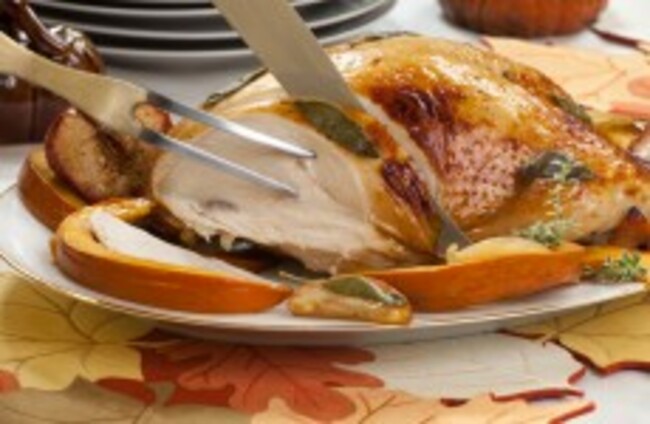
IN A COUPLE of days you’re going to be sitting at the table having the second-best meal of the year (Stephen’s Day beats it and you know it does).
Amid the spuds, veg and gravy will be star of the show – the turkey. But why are we settling down to eat a massive chicken on the most important day in the Christian calendar?
Turkeys are, natively, a North American bird, so their insertion into British and Irish Christmases is somewhat unusual.
The tradition is rooted, like many traditions, in practicality.
Turkeys were imported into Britain in 1526, being sold for a tuppence each. This made them far cheaper than chickens and far less useful than cows (who produce milk, which was handy).
But why the Christmas tradition?
Historian Max Shadbolt says that two British monarchs played a large role in this: Henry VIII and Queen Victoria.
Henry VIII is reputed to have eaten turkey at Christmas, but a lean spell followed in England under Oliver Cromwell and the bird fell out of use as a Christmas food.
Once Queen Victoria ascended to the throne, trade with the USA had reopened and turkeys became freely available in the UK.
Even that didn’t put them on every table. Being more expensive than goose, it was still considered a luxury – A Christmas Carol features Scrooge buying one for Bob Cratchit.
But as the Victorian era continued and families became larger, turkey became a practical choice for a meat. It was not expensive and could be guaranteed to feed a family (and any relatives who might call in) and leave enough to be eaten over the Christmas period.

To embed this post, copy the code below on your site










have your say