Sign in. It’s quick, free and it’s up to you.
An account is an optional way to support the work we do. Find out more.
Sign in. It’s quick, free and it’s up to you.
An account is an optional way to support the work we do. Find out more.
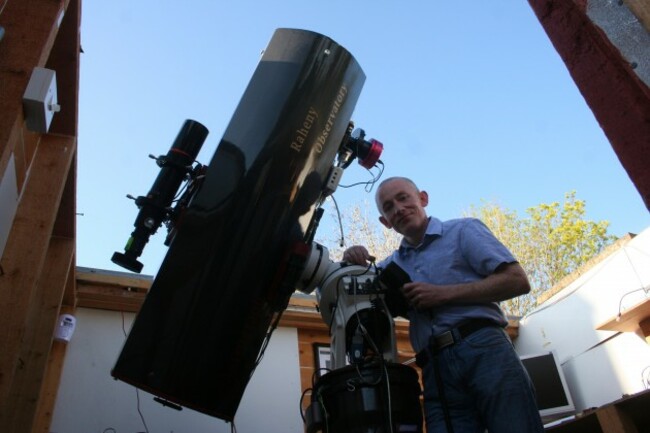
AN IRISH MAN has made his third supernova discovery – and this time, with a telescope he built himself from scratch.
Dave Grennan is an amateur astronomer living in Raheny in Dublin, who examines the skies from a specially-built observatory in his back garden.
He discovered his first supernova (a 290-million-year-old star) in 2010, and his second (which was named 212ej by the International Astronomical Union) in 2012.
Latest discovery
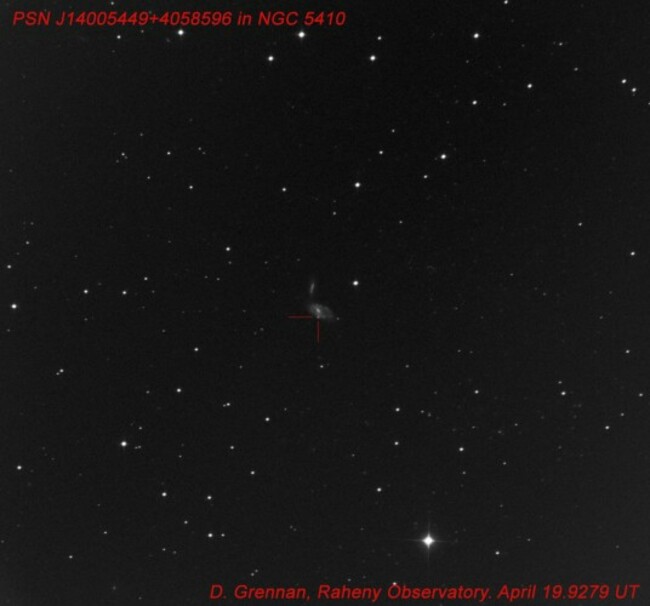
His latest discovery was confirmed as a type 1/c supernova by a team of professional astronomers in China, and designated Supernova2014as by the IAU on 26 April.
The explosion occurred in a galaxy over 170 quadrillion miles away called NGC 5410.
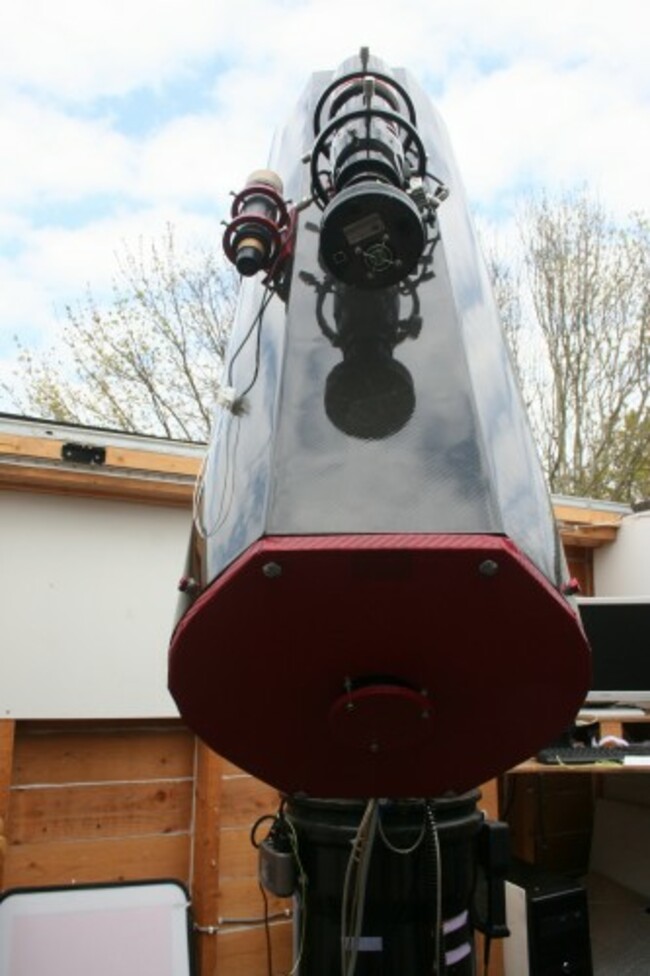
The discovery is particularly exciting for Grennan as he built the telescope from scratch over the period of a year.
“It’s certainly very exciting,” he said. “I don’t think it’s really sunk in yet. It was only yesterday that the final formal announcement was made.”
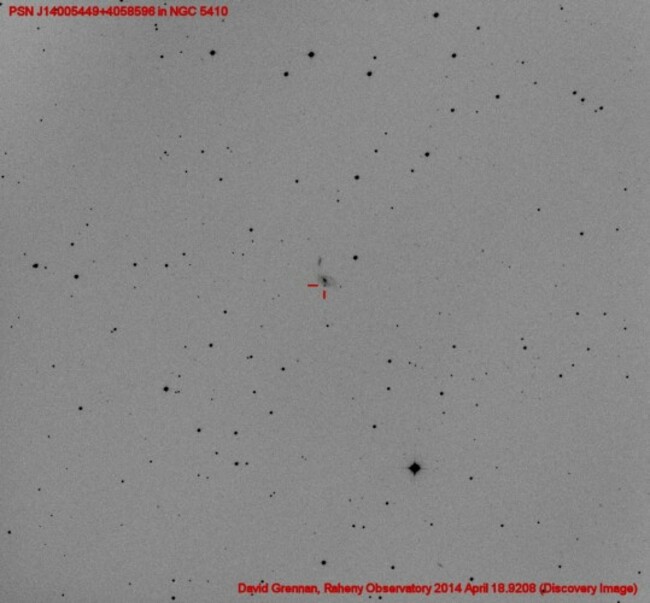
When he first made the discovery, he and his wife had a “nice strong cup of tea”, but Grennan hasn’t had time to celebrate with a glass of champagne, however.
What is a supernova?
For those wondering just why this discovery is so important, Grennan explained what a supernova is: “A supernova represents the dying moment of a Sun just like our own which explodes in a spectacularly violent manner”.
Even though this explosion happened 170million years ago, only now is the light reaching our planet. This particular explosion was caused when a star is robbed of its fuel by a nearby companion star. Without fuel it is unable to support it’s own weight and its core collapses causing an explosion which literally blow the star out of existence. Astronomers believe that explosions such may be leave behind ‘Black Holes’, regions of space so dense that even light itself can’t escape.
Grennan said that supernova explosions are important because “they help astronomers to get a better handle on just how old our universe really is and more importantly, what will be its final outcome. There is probably no bigger question in science.”
He noted that Ireland has a proud history of astronomers. “We once had the largest telescope in the world in Birr, Co Offaly,” he pointed out.
The astronomically aligned passage tomb at Newgrange pre-dates the Egyptian pyramids. Irish monks may have noticed a supernova explosion in 1054 and to this day Irish astronomers have developed a world-wide reputation for producing leading edge scientific research.
Inspiration
David Moore of Astronomy Ireland said that the discovery was “very exciting”. “The important thing is he’s methodically searching the skies,” said Moore, explaining how Grennan’s three discoverys demonstrate how amateur astronomers can contribute to scientific knowledge.
Astronomy Ireland is the biggest astronomy club in the world, relative to population. Irish people have a “vast interest in astronomy”, said Moore – and Grennan’s latest discovery proves that you don’t have to leave your back garden in order to make an impact.
Grennan works in IT by day, and said his computer skills have helped his astronomy work. “What the computers do for me is they sort out where I should look in the skies, where I have already looked, so I don’t look in the same place two nights in a row,” he pointed out.
People like Grennan can “contribute to the sum total of human knowledge”, said Moore.
“As an amateur that’s a great feeling to know that you’ve actually contributed in a real sense,” said Grennan. “Astronomy is one of those areas where amateurs and professionals work alongside each other.”
He hopes that his discovery might inspire some of the younger generation to follow a career in science.
“That way, we know the future will be bright for our knowledge-based economy,” he said.

To embed this post, copy the code below on your site












have your say