Sign in. It’s quick, free and it’s up to you.
An account is an optional way to support the work we do. Find out more.
Sign in. It’s quick, free and it’s up to you.
An account is an optional way to support the work we do. Find out more.
IT TAKES A certain kind of clothing shop to get people excited about buying plain t-shirts.
But reports that Uniqlo is preparing to open its first Irish store have prompted a fairly enthusiastic response online.
“Best socks and jocks known to man. Delighted,” wrote one Reddit user. Another offered a slightly less breathless assessment: “finally, somewhere to buy beige clothes!”
dublin gays right now https://t.co/Nb1kbECvRu
— Eoin Ó Catháin (@EoinKeane101) November 16, 2026
The Japanese retailer has agreed a deal for premises at 23–27 College Green, currently occupied by H&M, according to a report by Linda Daly in The Sunday Times.
The newspaper reported that Uniqlo had been seeking an Irish location since 2021.
So, what’s getting people excited about another clothing chain?
For fashion journalist Ruth O’Connor, the appeal starts with everyday basics.
“Uniqlo is known for its great quality basics at an affordable price point,” she told The Journal.
These are pieces that “wash well and act as easy separates for layering”, providing the basis for a capsule wardrobe.
There’s also an element of wanting what we can’t get here, which may be lost if the popular retail outlet opens a shop in Dublin.
“People like shopping in-store when visiting abroad and bringing home something that other people don’t have,” O’Connor said.
Alongside its outerwear and lightweight jackets that pack away for travel, O’Connor points to Uniqlo’s knitwear.
While it sells mixed-fibre clothing too, its range includes cashmere, merino wool and lambs wool pieces at prices she says help distinguish it from competitors, particularly in womenswear.
Whether a Dublin shop would match the prices Irish customers have paid online or abroad remains to be seen, O’Connor said.
Then there are the designer collaborations, including its partnership with Irish designer Jonathan Anderson, which dates back to 2017.
O’Connor said these allow shoppers to tap into a designer’s aesthetic without paying mainline prices, while limited-edition releases create anticipation.
“It means customers can show that they have their fingers on the style pulse even if the mainline collections of those designers are beyond their reach financially.”
O’Connor sees a distinction between Uniqlo and other clothing chains that are popular in Ireland.
“The brand is less driven by trends or influenced by designer catwalk collections than H&M or Zara,” O’Connor said.
Instead, she suggests M&S could see some customers drift towards Uniqlo for knitwear and basics.
“However Uniqlo doesn’t stock the same range of products as M&S on a wider basis – items such as footwear, a wide range of lingerie options, occasionwear or tailoring,” O’Connor added.
Clothes designed to get plenty of wear sound appealing, but that alone doesn’t answer questions about their environmental impact.
O’Connor points to sustainability ratings organisation Good On You, which gives Uniqlo an overall assessment of “It’s a start”.
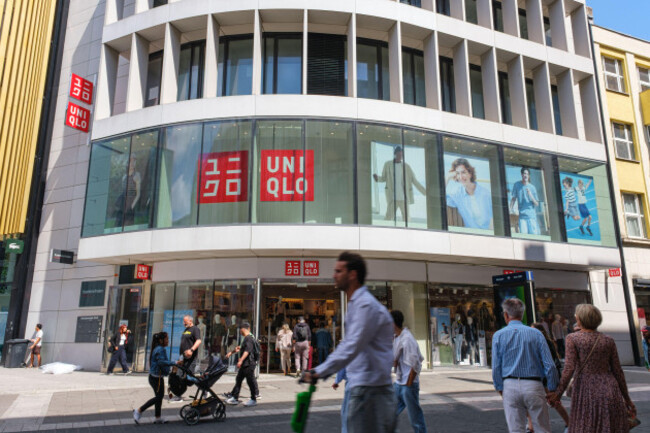
Its June assessment awards the company three out of five for environmental performance, four for its treatment of people and three for animal welfare.
The sustainability rating acknowledges lower-impact materials and emissions targets, while identifying gaps in evidence showing progress.
O’Connor said transparency remains a major problem across the fashion industry.
She added that Uniqlo provides information online about materials, manufacturing locations, sizing and garment care, helping shoppers make informed decisions.
“The more well informed the customer is, the better, and the company does provide
information (online at least) around sizing which can help prevent problems with fit -
something that contributes to the issue of large volumes of returns or unworn
garments being disposed of,” O’Connor said.

To embed this post, copy the code below on your site















have your say