Sign in. It’s quick, free and it’s up to you.
An account is an optional way to support the work we do. Find out more.
Sign in. It’s quick, free and it’s up to you.
An account is an optional way to support the work we do. Find out more.
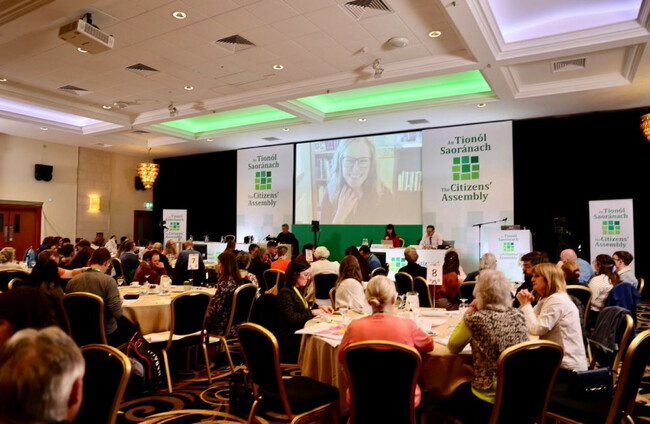
IRELAND NEEDS TO maintain its traditional peatlands and their rich biodiversity while supporting a just transition for those who solely depend on turf as a source of fuel.
That’s what a Citizens’ Assembly on Biodiversity Loss has heard as it concluded its fourth meeting with an in-depth discussion on restoring and regenerating Ireland’s peatlands.
Representatives from Irish Rural Link, Community Wetlands Forum, and Irish Peatlands Conservation Council told the meeting about the history and heritage of Irish bogs and about the importance of peatlands for Irish biodiversity.
Today’s session followed a meeting yesterday where the focus was on the voices and perspectives of farmers and rural communities around agricultural landscapes.
Speaking yesterday, the Irish Farming Association’s Environment Chair Paul O’Brien called for a “collaborative approach to nature conservation”.
He added: “Too often, this debate is dominated by extreme voices that don’t allow a mature discussion to take place. Farmers who are playing their part in improving biodiversity deserve recognition, not vilification.”
Speaking about the weekend’s meeting, the Chair of the Citizens’ Assembly on Biodiversity Loss, Dr. Aoibhinn Ní Shúilleabháin, described it as “one of the most intense and significant meetings of the Assembly”.
A range of speakers and representatives spoke about how they are managing the challenge of biodiversity loss through agricultural practices.
Dr Ní Shúilleabháin said: “It was crucially important that we heard from multiple angles in order to inform our recommendations that we will make in our final report.
“In particular the discussion on peatlands brought home to all of us the history and heritage of these special lands, and the need to value our heritage while also ensuring we protect the lands that will be left to future generations.
“As the Assembly is tasked with recommending solutions that will be implemented, this weekend’s discussions were a hugely important part of this process.”
The penultimate meeting of the Assembly will take place in three weeks and will focus on freshwater, marine, and the urban environment.
The Assembly is the due to complete its work by the end of the year, when it will send its final report and recommendations to the Houses of the Oireachtas.

To embed this post, copy the code below on your site














have your say