Sign in. It’s quick, free and it’s up to you.
An account is an optional way to support the work we do. Find out more.
Sign in. It’s quick, free and it’s up to you.
An account is an optional way to support the work we do. Find out more.

THE WORLD NEEDS an urgent regulatory framework to manage Artificial Intelligence (AI) and nations, including Ireland, must join together to achieve it, one of Europe’s leading experts has said.
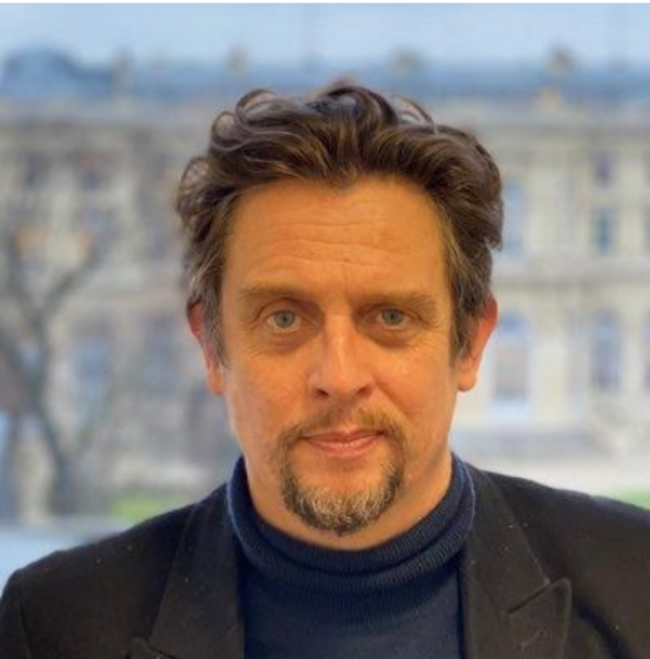
Henri Verdier is France’s Ambassador for Digital Affairs and on a recent trip to Ireland he sat down with The Journal to discuss the challenges around the rapidly growing AI ecosystem.
Verdier has a background in digital business and was an entrepreneur before taking up the role in 2018 of advocating for tech in the French Government.
In a wide ranging discussion he spoke about the need for a concerted effort by governments across the world to come together and form international laws that would govern the use of highly advanced tech.
“In a nutshell, I think that what is at stake is democracy itself. Do we have a democratic feedback? Are we comfortable with a future society that we will live in? That’s my main concern,” he said.
Verdier said that such is the pace of advances in AI and tech that he is tasked, by the French Government, to find a way to develop a coherent French position.
“I deal with AI, but I also deal with cyber security, with the European approach regarding digital infrastructure, with international cooperation, internet governance.
“The most important aspect in this field is that we need a strong European position.
“My belief is we don’t want to be trapped in a kind of new cold war between China and the US, and nor do we don’t want to embrace the Silicon Valley approach, nor the Chinese approach.
So as Europeans, we have to stick to our views on the way forward,” he said.
Verdier believe that “is quite an impossible mission”.
Key to that strategy is a “collective approach” in a “serious international conversation” about how to manage the innovation.
Verdier said that one aspect of human culture that may suffer in a future due to AI is indigenous languages.
“I was in India and Brazil recently and in those two countries, they have more than 2000 native languages.
“If they don’t have proper AI models for these languages, those languages will disappear because nobody will work with those languages. So if you are not a working language, you disappear as a language,” he added.
He said the move of ireland to declare its official language as Irish in European Parliament means that Irish is likely to be protected from this issue.
Verdier believes that to approach AI as merely an “existential risk” is an over simplification.
He believes that the advances in AI will assist medical care and scientific study dramatically but said that badly drafted regulatory frameworks could stop that.
“We need to regulate but we need to regulate in the way that encourage innovation and not build burdens to innovation,” he added.
Verdier believes that regulations must be “smart and small” meaning that they are drafted in an uncomplicated way.
He used the example of the international agreement that established use of the Suez Canal as being seven pages long and said that the Channel Tunnel treaty that established the link between Britain and France was 7,000 pages.
“That is bad regulation, it needs to be much more direct,” he added.
Regardless of his wishes he said there is a need for Europeans to realise that they need to be willing to negotiate with big corporate entities in the tech world.
Verdier believes one of the first steps in the regulation is to reduce the risk of an AI monopoly by companies and to ensure that there is a public sector basis to it.
He said that there are signs of hope and in his meetings with major companies in Silicon Valley and elsewhere there are positive noises to address the issue and he believes it is achievable to get a global framework for regulation of AI.

To embed this post, copy the code below on your site














have your say