Sign in. It’s quick, free and it’s up to you.
An account is an optional way to support the work we do. Find out more.
Sign in. It’s quick, free and it’s up to you.
An account is an optional way to support the work we do. Find out more.
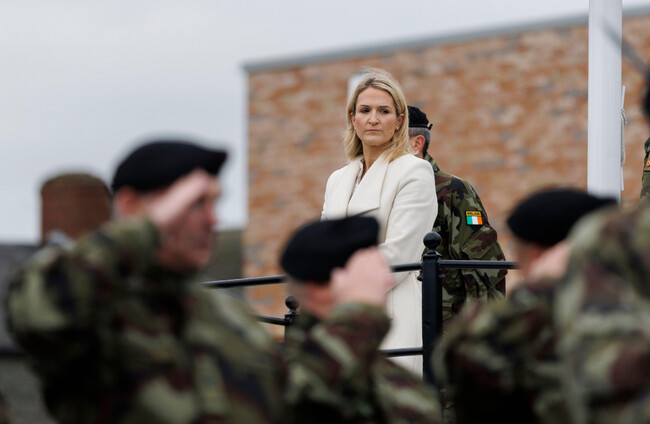

MINISTER FOR DEFENCE Helen McEntee has said that she will not accept an amendment from a government colleague to legislation to remove the triple lock as it could “tie” Ireland into only missions with UN General Assembly agreement.
Last Friday, the foreign affairs and defence minister said she would consider an amendment put forward by Fianna Fáil’s Willie O’Dea.
The Limerick TD, along with nine other Fianna Fáil TDs, is supporting the proposed amendment which would require de facto approval from the UN General Assembly, but not the Security Council, when Irish troops are being sent abroad.
The triple lock currently means that Ireland must satisfy three protocols before it deploys more than 12 troops abroad on a mission. There must be a UN Security Council agreed mandate, agreement of the cabinet in Dublin and a vote of the Dáil.
The government is moving to drop the need for a UN resolution to send military personnel on a mission abroad. Under its desired plan, a mission of fewer than 50 personnel could be signed off by agreement of the cabinet, and a mission of 50 personnel or more would require the approval of the cabinet and a vote in the Dáil.
Those in opposition to removing the triple lock believe it is at least an attack on Ireland’s commitment to multilateralism and at worst an effort to rid the country of its supposed neutral status.
The government view is that the triple lock is an unnecessary mechanism that puts foreign troop deployment decisions in the hands of the UN Security Council’s permanent five members with a veto: Britain, Russia, China, the United States and France.
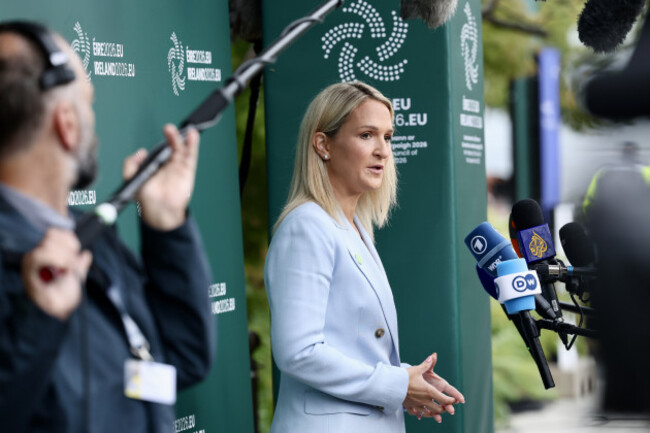
McEntee, speaking to The Journal this morning at an EU Presidency event in Dublin, said she will not accept O’Dea’s proposed amendment.
“I’ll bring forward my own amendment that will essentially reflect, I think, everybody’s desire that we maintain, in so far as possible, that connection to the UN,” she said.
McEntee added that her own preference was that any foreign deployment of Irish military personnel would be on a UN-mandated mission, and she said “that is not going to change”.
McEntee said that UN missions with a mandate are reducing in number and the ability for Irish soldiers to participate in peacekeeping missions was proving more and more difficult.
When asked if the O’Dea proposal was a Triple Lock 2.0, the minister said that it would not be an appropriate measure.
“What I’m proposing to bring forward is that where there is a General Assembly resolution based on perhaps a mission that might be proposed in the future, that we would have regard to it.
“But I do not see how we could tie ourselves to requiring a UN General Assembly [resolution] when what we are trying to do is remove the requirement for a Security Council mandate for the very same reason. It does not give us the choice.
“If we are left in a situation after the change to this legislation where we still require something that doesn’t give us as a country the absolute choice and decision as to where we send our troops, then the objective of it will have failed,” she added.
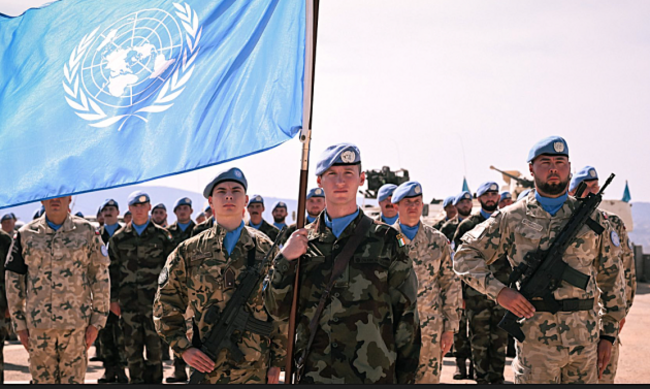
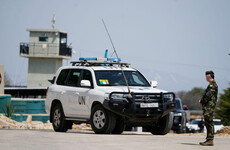
Separately, the minister said she is monitoring the security situation in Lebanon as Irish troops begin the work for their withdrawal in the new year as UNIFIL comes to an end.
The UNIFIL mission is ending after 48 years after the US withdrew its support for the renewal of the mission at the UN Security Council. The Washington decision came after lobbying by Israel.
In recent days there have been reports of gun battles breaking out in Beirut’s southern suburbs between armed people in the Hezbollah stronghold of Dahiyeh and the Lebanese Armed Forces. It comes as Hezbollah kick back against Lebanese government proposals for its disarmament.
A group of Irish soldiers returned to Dublin today unhindered by the apparent violence that erupted on Thursday morning.
“Unfortunately, we’ve seen over decades in Lebanon that the security environment can change, and that it is extremely volatile.
“Yesterday is not inconsequential. At the same time, we know it is a volatile environment, and it’s something that we need to continuously monitor.
“[The Defence Forces] ambition is obviously to make sure that we withdraw from Camp Shamrock, from UNIFIL in the south, in a safe and orderly way in the coming weeks, and that is our focus and our priority for the coming weeks,” she said.
UNIFIL anticipates closing the gates of its various bases in south Lebanon in early in 2027.

To embed this post, copy the code below on your site








have your say