Sign in. It’s quick, free and it’s up to you.
An account is an optional way to support the work we do. Find out more.
Sign in. It’s quick, free and it’s up to you.
An account is an optional way to support the work we do. Find out more.
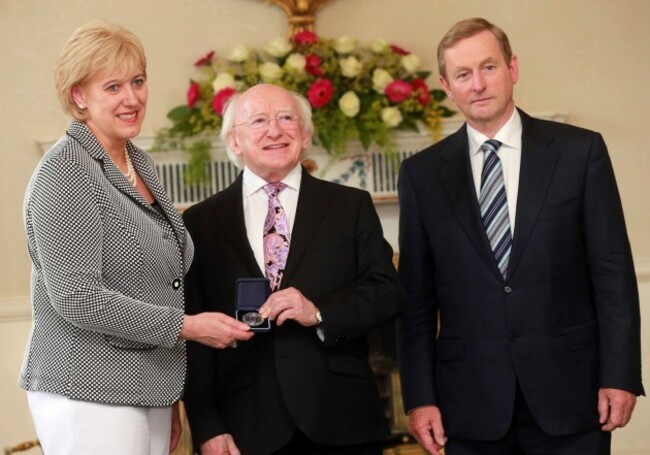
THE DEMOTION OF Jimmy Deenihan last week as Minister for the Arts, with Heather Humphreys, a relative unknown, stepping into his shoes was further proof to some that the arts portfolio was again being sidelined.
Described by some as the “consolation prize” in Cabinet it was argued that it was the “booby prize” of the reshuffle.
One win for the Department of Arts, Heritage and the Gaeltacht was that it was retained in its current format, despite speculation that it could be broken up.
But why is this department being undermined? With €123 million allocated for arts, culture and film, including €56 million for the Arts Council and €14 million for the Irish Film Board, the budget is not to be shrugged at.
Revenue
The Arts Council maintains that revenue from the arts is generated through taxation channels which include tax receipts from income earned (PAYE/income tax, PRSI and other payments on wages and salaries) and indirect tax receipts including VAT and excise duties.
The Assessment of the Economic Impact of the Arts in Ireland published in 2011, shows that contributions to the Exchequer from the wider arts sector through total direct and indirect tax revenue amounted to €306.8 million – €3.9 direct taxation and €252.9 million in indirect taxation.
An OECD report on Tourism Trends and Policies in 2012 found that since 2006 the numbers employed in the arts, entertainment and recreation sector in Ireland have been on the rise. Domestic tourism consumption of cultural services generated €209 million, while inbound tourism consumption for Ireland accounted for €197 million.
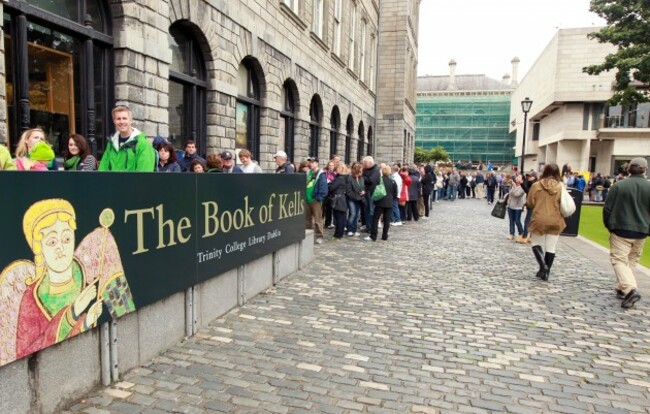
A lot has to be said for the pushing of ‘Brand Ireland’ in terms of bringing in revenue. This is something the Department of Arts, Heritage and the Gaeltacht with their Statement of Strategy for 2011–2014 stating their aim is “to promote and develop Ireland’s world-class artistic and creative strengths at home and abroad, maximising their societal, economic and reputational value for the country”.
The arts
It all sounds like the arts in holding its own, so why is the arts portfolio not being taken seriously in political circles?
Arts Council Director Orlaith McBride said that the retention of a full Cabinet for the arts is very significant, showing that the arts is being given recognition that it is an important aspect of Government.
She welcomed the appointment of Humphreys, stating that the council did not view it as “demotion” for the arts.
In terms of justifying their contribution to the economy, McBride said that the Arts Council is no different than any other body. “In 2008, 2009 onwards there was a huge push for the arts to validate itself and the contribution it makes to Irish society in economic terms. Rightly so. There was a significant contraction in public resources, an unprecedented one in every way, and every sector was attempting to us economics to validate its own existence,” she said.
Ireland’s saviour?
In the height of the downturn when the best and brightest minds gathered in Farmleigh to come up with some innovative solutions to help Ireland out of the mess, the message that emerged was that the arts could be the saviour.
The 2009 report from the Global Irish Economic forum forcefully argued that the arts and culture was an “asset should be harnessed as a unique brand identifier, a significant employer and selling point for Ireland abroad”.
Speakers focused on the concept of branding, noting the strength of ‘Brand Ireland’. The arts and culture were identified as having a key role to play in this process, with participants strongly arguing that the arts were no longer a luxury or a charity, but are a hugely important part of the economy, a ‘real’ industry employing 300,000 people. It was acknowledged that the contribution to the economy is often overlooked.
So, was this message lost along the way?
This year there was a reduction of approximately €16.9 million (7%) in exchequer funding to the Department of Arts, Heritage and the Gaeltacht.
McBride argued that the value of the arts can not just be looked at in terms of the national Exchequer. Unlike some departments, it can be difficult to quantify the arts, but should that make it any less of priority for Government? There is a far reaching aspect to what the arts has an impact on, she said.
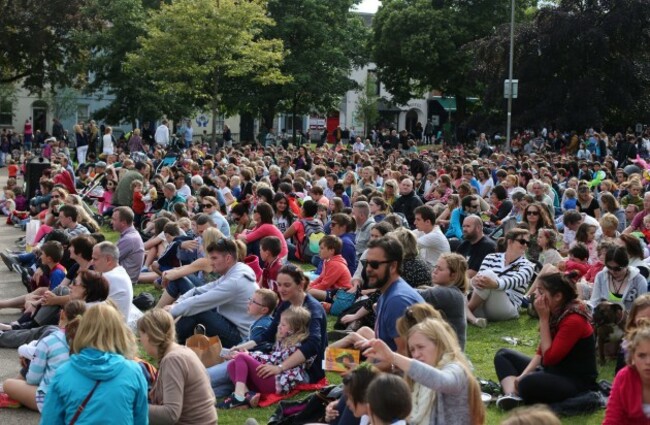
The local economy being one. “Half a million goes to the the Galway Arts Festival and this amount can absolutely be validated for them as it provides €21 million to the local economy,” said McBride.
The value of the arts
She said that recently there has been a return to the “intrinsic value of the arts” and a move away from talking about “the arts” but putting it in the perspective of “creativity and culture”.
“There has been a lot of discussion about a third space,” she said, adding that the focus is on people, the arts and the community. The arts doesn’t have to be boxed in to the theatre, the opera, the ballet, it is about public engagement in public spaces, including it into the social fabric.
“When we look at society I suppose the arts makes a contribution in a number of areas – the national economy, the local economy, also the personal economy for the artist and from the savings to the public purse from the Arts Council in terms of tax revenue and PAYE and a lot more,” she said.
“The health and well being is what we are hearing from people who are engaging with us,” she said, stating that in terms of social engagement with the socially disadvantaged with the likes of youth groups and theatre there is evidence that access to the arts reduces anti-social behaviour.
“It needs to be more about engagement in the arts, the third space and above all, community, and and less about people thinking of ‘high arts’,” concluded McBride.
Ireland prides itself on its culture, history and heritage. For it to be held in such high regard by the people, perhaps politicians shouldn’t be so quick to write the department off?

To embed this post, copy the code below on your site















have your say