Sign in. It’s quick, free and it’s up to you.
An account is an optional way to support the work we do. Find out more.
Sign in. It’s quick, free and it’s up to you.
An account is an optional way to support the work we do. Find out more.
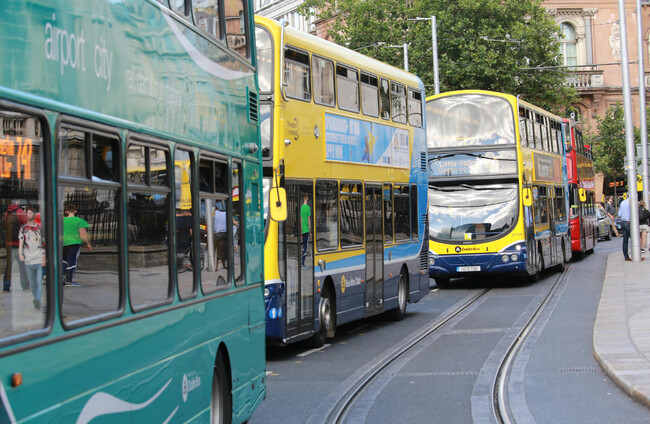
THE AVERAGE SPEED of Dublin Bus at peak times on weekday mornings was just 13.5km/h in October, the company said in a statement today.
Dublin Bus indicated the October average was slower than previous months, but could not provide other figures by way of comparison this afternoon.
The company noted that the TomTom global congestion report ranks Dublin as the 10th most congested city globally.
Dublin Bus spokesman Blake Boland said: “Issues with congestion still hamper our ability to move about the city freely.”
“Dublin Bus remains committed to delivering the service that a modern, 24-hour capital city like Dublin deserves,” Boland said.
He said Dublin Bus favours measures that will reduce congestion, including more bus lanes and amendments to routes.
The number of passenger journeys on Dublin Bus increased by 5% last year to 164 million. On a typical weekday, Dublin Bus carries around 500,000 customers throughout the city.
The busiest day of the year was Wednesday, 8 October, when 568,000 people boarded buses.
Stop 319 on Westmoreland Street was the busiest stop in 2025, with 1.25 million passengers using it.
It serves some of the city’s most frequent routes including the E1, E2, F1, F2 and F3.
The busiest route of all is the E1, which carried about 7.5 million customers in 2025. It’s a 24-hr route that operates between Ballywaltrim and Northwood.
Five more routes now provide 24-hour service through BusConnects, bringing the total number to 15.
The 24-hour routes were used by more than 11 million people this year between 10pm and 6am.
In its update today, Dublin Bus said electric buses now comprise 10% of its fleet. The first electric double-decker hit the road two years ago.
The National Transport Authority recently announced it would be changing Routes 23 and 24 from the city centre to the Finglas area, “in response to reliability issues and feedback from passengers and local representatives”. Heavy traffic was identified as the main cause for delays, as well as a general shortage of bus drivers.

To embed this post, copy the code below on your site













have your say