Sign in. It’s quick, free and it’s up to you.
An account is an optional way to support the work we do. Find out more.
Sign in. It’s quick, free and it’s up to you.
An account is an optional way to support the work we do. Find out more.

LAST UPDATE | 19 Nov
THE OIREACHTAS TRANSPORT Committee has told the government more speed cameras would make “such a difference” in tackling road deaths.
The Committee published a new road safety report on Thursday, which has the title: “The Urgent Need for Action.”
In the report they called on the government to reverse its decision not to adopt the recommendation for a 30 km/h default speed limit in built-up areas, with clearly justified exceptions where higher speeds can be made safe.
Fianna Fáil TD Shane Moynihan said local authorities are “well-placed” to make determinations on appropriate speed limits.
He said the local authorities need to make these determinations “as a matter of urgency”.
In October last year local authorities were instructed to implement 30km/h speed limits in built-up and urban areas “where appropriate” by 2027.
The report also said enforcement cameras on roads have been slow to arrive and called for the deployment of safety cameras under the National Safety Camera Strategy to be progressed urgently.
Murphy said though they don’t have an exact number of the amount of cameras they believe should be on roads, they are asking for “publication of an implementation plan in the new year”.
The report called for “much stronger custodial sentences” for deliberately driving the wrong way on a motorway.
It also noted that more people died on Irish roads last year than in any other year over the previous decade and that since 2019, road deaths have increased by 31% in Ireland but decreased by 15% across the EU.
There are 52 recommendations in the report in the “short to medium term”, including the establishment of an independent road safety commissioner to provide “oversight and accountability”.
Another recommendation is that the Department of Justice and Department of Transport examine the introduction of a new aggregated offence of dangerous driving for deliberately driving the wrong way on a motorway, “with much stronger custodial sentences”.
There has been an average of 77 recorded incidents a year between 2021 and 2025 of people driving the wrong way on a motorway.
Meanwhile, another recommendation is that motorway and rural road driving experience be included as part of the essential driver training, and that consideration be given to increasing the maximum sentence for dangerous driving causing death or serious bodily injury from 10 years to 14 years.
The report also calls for proposed legislation providing for the recognition of the loss of a pregnancy resulting from careless or dangerous driving to be progressed and enacted.
The proposed legislation, known as Jax’s Law, seeks to recognise a stillborn baby as an individual victim of a road traffic collision.
Speaking on RTÉ’s Morning Ireland, Transport Committee vice-chair Shane Moynihan commented on the recommendation for a road safety commissioner.
He said representative groups had responded that there are a lot of agencies involved in the delivery of road safety policy and actions, “but there’s no one single body on an ongoing basis that is providing that overall oversight for accountability”.
“What we’re trying to do is get over that idea of the fragmentation of responsibility and allow for that single point of consistent oversight of delivery and accountability, obviously under the political leadership of the minister of the day,” said Moynihan.
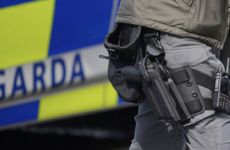
There is also a recommendation that the garda roads policing unit be restored to 2009 levels.
Moynihan said this should be done in lockstep with a faster rollout of safety cameras.
“This is about consistent enforcement, and where we can use technology to enhance the role of An Garda Síochána we should do that, notwithstanding the need to increase the size of the roads policing unit to the level that it was at back in 2009.”
Moynihan added that Ireland should move to “cameras being a feature of our roads” and that they should be used to enable “other aspects of road safety breaches”, such as implementing HGV restrictions in residential areas.
Susan Gray is the founder of PARC, a charity advocating for road safety and road traffic victims.
Also speaking to Morning Ireland, she said a potential road safety commission would “need to be totally independent, with total powers to hold all the relevant agencies to task if they don’t do their job properly”.
Gray added that “we need to see all the roads policing units assigned more gardaí”.
“We had over 1,000 in 2009, we have 669 now, that’s not good enough.
“We really need to see gardaí assigned to this specialised unit nationwide, and more visibility of gardaí on the ground, not just over the long weekends.
“People need to have the fear that if they break the law, they will be caught. That fear is not out there.”
One of the report’s recommendations spoke to this and called for “enforcement of road traffic law to be conducted on a routine and sustained basis rather than through periodic campaigns”.

To embed this post, copy the code below on your site












have your say