Sign in. It’s quick, free and it’s up to you.
An account is an optional way to support the work we do. Find out more.
Sign in. It’s quick, free and it’s up to you.
An account is an optional way to support the work we do. Find out more.
PEOPLE LOOKING TO quit vaping are being turned away from HSE-funded smoking cessation services due to a lack of capacity and funding for a dedicated vaping service.
This is despite the rise in people who use vaping products and wish to quit presenting to the HSE stop smoking services.
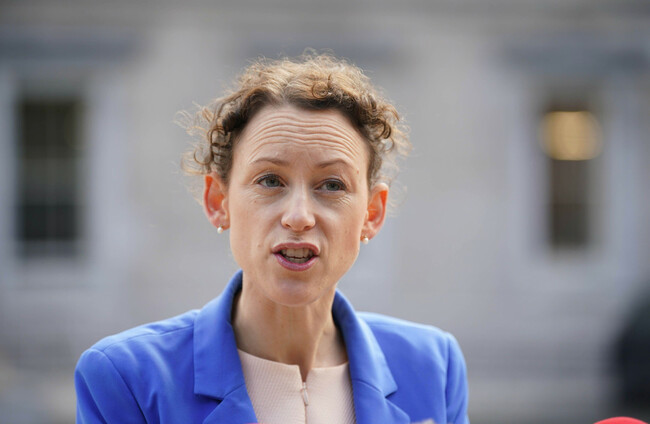
“We do not have capacity to deliver stop vaping care and are not resourced to do so,” Martina Blake, head of the HSE’s Tobacco Free Ireland Programme, told Labour TD Marie Sherlock in response to a parliamentary question.
The HSE Tobacco Free Ireland Programme was set up in 2016 to support people to quit smoking, as well as protect children and “denormalise” tobacco use for the next generation.
Under this programme, the Department of Health provides funding to the HSE to “oversee and deliver evidence-based stop smoking care”.
A Dáil debate on the use of vapes by young people is set to be held later today.
Legislation to ban single-use vapes and restrict flavours and packaging is currently being drafted by the Office of the Attorney General.
These bills have been prioritised for publication this year, a spokesperson for the Department of Health said.
Staff at stop smoking services have seen an increasing number of people “looking for support to quit vaping in conjunction with their tobacco use, as well as from clients who do not use tobacco and only use e-cigarettes and wish to quit,” Blake continued.
But “the HSE has not been directed or funded by the Department of Health to develop a stop vaping service”.
Such a service would require dedicated additional resources to examine the evidence on best practice, train and recruit staff and provide medications for e-cigarette cessation, Blake said.
A spokesperson for the HSE told The Journal that a business case and estimated bid for the development of this service has been submitted to the Minister for consideration.
Support, including nicotine replacement therapy, is available to people who are smoking and using vapes, but those who only use vapes cannot receive this help.
In some local services, behavioural support and advice may be provided to people wishing to quit vaping, a HSE spokesperson said, but these are only available where there is capacity.
“It is alarming that the Government is not keeping up with the trends or funding the HSE to support the public who wish to stop all forms of nicotine use,” Marie Sherlock told The Journal.
“We now see exceptional marketing by tobacco companies to get a new generation addicted to their other products,” she continued.
Though vapes don’t contain tobacco like cigarettes, they are still highly addictive due to their nicotine content.
The Journal Investigates reported on the addictive qualities of nicotine found in vapes in recent months. Our investigation also found that some vapes labelled as ‘nicotine free’ did in fact contain nicotine following HSE inspections and testing.
Professor Donal O’Shea, head of the Department of Chemistry at the Royal College of Surgeons in Ireland (RCSI), previously told our investigative team that nicotine can cause memory and concentration issues as well as impact how the brain develops.
“It’s not a problem until you try to stop,” he said, adding that nicotine addiction is still greatly underestimated by the general public.
Irish tobacco businesses are also increasingly turning to vaping as a way to mitigate falling sales from smoking.
“We have a generation of people who have never smoked but who now have a nicotine dependence and who may be at risk of smoking into the future,” Sherlock added.
Back in 2013, the government set a target to have a smoking prevalence rate of less than 5% by 2025.
But the Healthy Ireland Report in 2024 found that 17% of the population are still smokers, showing that this target has been “abysmally missed” according to Sherlock.
“Progress has now stalled alongside the emergence of novel nicotine products such as flavoured vapes and nicotine pouches,” she continued, calling on the Minister to “step up and bring Ireland back on track”.
Funding for a “youth vaping prevention media campaign” was provided in Budget 2025, a spokesperson for the Department of Health said. It is currently being developed by the HSE and will “provide evidence-based messaging to young people and their guardians”.
The HSE QUIT service has advice and tips on how to quit vaping available online.
—
Conor O’Carroll is an investigative reporter with The Journal Investigates.
Our investigative unit is dedicated to lifting the lid on how Ireland works. This takes time and it takes resources. Find out how you can help:

To embed this post, copy the code below on your site
















have your say