Sign in. It’s quick, free and it’s up to you.
An account is an optional way to support the work we do. Find out more.
Sign in. It’s quick, free and it’s up to you.
An account is an optional way to support the work we do. Find out more.
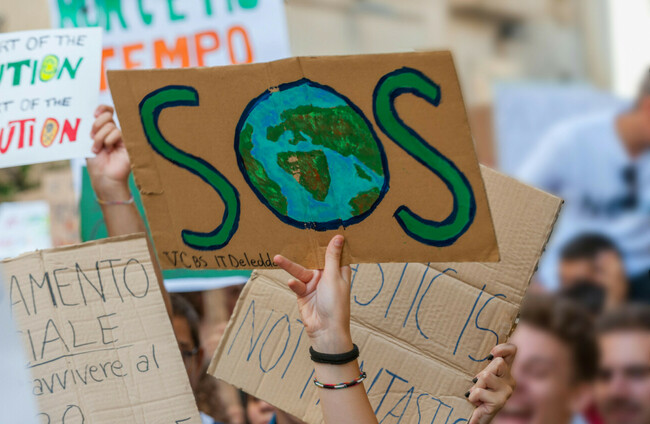
FRIENDS OF THE Irish Environment, an environmental group, has said that it is “disappointed” at the outcome of a High Court judgement in a case it brought against the Irish government, the Minister for Climate and the Attorney General.
The group had argued that the government failed to clearly outline a plan for how it will keep Ireland’s emissions within legally-binding carbon budgets.
Friends of the Irish Environment (FIE) was represented by Community Law and Mediation. It challenged the government’s 2023 Climate Action Plan in the High Court at the end of January.
In a statement released this evening, the group said that “important clarity” has however been provided on the government’s obligations when developing climate plans, under the Climate Action and Low Carbon Development Act 2015 (as amended).
FIE had argued that the 2023 Climate Action Plan 2023 and its Annex of Actions fail to demonstrate with sufficient specificity how emissions will fall in line with Ireland’s carbon budgets.
It said this amounts to a breach of the government’s legal obligations under the Climate Action and Low Carbon Development Act 2015.
The carbon budgets, which were signed off in 2022 are are legally binding, set out the amount of greenhouse gas emissions that Ireland may produce over several five-year periods with an objective of putting Ireland on track to climate neutrality by 2050.
Ireland’s Climate Action Plan and an associated Annex of Actions is published annually and is supposed to set out a roadmap for Ireland staying within that period’s carbon budget.
However, FIE argued in the High Court that the 2023 Climate Action Plan and Annex of Actions does not comply with several requirements in the Climate Action and Low Carbon Development Act 2015.
It argued that the State has not “ensured” that the plan is “consistent” with the carbon budget programme, contrary to the requirements of the 2015 Act.
“This judgment comes at a time when the country grapples with the severe impacts of Storm Éowyn and as Ireland’s greenhouse gas emissions are projected to significantly exceed the legally binding carbon budgets for 2021-2030,” the group said.
“Ireland’s emissions are the second highest per capita in the EU, and they are not falling quickly enough. Storm events are increasing in Ireland, and rising sea-levels will intensify the impact of storms on coastal communities.
“Recognising the severity of the climate crisis, the Court highlights that ‘urgent and significant additional action is required’.”
This case is the first of four legal challenges of the government’s performance on climate action.
With reporting by Lauren Boland

To embed this post, copy the code below on your site
















have your say