Sign in. It’s quick, free and it’s up to you.
An account is an optional way to support the work we do. Find out more.
Sign in. It’s quick, free and it’s up to you.
An account is an optional way to support the work we do. Find out more.

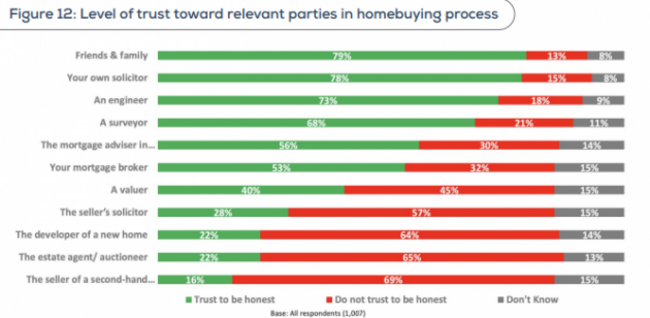
DEVELOPERS, ESTATE AGENTS and sellers are second hand homes are the least trusted actors in the homebuying process.
However, most people trust their friends, family, and their own solicitor.
That’s according to a new report from the Competition and Consumer Protection Commission (CCPC).
The CCPC said the research highlights that the “biggest pain points for buyers” relate to a lack of information.
A spokesperson added that buyers are often left “confused and frustrated in limbo due to lengthy delays”.
A sample of 1,007 past, present and aspirational homeowners were surveyed for the report.
Only 16% trust the seller of a second-hand home and just 22% trust the estate agents or the developers of a new home.
Friends and family were the most trusted source of information at 79%, followed closely by the buyers’ solicitors and engineers, at 78% and 73% respectively.
The research also showed that consumers want more information earlier in the process, with 78% agreeing that if a potential buyer asks a question about a property, the estate agent should have to identify and disclose the information to other buyers.
The CCPC noted that home buying in Ireland can be a complex process with many steps, and only 16% think that the current system is “transparent for buyers”.
Meanwhile, close to 30% of homeowners discovered something after the sale that they wished they had known about the property, its contents or the surrounding area before buying their home.
And over half (57%) of those who made such a discovery reported that they would have lowered their offer or withdrawn completely if they knew about the issue before the sale closed.
The CCPC noted that in Ireland, the sale of residential properties follows the principle of ‘buyer beware’, meaning it is the buyer’s responsibility to investigate a property’s condition and legal status before making the purchase.
It said that this highlights the importance of “clear, accurate and timely information at every stage of the process”.
“The effectiveness and transparency of this information from estate agents, solicitors and public records are vital in reducing risks for buyers,” said the CCPC.
In order to improve the homebuying process for consumers, the CCPC said it has identified several actions that could be taken.
These include calling on the Government to legislate for the requirement of pre-sale information to avoid delays and possible sales falling through, and to create a new conveyancing profession to enhance the efficiency of the legal process.
Meanwhile, the CCPC said it will enhance its homebuyers’ guide and include advice on what questions to ask at various points in the process.
It will also develop guidance for estate agents and developers that will help provide more and better information to homebuyers.
Simon Barry, director of research, advocacy and international at CCPC said that buying a home can be an “incredibly complicated and lengthy process”.
He said the CCPC research shows that “homebuyers find it difficult to know what questions to ask and aren’t sure where to find the information they need”.
He added: “The legal principle of ‘buyer beware’ puts the responsibility of gathering the necessary information about a property into the buyer’s hands.
“Therefore, the CCPC is calling for that information to be more accessible to buyers much earlier in the process. This will empower them to make more informed decisions.”

To embed this post, copy the code below on your site















have your say