Sign in. It’s quick, free and it’s up to you.
An account is an optional way to support the work we do. Find out more.
Sign in. It’s quick, free and it’s up to you.
An account is an optional way to support the work we do. Find out more.


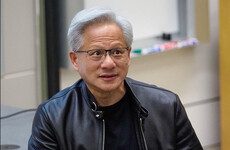
NVIDIA’S JENSEN HUANG is one of the most recognisable CEOs in the world. His trademark leather jacket has become almost as famous as the company itself. In recent years, he has become a ubiquitous face of the AI revolution, and one of its more persuasive salespeople.
In the past few weeks, Huang’s personal life has been thrust into centre stage after reports of extramarital relationships and a potential foreign intelligence spy plot. News of the initial alleged affair wiped $400 billion (€363.97 billion) off the company’s market value in a matter of days, prompting a global media firestorm, and a diplomatic and economic chain reaction that had many fearing the start of an AI bubble bursting.
NVIDIA responded swiftly. Within the first 48 hours of the story breaking, Huang publicly apologised to his family and colleagues, and NVIDIA’s board launched an independent investigation. Huang subsequently resigned, with CFO Colette Kress named interim CEO. However, earlier today, the board performed a dramatic U-turn, reinstating Huang as CEO with immediate effective.

The ongoing story has raised questions about corporate governance, national security and critical infrastructure, shareholder value, workplace relationships and corporate leadership.
While the episode continues to play out, it has also prompted a more fundamental question: when is it appropriate for a company and its chief executive to part ways?
Huang is not the first CEO to trip himself up in this manner. Nor will he be the last. In 2025, a previously under-the-radar Data-Ops company Astronomer was catapulted into the public consciousness when its CEO Andy Byron became one of the year’s most widely shared internet memes.
Byron was caught in a compromising embrace with the company’s chief people officer on the big screen of a Coldplay concert in Massachusetts. The video clip went viral, and he later resigned. The board said its leaders were expected to meet high standards of conduct and accountability, “and recently, that standard was not met.”

In the same year, Nestle CEO Laurent Freixe was dismissed after an investigation into an undisclosed relationship with a direct subordinate found it breached the company’s code of conduct.
In 2023, Bernard Looney stepped down as CEO of BP after admitting that he had not been “fully transparent” in disclosing “details of all relationships” he had with colleagues in the company. Essentially, trust was deemed to have been broken, and his position was untenable. However, there are countless other examples of senior executives emerging from such episodes largely unscathed.
In crisis comms terms, executive scandals are a unique beast. Partly because the very individual that an institution typically looks to for leadership in turbulent times is now the source of the strife.
More broadly, scandals of this nature can also take many forms, which means they’re difficult to anticipate or pre-empt. Where no law has been broken, it can be difficult to determine what qualifies as executive misconduct, versus mere unedifying behaviour.

This judgment is often subjective, informed by the short- and long-term financial impact of the crisis, the executive’s value to the business, its organisational culture, codes of conduct and risk appetite, the impact on employees, investors and customers, and the wider cultural mood music of the time.
Boardroom politics can also influence the response; who stands to gain from the ousting of a senior executive? Will they be emboldened – either publicly or behind the scenes – to make a power grab while the incumbent is on the back foot?
Amid these competing considerations, the board’s central question is whether the CEO still has the trust of key stakeholders and can credibly lead the crisis response. Each group will approach the crisis from a different perspective, though their concerns may overlap. When a senior executive’s ability to credibly lead or reassure is undermined by the need to avoid embarrassing questions, skip media engagements, or dodge colleagues in the corridor, their credibility erodes. Their capacity to embody the company mission becomes compromised.
NVIDIA’s case is admittedly more complex than a personal scandal alone: the investigation concerns possible national security implications. Today’s board statement said it had received “input from senior levels of… Government” and was satisfied with Huang’s “candor” and ability to lead. It also said it was confident his return “poses no national security risk”, despite the ongoing status of the investigation.
Furthermore, the founder dynamic adds another layer of complexity. After 33 years leading NVIDIA, Huang’s identity and the companies are nearly inseparable; what is NVIDIA without Huang? This makes extracting the individual from the brand a balancing act. In such instances, the challenge is to be seen to communicate as separate entities, but also in tune. Throughout, NVIDIA and Huang appear to be successfully navigating this tightrope.
In his statement published on 17 November, Huang took responsibility for his personal actions; “I owe my family and all of you an apology”, Meanwhile the NVIDIA board’s messaging focused on clarity of action and market reassurance: “we expect the company’s operations… to continue without interruption.”

In Huang’s same statement, he said he would return if the board believed it was in the company’s interests. At the time, the board rejected this prospect, but a recent open letter to the board, signed by 200,000+ including Elon Musk amongst other prominent industry figures, put the question firmly back on the agenda. Overnight, President Trump weighed in, writing on Truth Social “I hope the board of Nvidia rehires Jensen Huang. It would be the best thing for the company, and also, for the U.S.A.”. His intervention appears to have provided the prerequisite green light for Huang’s return.
Huang’s case shows the powerful pull of a charismatic founder-CEO, particularly when the company’s identity is so closely intertwined with his own. From here, the board must now stand over its decision, demonstrate to external audiences – including the cynics – that the ongoing independent investigation remains credible and will be allowed to reach its conclusion, and that newly outlined national security oversight measures confirmed as part of today’s news, are meaningful and robust.
Reinstatement may settle who leads NVIDIA today. Whether it restores confidence in the board’s judgment will depend on whether stakeholders believe it reached its decision independently, and whether the investigation and new oversight measures provide credible accountability.
Paddy O’Dea is a director at communications firm Fenton Fitzwilliam.
To embed this post, copy the code below on your site







have your say