Sign in. It’s quick, free and it’s up to you.
An account is an optional way to support the work we do. Find out more.
Sign in. It’s quick, free and it’s up to you.
An account is an optional way to support the work we do. Find out more.
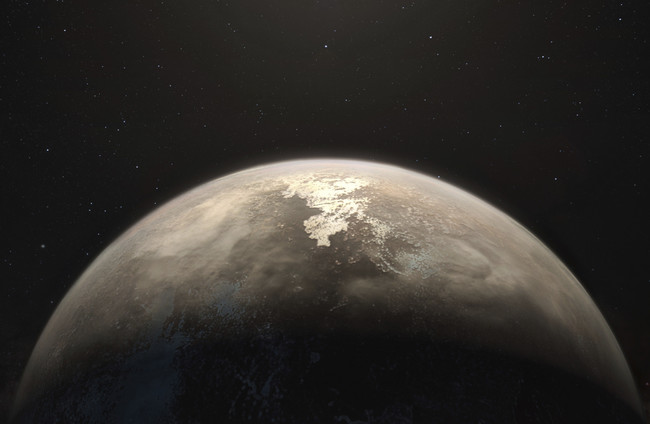
ASTRONOMERS HAVE DISCOVERED a close new world about the size of Earth, where a year lasts just under 10 days.
At a distance of 11 light-years, Ross 128 b is the second-closest planet to be detected yet outside our solar system with surface temperatures potentially similar to ours.
Ross 128 b is very near its star, thus the short orbit. But it doesn’t get broiled because the red dwarf star is cool. The star is also quiet, meaning no radiation flare-ups. That’s encouraging news for seekers of extraterrestrial life. The planet is believed to border the so-called habitable zone.
A team led by the University of Grenoble Alps’ Xavier Bonfils made the discovery using La Silla Observatory in Chile.
Co-discoverer Nicola Astudillo-Defru from the Geneva Observatory in Switzerland told BBC News:
“…we still need to know what the atmosphere of Ross 128 b is like. Depending on its composition and the reflectivity of its clouds, the exoplanet may be life friendly with liquid water as the Earth, or sterile like Venus.”
NASA’s exoplanet – planets outside of our solar system – count stands at 3,550.

To embed this post, copy the code below on your site













have your say