Sign in. It’s quick, free and it’s up to you.
An account is an optional way to support the work we do. Find out more.
Sign in. It’s quick, free and it’s up to you.
An account is an optional way to support the work we do. Find out more.
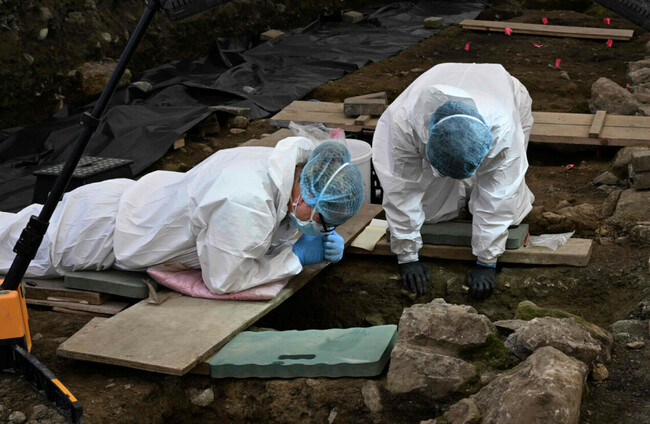
PEOPLE WHO HAVE reason to believe they may be a relative of a child who died at the Tuam Mother and Baby Home have been encouraged to come forward and provide a DNA sample.
The office responsible for the excavation of the site of the former institution, the Office of the Director of Authorised Intervention, Tuam (ODAIT), is seeking the samples in a bid to identify the remains of young children found buried on the grounds.
The excavation of the St Mary’s site in the Co Galway town is attempting to identify the remains of infants who died at the home between 1925 and 1961.
In 2014, research led by local historian Catherine Corless indicated that 796 babies and young children were buried in a sewage system at the Co Galway institution across that time period.
Archaeologists and other specialists started working at the site on 14 July last year.
ODAIT has taken 74 DNA samples from eligible family members to date.
The DNA samples together with the information gathered from the forensic excavation and analysis of the human remains will assist ODAIT “in attempting to individualise and identify the deceased”, the office said.
It said the process of identifying the human remains will be “hugely challenging” and is only possible with the support of the family members.
The total number of infant remains recovered from the site is 109, as of October. Investigators continue to work on the site.
The full list of 802 names of the deceased who are recorded as having died at the former mother and baby institution is available online. ODAIT has requested that if one believes they are a close relation of a child recorded as deceased, they come forward.
Likewise, if an eligible family member would like to object to the participation in the identification programme of another eligible family member, they can register their objection with the office.
Those eligible have until 24 September 2027 to apply to provide a DNA sample. Those who wish to object have until 26 February 2027.
The office’s director Daniel McSweeney said he wished to thank six family members who have taken part in ODAIT’s public information campaign.

To embed this post, copy the code below on your site











have your say