Sign in. It’s quick, free and it’s up to you.
An account is an optional way to support the work we do. Find out more.
Sign in. It’s quick, free and it’s up to you.
An account is an optional way to support the work we do. Find out more.

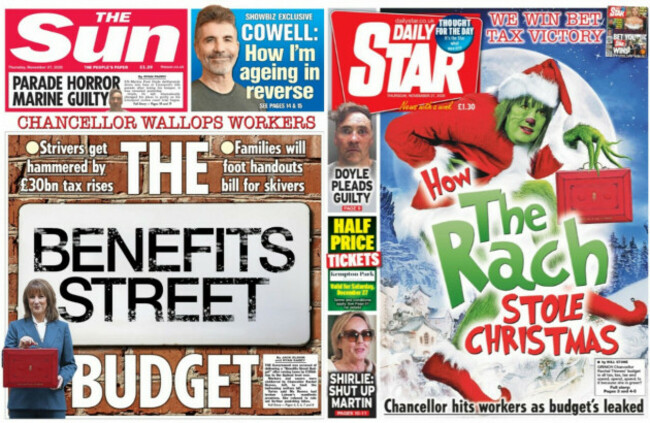
IT’S BEEN DUBBED a “mansion tax” and seen its author likened to the Grinch who stole Christmas, but would UK chancellor Rachel Reeves’ new charge on high-value homes work here in Ireland?
The measure had been floated in advance of Reeves’ announcement last week and was met with outrage by some segments of British society, the media and opposition parties.
Conservative shadow minister for housing James Cleverly told The Telegraph it was “an attack on aspiration and on people who have worked hard and saved hard, who will now have to pay for those who don’t work at all”.
The Sun, meanwhile, conjured images of “grannies being forced to sell up”.
Reeves defended the measure as a means of closing the UK’s yawning wealth gap and generating about £400 million in revenue by 2029-2030, although some economic experts criticised it for not going far enough.
The Journal spoke to two economists about the potential for the Irish government to introduce a similar tax here. Both criticised Ireland’s already relatively low Local Property Tax and the government’s reliance on increasingly precarious corporate tax revenue.
The High Value Council Tax Surcharge will apply to properties worth £2 million (€2.29m) or more starting in 2028.
People who own properties worth between £2m and £2.5m (€2.86m), will pay £2,500 (€2,864) a year, while those who own homes worth £5m (€5.72m) or more, will pay £7,500 (€8,592).
The charge will be paid in addition to already existing property taxes and Reeves said it tax would be increase annually in line with inflation.
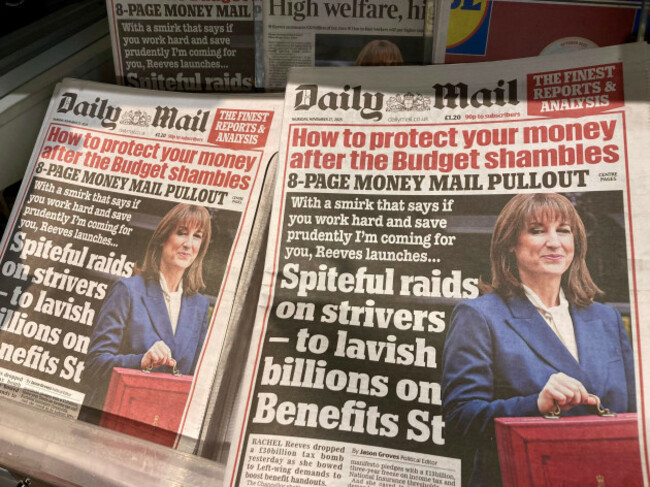
Reeves’ new tax is a straightforward way of taxing the wealthy, which has been decried by the Conservatives but also criticised as not guaranteeing much of a return.
“If you want to raise more tax from people with wealth, it’s probably the best way, or the least worst way of doing so,” said Barra Roantree, assistant professor of economics at Trinity College Dublin.
Property is not particularly mobile. It can’t go wandering.
It also comes with fewer implications for wider economic activity, he explained.
“You’re not going to deter investment in companies in the same way that you might if you’re, say, taxing businesses or business shares and equities and that. So it’s a reasonable way of doing that.”
Enda Hargaden, a lecturer in economics at UCD, said that the mansion tax will not make much of a difference to the overall health of the UK government’s finances because it will only affect less than 1% of homes and, as the chancellor said, it’s estimated it will bring in £400m a year, which is not much in the grand scheme of things.
“In this context, you can understand why the Institute for Fiscal Studies has dismissed the mansion tax as ‘not a serious solution’,” he said, referring to criticism from a prominent UK think tank that has criticised Reeves for not going far enough.
As for whether a UK-style mansion tax would be a good idea for Ireland, Roantree said it would not be necessary to emulate it directly because the Local Property Tax (LPT) is already applied progressively, meaning people who own higher value property pay more than those living in cheaper homes.
The issue he and Hargaden see is that recent Irish governments have weakened the LPT by widening the bands that properties fall into and by charging a rate that is low by international standards, particularly compared to the Council Tax in the UK.
The band expansions, Roantree said, were based on “bad logic” and “undermine” the tax itself.
Both analysts were critical of decisions made by successive governments that have been good to property owners but left the country’s finances in a precarious position.
It’s no secret that Ireland relies heavily on corporate tax revenue to fill its coffers, which has left the country’s finances vulnerable to shifting economic headwinds – and the whims of US President Donald Trump – which are outside the government’s control.
This tax policy has brought in substantial sums of money, but as Hargaden explained, “economists call this windfall ‘excess revenues’ because it won’t last”.
Property taxes are not an easy sell for political parties, especially those like Fine Gael and Fianna Fáil, whose support base is mostly made up of property owners. Actually, that’s putting it lightly, many people hate property taxes.
“Taxing family homes is obviously unpopular, but if you want to tax those with high wealth, taxing property is one of the least damaging ways to do it,” Hargaden said.
We are too dependent on notoriously volatile corporate taxes.
“If you don’t want to tax family homes, that’s fine, but that revenue does have to come from somewhere else. At the moment, it is coming from an unsustainable source,” he said.
Given the fact that the Department of Finance has itself warned that Ireland it too reliant on corporate tax while simultaneously watering down property tax, Roantree said “it is a completely incoherent policy”.

To embed this post, copy the code below on your site
















have your say