Sign in. It’s quick, free and it’s up to you.
An account is an optional way to support the work we do. Find out more.
Sign in. It’s quick, free and it’s up to you.
An account is an optional way to support the work we do. Find out more.
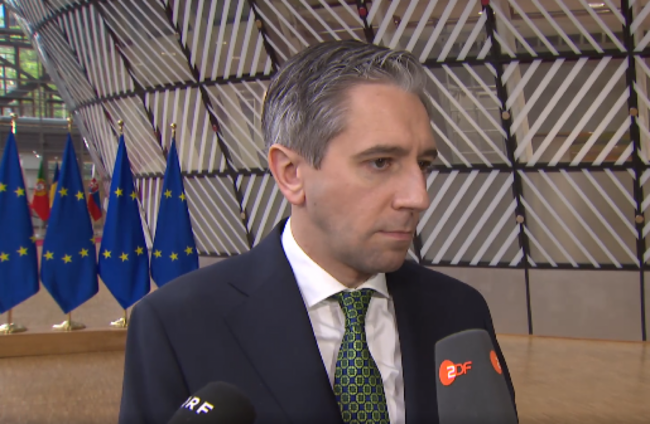
TÁNAISTE SIMON HARRIS claims the Trump administration has a “fundamental misunderstanding” of how trade works in relation to the pharma industry as EU ministers meet in Brussels to discuss tariffs.
The meeting of the Foreign Affairs Council today is being held 37 days into the 90-day pause on tariff measures proposed by Donald Trump against the EU.
Chaired by EU Trade Commissioner Maros Sefcovic and attended by foreign affairs ministers from around the bloc, member states will be offering their input into any resolutions on possible countermeasures against US tariffs, should they be enacted.
The Tánaiste is attending the talks in his capacity as Minister for Foreign Affairs and Trade.
He told reporters that he will present to his EU counterparts the potential fallout for Ireland’s economic interests when formulating any plan for retaliatory tariffs.
“My initial sense is that things around agri-food, around med tech and potentially around aviation, are particular causes of concern and impact for Ireland,” Harris said.
Responding to a question about Trump’s accusations of “freeloading” by the EU on American pharma spending, Harris was adamant to point out the interdependence of both parties in that industry.
“I think there’s a fundamental misunderstanding from elements of the United States administration in terms of how the pharma sector works in terms of global supply chains,” he said.
Harris met last month with US Commerce Secretary Howard Lutnick, who once labelled Ireland his “favourite tax scam”, in Washington where the Tánaiste repeated calls for restraint and negotiations between the US and the EU.
“I would have made this point when I met with with Secretary Lutnick, that actually the EU and the US are very interdependent when it comes to the pharma sector.
“I believe that actually, if the European Union in the United States get in a room, I actually believe we can make progress on pharma that is good for both the US and the European Union.”
Pharmaceutical products account for €100 billion (45%) of Ireland’s exported goods with companies such as Pfizer, Johnson & Johnson, AbbVie and Eli Lilly having manufacturing facilities, research and development centres, and shared services in Ireland.
Harris also pointed out the tangible economic benefits to the US and its pharma companies by setting up in Ireland.
“Pharma companies don’t locate in Ireland for the sunshine. They locate in Ireland because they want access to 460 million consumers.
“They locate in Ireland and Europe, including many other member states, because they do very well out there to make a lot of money. It’s good for them.”
He added: “The idea that you’d actually shrink the global reach of your pharma companies, I don’t think makes any objective economic or financial sense.”
To embed this post, copy the code below on your site















have your say