Sign in. It’s quick, free and it’s up to you.
An account is an optional way to support the work we do. Find out more.

Sign in. It’s quick, free and it’s up to you.
An account is an optional way to support the work we do. Find out more.
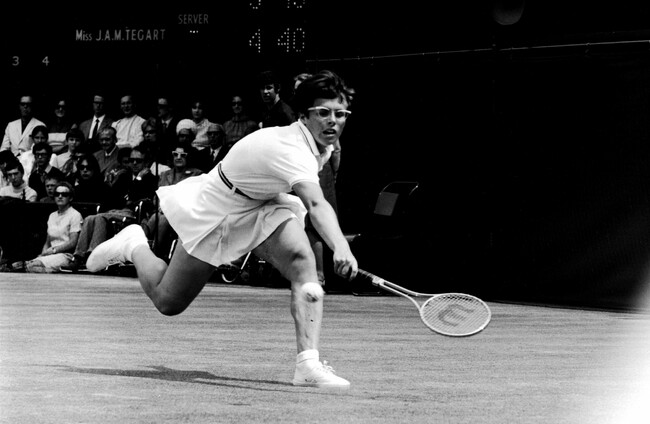

WHEN BILLIE JEAN KING was awarded the Sports Illustrated Sportsman Of The Year in 1972 (which still remains a bit of a misnomer), not only was she the first tennis player to get the award, she was also the first female to ever win it.
It was a year before she would face Bobby Riggs in Houston Astrodome for Battle of the Sexes – a match that was estimated to have been watched by 90 million television viewers worldwide, and one that would forever change the face of tennis.
Though you may recognise her for her role in that match, here’s some things you may not realise about the incredible Billie Jean King.
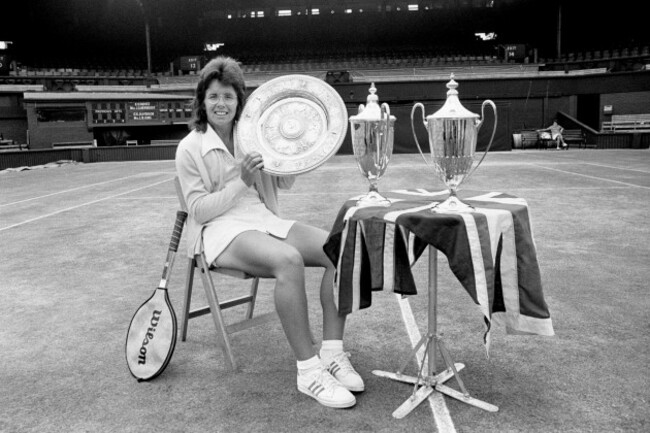
Although the awe-inspiring talents of Serena Williams’ Australian Open win while eight weeks pregnant may have blurred King from our recent memory, King was one of the original female forces who completely shook up the world of tennis.
As a former World No 1 ranked female tennis player, King won an inspirational 39 Grand Slam titles (12 in singles, 16 in doubles and 11 in mixed doubles). She also won the singles at the first ever WTA Tour Championships, while being on the winning US team for seven Federation Cups and nine Wightman Cups. No big deal.
Not only did Obama award King the Presidential Medal of Freedom in 2009, in an interview last September with Seth Meyers (seen above), King reveals that his unwavering respect for the tennis player started long before that.
It was amazing. He understands me – he saw the Battle of the Sexes when he was 12. He said, ‘now that I have two daughters, you know, it really changed my life’. I get these stories from men all the time now that they have daughters.
In the interview, King also credits the award ceremony as one where, ‘it was the first time that a president has ever mentioned the LGBTQ community’. She was also the first ever female athlete to receive it – something she sees as ‘good and bad’, as there were many women that went before her who remain uncredited for their talent.
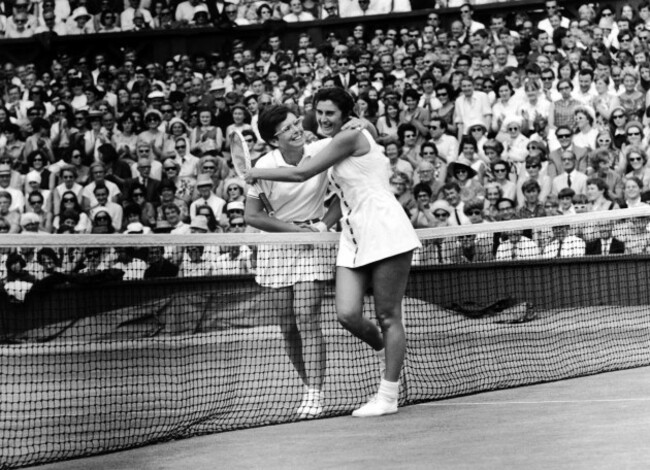
The realisation about inequality in the world dawned on King by the time she was only twelve years old, while ‘daydreaming about her little tiny universe of tennis’, as The Guardian detailed recently:
I thought to myself: ‘Everybody’s wearing white shoes, white socks, white clothes, playing with white balls, everybody who plays is white. Where is everybody else? That was the moment I decided to fight for equality and freedom and equal rights and opportunities for everyone. Everyone. Not just girls. Everyone.
King now runs a non-profit promoting workplace equality – The Billie King Leadership Initiative, which she told The Guardian had completed research that (for once) found something very positive about millennials:
This is the greatest generation on inclusion ever. And that gives me hope. We’ve done all kinds of studies and it holds true that young people don’t want to be in a workplace that doesn’t have inclusion. They’ll leave work and go to another company if it has better inclusion.
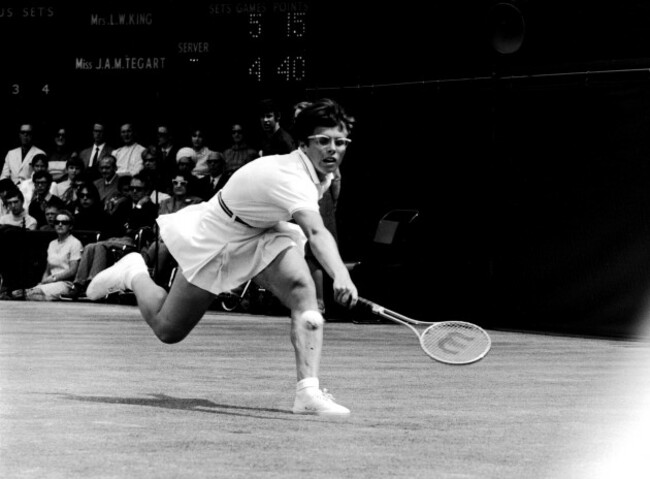
One of the many ways that King strove for equality was her establishment of the Women’s Tennis Association, just months before she came head to head against Bobby Riggs on the court for Battle of the Sexes and only a week before Wimbledon in 1973.
After King won the first ‘open era’ (amateurs were allowed compete) Wimbledon Championships, she won £750 while her male counterpart Rod Laver won £2,000. Along with eight other female players, they boycotted the 1970 Pacific Southwest Championships, instead establishing their own Virginia Slims Circuit, for which they signed symbolic $1 contracts.
A few years later, King would go on not only to establish the Women’s Tennis Association (WTA) but also the Women’s Sports Foundation the following year. While the WTA strives to promote fantastic female tennis athletes, the Women’s Sports Foundation provides girls with access to sport.
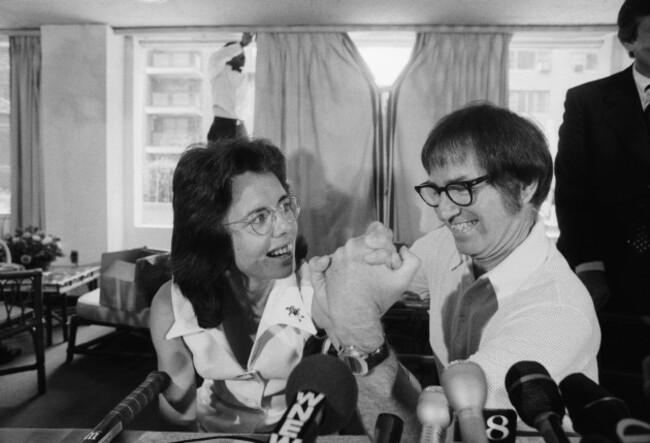
Without giving too much of the story away, there was a lot riding on King’s shoulders for her famous 1973 match with Bobby Riggs, who had said ridiculous things like, “I’ll tell you why I’ll win – she’s a woman and they don’t have emotional stability“.
As King explained in a interview with Vogue last August,
I knew it would [overshadow the rest of my career] when I played it. Nine million people watched that game. In those days, 95 percent of the media was controlled by men, and they didn’t care about us that much until we were in their arena—the men’s arena. Now they cared. So I knew that would happen when I played Bobby. Now it was about them.
Not only did King have the weight of all female athletes riding on her shoulders in 1973, she was also trying to hide a secret affair with her female hairdresser – a love story that King hopes will inspire this generation of LGBT kids:
I hope [it] helps motivate kids, young people, to fight for equality and freedom, and for the LGBTQ+ community …
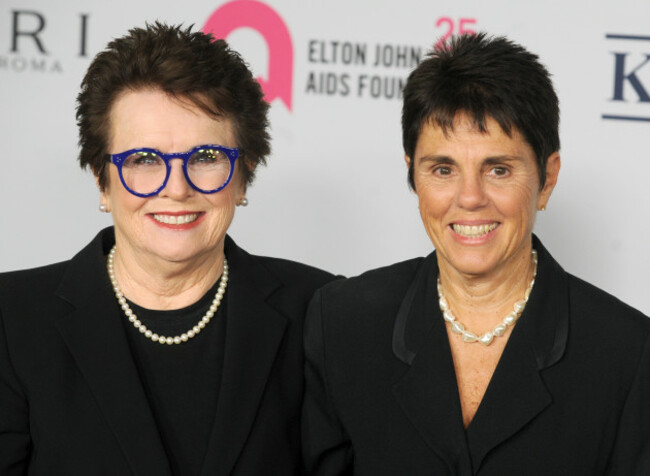
King has since been in a relationship for years with former professional tennis player Ilana Kloss (pictured above) and reminded Reuters that not even her friend Elton John will ever tell her what to do:
He says ‘I’ll play (at your wedding). You are a famous gay person, you gotta do this’. [But I told him], ‘I don’t gotta do nothing, baby.’
Even now, forty years later, King’s unwillingness to be pushed around by anyone is as strong as when she first stepped out onto the court to face Bobby Riggs for Battle of the Sexes.
Battle Of The Sexes tells the unforgettable story of King, the most successful female tennis player in the world taking on Bobby Riggs, a chauvinist who thought women had no business playing tennis. Their rivalry would be decided in the ultimate grudge match, with the whole world watching. It hits cinemas on general release on November 24th, from 20th Century Fox.
To embed this post, copy the code below on your site














have your say