Sign in. It’s quick, free and it’s up to you.
An account is an optional way to support the work we do. Find out more.
Sign in. It’s quick, free and it’s up to you.
An account is an optional way to support the work we do. Find out more.
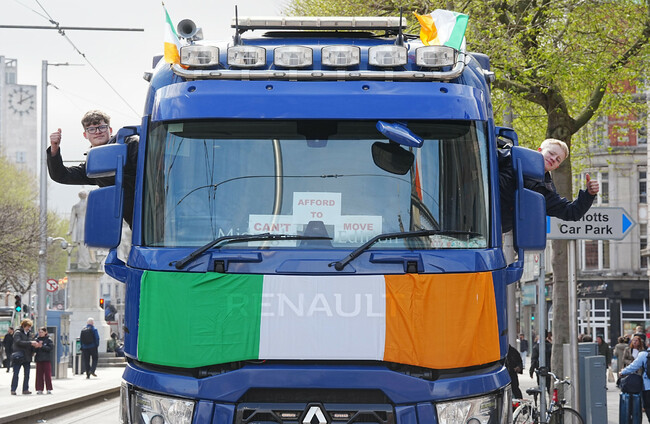
PROTESTS OVER THE cost of fuel have shut down cities, towns and key roads across the country over the last 48 hours.
As commuters abandoned public transport and drivers sat in traffic in Dublin’s city centre this morning, some directed their anger at the government, asking why it doesn’t give in to the demands and stop the chaos.
But who are the protesters and what are their demands? What must be done for them to stop clogging up the roads?
“It’s hard to know, because there is no actual overseer or runner of this protest.”
That’s according to John Morley, a broadcaster with Galway Bay FM, who told RTÉ’s Morning Ireland that access to fuel terminals in Foynes and Galway was “totally obstructed” by protesters this morning.
The protests are widespread and highly-disruptive, but organisation appears to be at grassroots level rather than under an umbrella group.
The Irish Farmers’ Association and Irish Road Haulage Association are not spearheading the protests. They’re staying out of this battle, as they’re currently in talks with the government about other supports their respective sectors need.
Instead, workers and businesses affected took to Facebook and TikTok to drum up support and coordinate convoys in their area.
On 1 April, a newly-formed group called the Irish Haulage Farming Construction Contractors Amalgamation (IHFCCA) wrote to TDs asking for support and stating their demands.
The group has been asking to meet with the Taoiseach, Tánaiste, and a number of ministers, including Jack Chambers. Such a meeting isn’t looking likely, as politicians have been coming out one by one to condemn the demonstrations.
Taoiseach Micheál Martin said the slow-moving convoys are “a wrong form of protest”, while Public Expenditure Minister Jack Chambers saying the action was “unacceptable and irresponsible”.
Protesters appear to be undeterred, as more demonstrations are planned for tomorrow, according to posts online.
Demands
One protester, Agricultural Contractor Chris Duffy, told Newstalk that if the government agrees to a meeting, the disruption “stops immediately”.
However, in their letter to politicians last week before protests began, the IHFCCA said they wanted more: a suspension of the Carbon Tax, which is due to rise again on 31 May.
The suspension should remain until prices “return to normal”, they said.
The group also called for a cap on fuel prices.
They suggested the following limits: €1.10/litre for Marine Gas Oil (used for ships), €1.10/litre for Green Diesel, €1.10/litre for Kerosene, and €1.85/litre for white diesel.
In late March, the government introduced temporary excise duty cuts on fuel, reducing petrol by 15 cent, auto diesel by 20 cent, and Marine Gas Oil by 3 cent per litre until 31 May.
The government also temporarily increased the Diesel Rebate Scheme for hauliers to 12 cent per litre.
The IHFCCA said, however, that the quarterly claims system should be made monthly to increase cashflow for businesses sooner.
Another group called The People Of Ireland Against Fuel Prices has been organising convoys around the country through localised Whatsapp groups linked on their Facebook page.
They are demanding that Carbon Tax be abolished completely and fuel be capped at “realistic and affordable prices”. The group doesn’t appear to state what they consider to be affordable prices.
They said without government intervention families and businesses could be “pushed beyond breaking point”.
“This is no longer about one sector – this is about the survival of the people who keep Ireland moving,” the group said in a Facebook post.
The Irish Farmers’ Association last week met with government leaders to discuss fuel, as well as fertiliser, which has also gone up in price.
“The Tánaiste ruled out any permanent or even temporary reduction in carbon tax,” IFA President Francie Gorman said.
“We still want the government to reconsider this position. However, we have set out a number of alternative proposals to government to address the fuel and fertiliser price issue,” he said.
Gorman didn’t directly tie the government’s next steps to ending the protests, but he said it is “fuelling public frustration by not acting quickly enough”.

To embed this post, copy the code below on your site












have your say