Sign in. It’s quick, free and it’s up to you.
An account is an optional way to support the work we do. Find out more.
Sign in. It’s quick, free and it’s up to you.
An account is an optional way to support the work we do. Find out more.
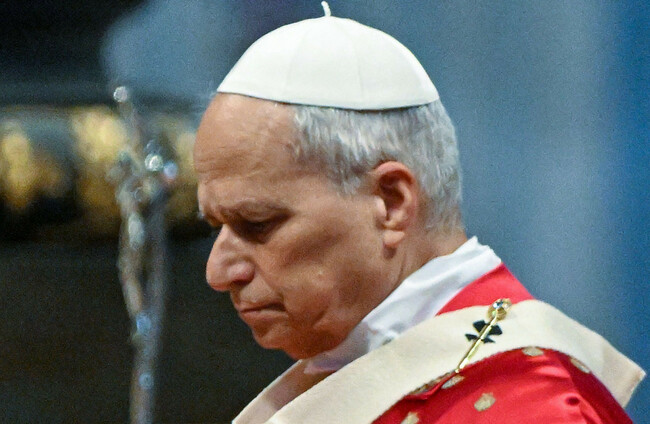
POPE LEO XIV has issued a sweeping encyclical on artificial intelligence, apologising for the Catholic Church’s delayed condemnation of slavery, and warning modern technology risks creating “new forms of slavery”.
The document, titled Magnifica Humanitas (‘Magnificent Humanity’), is the first encyclical of Leo’s papacy and sets out his vision for how the Church should respond to the rapid growth of AI and digital technologies.
In the text, released at the Vatican today, the pope said the Church’s historic involvement with slavery remained “a wound in Christian memory”.
“For this, in the name of the Church, I sincerely ask for pardon,” he wrote.
Leo said that the Church owned slaves until the Middle Ages and advised European rulers on how to justify enslaving “infidels”.
He said it was only in the 19th century that “a formal, absolute and universal condemnation of slavery was clearly articulated”.
“It is true that past events cannot be judged anachronistically,” he wrote.
“Yet neither can we deny or diminish the delay with which both society and the Church came to denounce the scourge of slavery”.
While previous popes, including John Paul II and Francis apologised for Christian involvement in slavery and condemned modern exploitation, Leo’s statement went further in directly acknowledging the Church’s institutional role.
The encyclical focuses primarily on the ethical consequences of artificial intelligence, which Leo described as one of the defining issues of the modern era.
He warned AI could deepen inequality, concentrate power among wealthy corporations and governments, and exploit hidden labour forces underpinning the digital economy.
“A significant part of the digital economy’s functioning relies on the silent work of millions of people,” he wrote, citing data labelling, content moderation and the extraction of minerals needed for microprocessors.
He said many workers involved in these processes were young people and women employed in harsh conditions for low wages.
“If technology promises emancipation, yet produces new forms of global subordination, it stands in contradiction to the fundamental principle of human dignity,” Leo wrote.
“The fight against new forms of slavery is a decisive test for the ethical discernment of AI”.
The pope also warned against what he described as an “armed competition” in artificial intelligence, driven by geopolitical rivalry and corporate dominance.
“Disarming AI means freeing it from the mentality of ‘armed competition,” he wrote.
“To disarm foes not mean rejecting technology, but preventing it from dominating humanity”.
Leo called for stronger international regulation of AI, including legal safeguards, independent oversight and political accountability.
He warned that technological development was moving faster than society’s ability to regulate it responsibly.
The encyclical also contained a sharp criticism of the “just war” theory, recently invoked by figures in Donald Trump’s administration.
“Today, more than ever, it is important to reaffirm that the ‘just war’ theory, which has all too often been used to justify any kind of war, is now outdated,” Leo wrote.
He added that “no algorithm can make war morally acceptable” and said lethal military decisions should never be entrusted to artificial intelligence.
The manifesto was presented at the Vatican today alongside Christopher Olah, the co-founder of leading AI company Anthropic.
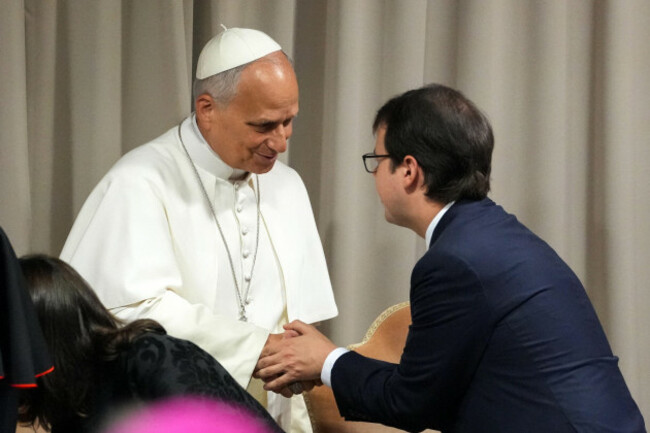
He warned that there is “a real possibility” that AI will displace human labour “at very large scale”.
Olah noted that AI development is concentrated in a “handful of wealthy nations” and said it was important to ensure that the gains of AI are shared globally”.
He also warned that while AI researchers may set out with the best of intentions, they “operate inside a set of incentives and constraints that can sometimes conflict with doing the right thing”.
Meanwhile, Olah said his researchers “keep finding things that are mysterious, even unsettling” within AI.
He said this includes evidence of “introspection” on behalf of AI systems, as well as internal states that “functionally mirror joy, satisfaction, fear, grief and unease.”
Leo signed the document on 15 May, marking the 135th anniversary of Rerum Novarum, the landmark social teaching encyclical issued by Pope Leo XIII during the Industrial Revolution.
To embed this post, copy the code below on your site











have your say