Sign in. It’s quick, free and it’s up to you.
An account is an optional way to support the work we do. Find out more.
Sign in. It’s quick, free and it’s up to you.
An account is an optional way to support the work we do. Find out more.
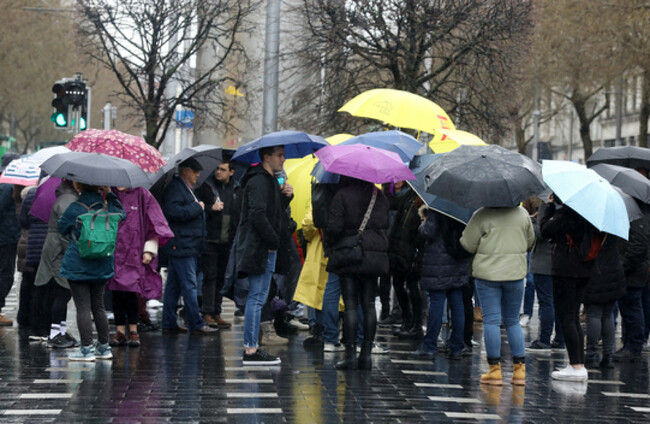
WHILE MOST OF Europe has seen swelteringly hot weather this July, Ireland has instead had one of the rainiest summer months on record.
Several weather stations around the country have seen their wettest July since records began, and many have recorded significantly higher monthly rainfall than the average for this month.
The wettest July nationwide was in 2009, but with another week to go until the month is out, 2023 may take its place.
Met Éireann climatologist Paul Moore told The Journal that the main reason we saw so much rain this month was the position of the jet stream relative to Ireland.
The jet stream is a flow of strong winds that cause changes in wind and pressure several miles above the earth’s surface. It influences areas of high and low pressure, which in turn affects the weather.
Moore said: “The jet stream has been quite strong and we’ve been to the north of jet stream for most of the month, and on the cooler side, with a lot of low pressure over us.”
That has, he said, led to a lot of weather fronts and heavy showers.
While the wet weather here is not directly related to the baking heat in mainland Europe, it is the case that countries hit with hot weather are south of the jet stream.
Several stations have recorded rainfall that is significantly higher than their long-term average for the month of July. Mullingar has recorded 152.7mm of rainfall this month, compared to a long-term average of 71.1.
Moore Park in Cork has recorded more than double its long-term average rainfall for July with 133.8mm of rain this month.
Johnstown Castle in Wexford, with a long-term average of 72.8mm, has recorded 100.7mm of rain this month.
The highest monthly rainfall ever recorded is 577.9mm in Kerry in 1950.
While it is difficult to draw direct links between climate change and unseasonable weather like this, Moore said that “warmer temperatures in general can hold more moisture.
“So the projections for Ireland, and globally, is that when there is rainfall, that it can be more intense because there can be more water vapour in the atmosphere.”
Several Status Yellow rain and thunderstorm warnings have been issued in recent weeks.
Climatologist Peter Thorne previously told The Journal that a major misconception about climate change is that it will only lead to hotter, drier weather.
He said that precipitation extremes, such as those we’re currently seeing, are “becoming more extreme in Ireland and those are another indelible fingerprint of climate change”.
The recent heavy rain led the organisers of the Forever Young festival to pause entry to the grounds due to flooding in the campsite.
There is more rain forecast this week – there will be some showers this evening, mainly in Leinster and Ulster.
Met Éireann has said conditions will turn more unsettled from midweek onwards, with widespread rain moving in from the west.
To embed this post, copy the code below on your site
have your say