Sign in. It’s quick, free and it’s up to you.
An account is an optional way to support the work we do. Find out more.
Sign in. It’s quick, free and it’s up to you.
An account is an optional way to support the work we do. Find out more.

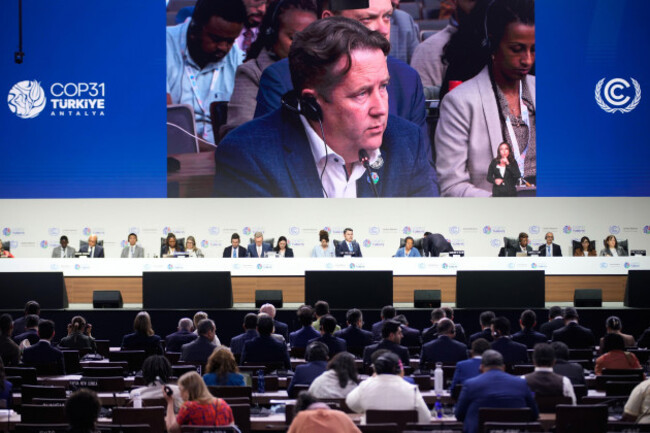
IT’S ONLY FOUR years ago, but it seems like a different world. Back then Ursula von der Leyen, president of the European Commission, in a speech in Bruges, Belgium, was reflecting on the ‘Green Deal’, a collection of measures to deal with the environmental crisis that had been launched three years previously.
She described the package as “our growth strategy… towards a thriving, clean and competitive European economy”. Despite challenges from Covid and Russia’s unprovoked invasion of Ukraine, she maintained Europe had “stayed the course” on its environmental ambition.
However, since a new parliament was elected in 2024 the mood has changed dramatically. The dominant right wing voices now decry the Green Deal while environmental measures are seen as not just a burden but an obstacle to economic growth and competitiveness. It is blamed for everything form rising electricity prices to floods and crop failures (devastating floods in Spain in autumn 2024 were falsely attributed by that country’s far right to demands from Brussels to remove obsolete dams and other barriers on rivers). No matter that the climate and nature crisis is intensifying by the season, with devastating impacts on people across the continent.
The new political forces have set about dismantling the Green Deal, weakening, deferring or stopping legislation in its tracks. The celebrated LIFE fund, which has brought us the success of the Burren farming for nature programme or the recovery in corncrake numbers, is up for the chop. The regulation on importing goods from areas illegally deforested was delayed, twice. The emissions trading scheme that has driven impressive declines in greenhouse gas emissions from industry is under serious pressure from countries who want to burn more fossil fuels. Green measures for farmers have been diluted while protections for the wolf have been downgraded.
Environmental regulation in particular is blamed for slow economic growth and an inability to get things done. Gone is talk of the green transition and in its place are anodyne sounding words like ‘simplification’ and ‘competitiveness’.
In 2024, the former chairman of the European Central Bank and a previous Italian prime minister, Mario Draghi, published a lengthy tome on how to make the EU more dynamic and which noted that “the time devoted to analyses of environmental impacts [of new energy projects] represents a significant share of the difference between best and worst performers”.
In April of this year, the German chancellor Friedrich Merz, who hails from the same political family as von der Leyen, lambasted the new rules declaring that “we need to throw a spanner in the works of this machine in Brussels now, so that it stops”.
Many people share the frustration that has given rise to this mood. Here in Ireland, progress on public transport, energy and water infrastructure projects have been like watching cold treacle slide off a spoon. Even planning applications for nature restoration initiatives with no opposition require detailed, voluminous and expensive environmental assessment that few will ever read.
There is certainly a case for speeding up decisions and resourcing regulatory authorities so that better decisions are made. However, there is no evidence that people are supportive of eviscerating environmental rules or backsliding on commitments to address the climate and biodiversity emergency.
A great novelty, and something environmental campaigners have been calling for years, would be actually implementing EU directives so that we achieve their aims of healthy nature, water and air. As well as making the countries of Europe better places in which to live, it would also reduce social opposition to certain projects and give greater certainty to developers.
However, there is no talk of this in Brussels or in Dublin.
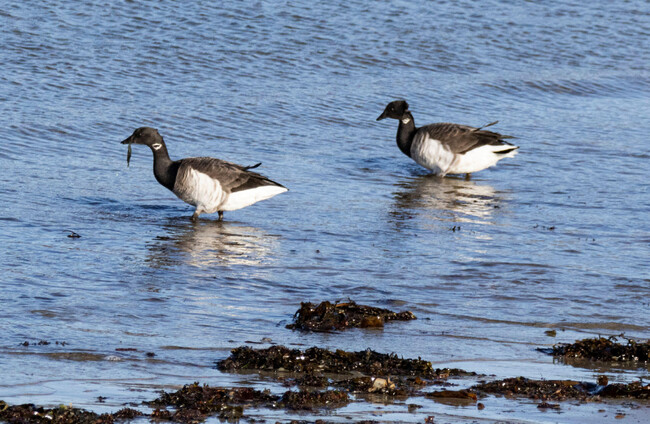
Sensing that everything is up for grabs, this week the right wing European People’s Party, of which Fine Gael is a member, along with their far right allies in the European Parliament, succeeded in amending a Commission proposal on ‘speeding up environmental assessments’ that would allow for the killing of birds and other protected species, such as bats, otters or whales, as part of the construction or operation of a project.
Killing or disturbing animals, including nests and eggs, in the course of building or simply during normal activities of a project or business activity would no longer be considered ‘deliberate’ and so not prosecutable.
BirdWatch Ireland estimates that the measure will affect 170 bird species in Ireland (which is nearly all of them, bearing in mind that two thirds of bird species in Ireland are threatened with extinction).
This is not all.
The parliament wants to weaken regulations on pesticides so that chemicals get approval in perpetuity, doing away with the need for periodic reviews that allow for new scientific findings. The chamber also voted this week to ‘fast track’ a long list of developments from airports to mines and data centres which will avoid mandatory environmental impact assessment.
Another amendment was approved to open up the Habitats and Birds Directive, the cornerstones of EU nature legislation, presumably so they can be gutted to allow exploitation and habitat destruction in the name of ‘growth’, ‘progress’ and ‘competitiveness’.
The World Wildlife Fund described the vote as “the far-right’s crusade on nature” while Oonagh Duggan of BirdWatch Ireland said that it showed that “for all the talk about restoring nature many politicians are doing the opposite”.
This is not the end of the road. There will now be negotiations between the Parliament, the Commission and the Council of Members States, but where is this going to stop? Ordinary citizens are once again called upon to make their voices heard in what seems like a never-ending war on nature.
Pádraic Fogarty is an environmental campaigner.
To embed this post, copy the code below on your site










have your say