Sign in. It’s quick, free and it’s up to you.
An account is an optional way to support the work we do. Find out more.
Sign in. It’s quick, free and it’s up to you.
An account is an optional way to support the work we do. Find out more.
THE IRISH GOVERNMENT has in recent months sought to make it easier to build one-off housing in the countryside, a move it claims is designed to ease the pressure on housing and to give people more choice about where they live.
In truth, this populist quick-fix ‘solution’ to our housing crisis creates far more problems than it claims to solve. Loosening the rules on one-off housing means our rural hinterlands morph into an unplanned suburban commuter belt sprawling deep into the countryside.
Apart from trapping people in car dependency, one-off rural housing also has the effect of hollowing out rural towns and villages, a process which accelerates the disappearance of local services, such as shops, restaurants, post offices and pubs.
It also serves to deepen social isolation as more people live apart from their neighbours and remote from public services. This becomes painfully apparent as people grow old and often find themselves unable to drive and effectively trapped in their isolated homes.
In Ireland and beyond, there is an invisible line between land for housing and land for agriculture, even if this line is somewhat blurred by the countryside being pockmarked by one-off housing units quite unconnected to the adjacent fields.
What if there was a third way? What if food production and urban living could somehow be combined? This was the kind of thinking that inspired the local authorities in the Dutch city of Almere, itself barely half a century old and built on a reclaimed polder less than an hour’s drive east of the capital, Amsterdam.
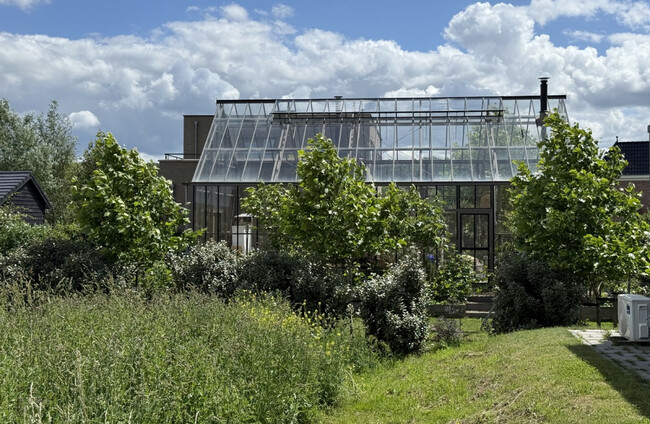
A project had reclaimed several thousand hectares of polder from the sea, which meant they effectively had a blank canvas in terms of what to do with what was effectively brand new land. From this, the idea grew that is today known as Oosterwold, a quasi-urban experiment spanning over 4,000 hectares that uniquely softens the lines between farming and living space.
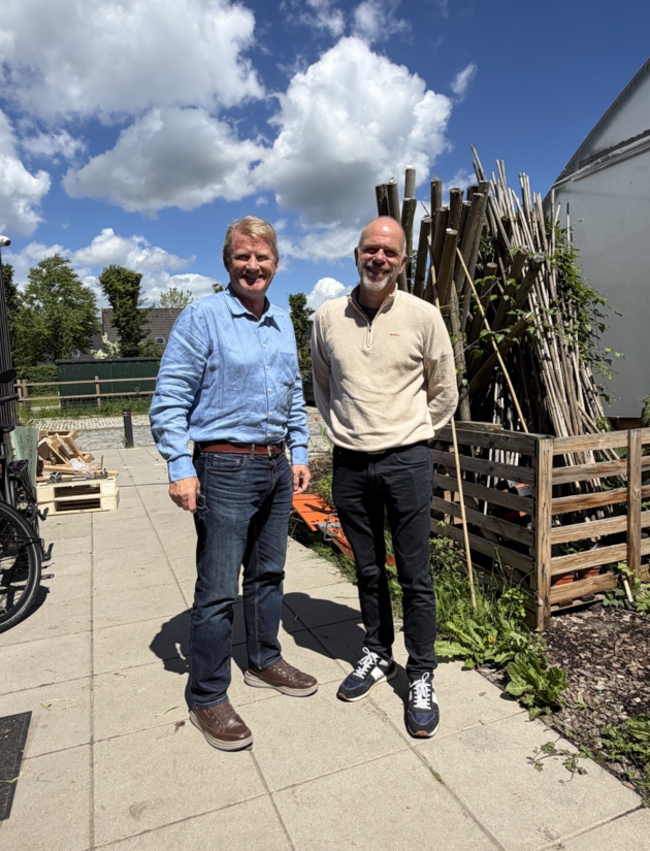
I visited Oosterwold, now comprising over 2,000 homes and around 5,000 residents, this summer, accompanied by Dr Jan Eelco Jansma of Wageningen University & Research, who has been involved for the last two decades in conceiving and shaping this project since its inception. It is envisaged that its population will expand to 15,000 homes and well over 30,000 residents in the coming years.
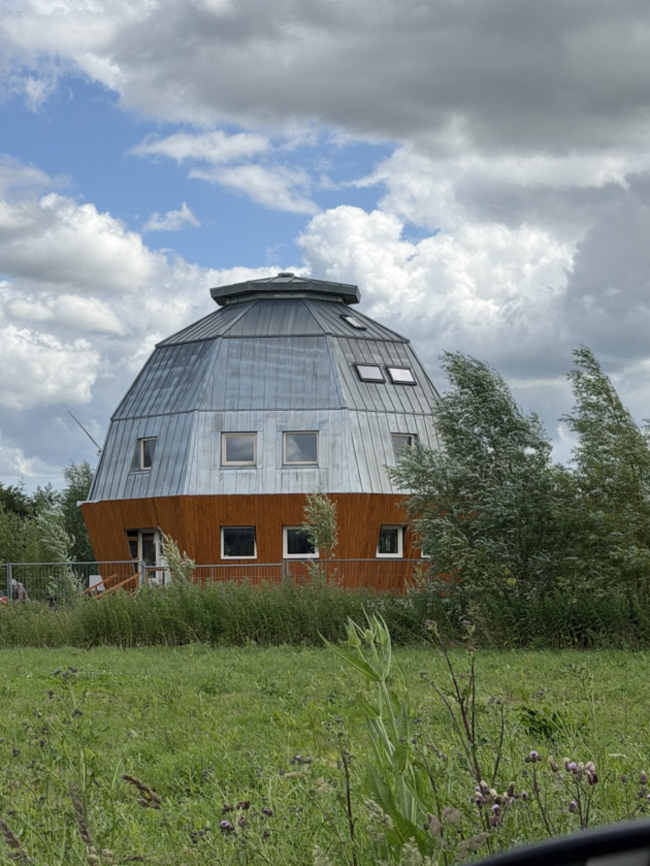
While Dutch planning law is notoriously rigid, with the location, shape and style of housing strictly regulated, Oosterwold is different. Here, people are allowed, within broad guidelines, to build as they please, with generous allotments on which to do it. The catch: all residents have to grow food on at least half of their holding.
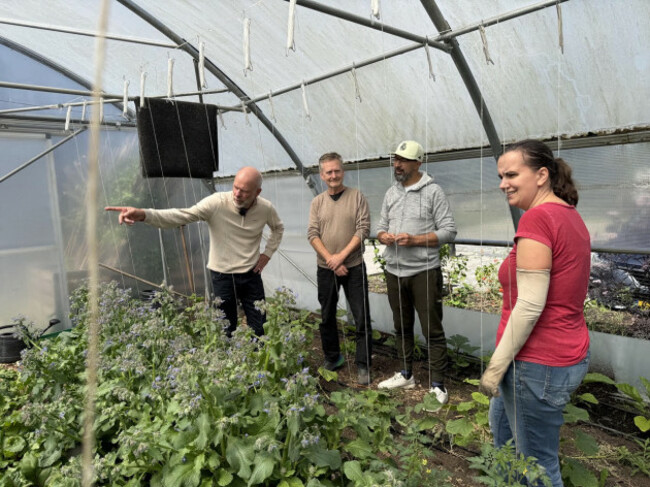
How exactly this is done is left to the individual. Some people rent their land to a professional farmer, who works the land while they continue to commute to work in Almere or Amsterdam. For others, it looks more like ‘The Good Life’, with orchards, greenhouses, polytunnels and an abundance of kitchen garden plots, including chickens, goats and even some sheep, that were also once common in Ireland but have all-but disappeared in the last half century.
As Dr Jansma describes it, Oosterwold attracts four main types of people. First are the highly committed ‘foodies’, often passionate about climate change and sustainability, some with young kids, others at or close to retirement age. The second group are commercially focused, including professional farmers and beekeepers, looking for access to land.
The third are what he calls the ‘socials’, these are people who see food as a shared connection and an opportunity to build strong communities. The final group are pragmatists, attracted to Oosterwold by the relatively low price of land, and far more flexibility around building styles. There is now a long waiting list for those hoping to move to Oosterwold, such has been the success of the experiment.
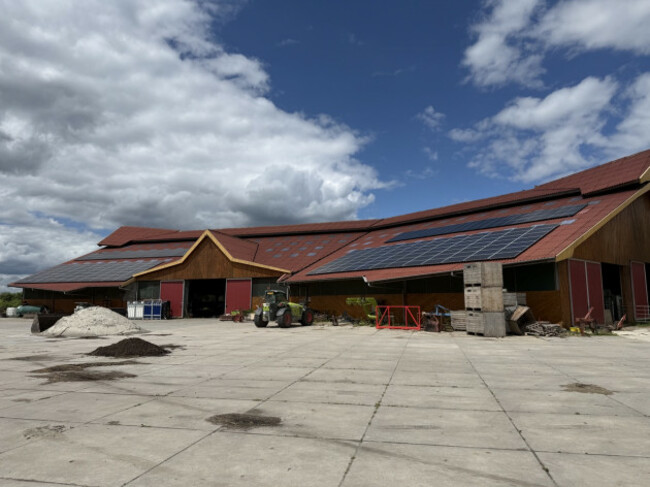
While some of the new residents of Oosterwold enjoy managing their stand-alone homes with kitchen gardens and orchards, for others, the idea of clustering their houses into small hamlets, leaving the adjacent land free for professional farming makes more sense.
The big challenge for those involved in small-scale horticulture is how to sell your surplus production of perishable food. To this effect, a local co-operative has been created since 2019 that provides a route to market for growers. As it expands, the co-op will include a knowledge centre and workshops, where skills can be passed on to newer members.
In the future, with up to 15,000 families having signed a commitment to produce food, “this is probably the largest urban farming project ever been done anywhere in the world”, according to co-op member, Jan-Albert Blaauw.
Food now being produced in Oosterwold is already being supplied to nearby Almere, but also increasingly, as far as Amsterdam. Two thirds of the final sale price of food in the co-op is paid to producers, with one third going to the not-for-profit co-op to cover its costs.
“In some respects, we are not trying to go forwards, we are instead trying to go 70 years backwards, back to when there was still a connection between locals and the farmers”, said co-op member and chef by profession, Jalil Bekkour. He moved to Oosterwold during the Covid pandemic, which he said gave him “two years to practice gardening”.
He has since built a small restaurant next to his home. Between 80-90% of the food he serves is grown and eaten locally.
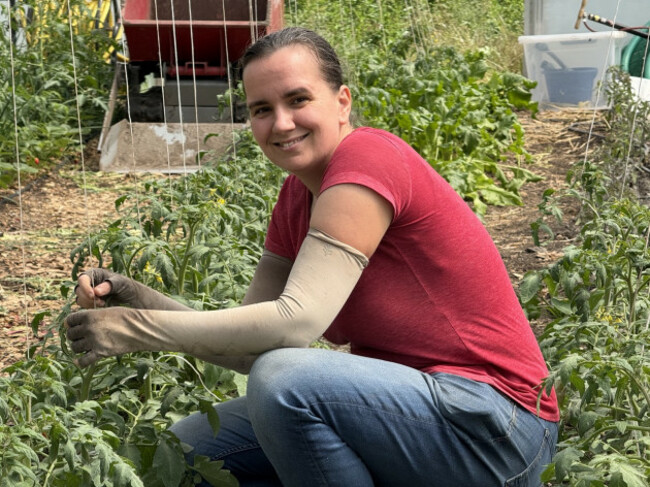
Another Oosterwold resident since 2021, Jorica Louwen with “no agricultural background whatever”, now manages a 1,000 square metre garden with her husband and is also involved in the co-op.
During the growing season, she spends an average of 35 hours a week working in her garden and with the co-op, while also remotely working an office job that brings in a “stable income” for a further 24 hours a week, making it in total a demanding 60-hour week schedule.
For Louwen, while it’s tough, there is no question of going back to her old life. “I do think that with everything going on in the world today, actually going back to gathering the knowledge and the skill to be able to produce your own food locally is becoming much more valuable”. Her hope for the near future is to be able to quit her office job and commit herself fully to life in Oosterwold.
While some local organic farmers have taken an interest in developments at Oosterwold, Bekkour feels that mainstream commercial farmers are much more resistant to change, as they are heavily subsidised to produce “cheap” food in the current system, a system that in turn is completely dependent on pesticides.
“When you take that away, the real cost of food is totally different than it is right now”, he adds.
The summer of 2026 saw 12 million tonnes of food, valued at more than €2 billion, lost and 660,000 hectares of land destroyed in Europe as a result of scorching temperatures.
Next summer will almost certainly be even hotter, and for as long as we persist in powering the world on fossil fuels, every year from here on gets more and more dangerous. As a result, food security has moved from the fringes to now being one of our most serious and pressing concerns.
The experiment in Oosterwold, as it scales up, is expected to produce around 10% of the food needs of Almere, a city with a population of almost 200,000, while offering resilience to food shocks and upskilling thousands of people in the almost lost art and practice of growing your own food.
My visit to Oosterwold was eye-opening, especially coming from Ireland, a country that should be an international powerhouse of environmentally-friendly food production, but is instead chronically food-insecure.
Not alone do we import more than four fifths of everything we eat, even our vaunted livestock sector is at the mercy of overseas producers to provide us with more than five million tonnes of animal feed annually, as well as around a million tonnes of chemical fertilizers, without which half of our huge herd of livestock would starve.
The closest thing we would have to Oosterwold, albeit on a much smaller scale, are local allotments. Nationally, there are an estimated 2,500 allotments, with long waiting lists in many areas for access to an allotment. In stark contrast, Denmark, with a similar population to Ireland, has more than 40,000 allotments.
As it is currently designed, our agriculture industry is entirely unable to meet the food requirements of the population of Ireland, while our horticulture industry is in near-terminal decline and, with minimal access to allotments, we as individuals lack access to the means to feed ourselves.
For Jan-Eelco Jansma, nurturing the project at Oosterwold has been a central part of his working life as a researcher for around 20 years. As he sees it, it’s at least as much about growing communities as growing food. “I think it’s this broader idea, that if you can integrate food production into urban development, it has so many advantages – it’s about creating linkages, creating cohesion to create nature”.
Learning from nature, coming to truly understanding where food comes from and grasping the health benefits that flow from fresh, unprocessed foods are, he believes, crucial.
Oosterwold may not hold all the answers, nor can its lessons be applied universally, but it certainly poses some valuable questions about the future of food, community and our wider relationship with the natural world.
John Gibbons is an environmental journalist and author of ‘The Lie of the Land – The Truth About Farming, Climate & Power in Ireland’.
To embed this post, copy the code below on your site













have your say