Sign in. It’s quick, free and it’s up to you.
An account is an optional way to support the work we do. Find out more.
Sign in. It’s quick, free and it’s up to you.
An account is an optional way to support the work we do. Find out more.
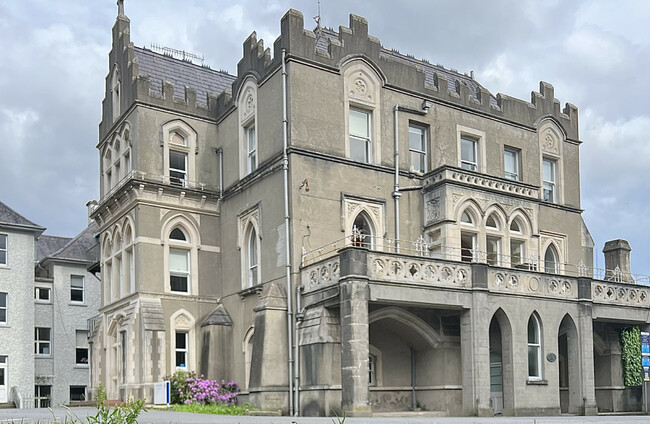
A “LOST” MEDIEVAL Dublin castle has been “hiding in plain sight” on the campus of University College Dublin (UCD), a researcher from the university said.
The Norman Roebuck castle was built in the early 13th century, research indicates, and its remains were long thought to have been cleared away to allow for the construction of the present Roebuck Castle around 150 years ago.
However, research has found that the walls of the medieval castle are preserved within the walls of the current castle.
The author of the research, Prof Tadhg O’Keefe, said “UCD can now claim to have the oldest standing building on any university campus in Ireland”.
O’Keefe is a specialist in medieval architectural history at the UCD School of Archaeology.
“From the outside, the present building looks to be entirely Victorian. Inside, though, the walls of the old castle are preserved. The medieval features are still there. They’re hidden under plaster, but they can be made out,” O’Keefe said.
“We are incredibly lucky that the Georgian and Victorian modernisers of the property simply built around the medieval castle rather than demolish it. And we are also lucky that they built very little else on the site.”
The courtyard at the back of the house today is, in fact, the medieval castle courtyard.
Historical sources indicate that the castle was probably built in the early 13th century, within living memory of the Norman invasion of 1169, the research states.
Alterations were made to it several times during the Middle Ages.
Its occupants included a medieval Lord High Chancellor of Ireland, and, reputedly, James II in 1689, the researcher added.
“By the 18th century, though, it had fallen into ruin.”
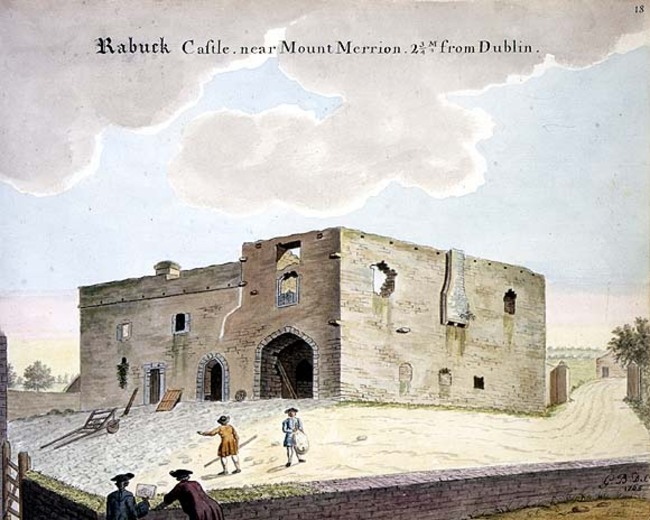
Gabriel Beranger, the Dutch-born artist of Huguenot descent who lived in Dublin, paid it a visit around 1765 and depicted it in a watercolour painting – fortunately for O’Keefe. The painting captured small details needed to work out the structural history of the building.
The medieval castle was lucky to survive, even in ruins, into the later 18th century.
Many castles like it were demolished in the 17th century, with their stonework recycled for use in more comfortable residences.
“It was always assumed that the old castle’s luck finally ran out at the end of the 18th century when its then-owner set about modernising the property. And it was also assumed that, if anything did manage to survive that episode, it certainly could not have survived the building of the Victorian house that we see on campus today.”
More archaeological research is needed to establish the exact date of the castle, but O’Keefe is confident that the oldest part of it can be dated to the early 13th century, thanks to the accuracy of Beranger’s watercolours.
“The passage of time has been unkind to the castles which were built across south Dublin in the Middle Ages. Lost buildings are lost historical records.
“They leave gaps in our knowledge. It is wonderful to be able to welcome back Roebuck’s medieval castle, and to know that it won’t get lost again.”

To embed this post, copy the code below on your site















have your say