Sign in. It’s quick, free and it’s up to you.
An account is an optional way to support the work we do. Find out more.
Sign in. It’s quick, free and it’s up to you.
An account is an optional way to support the work we do. Find out more.
HAVING GROWN TIRED of mulling over the various permutations in the UK’s post-election landscape commentators have, in recent days, shifted their attention to assessing the campaign itself.
By common consensus, many believe this has been an utterly boring and forgettable general election. Much of that has to do with how shielded the main party leaders have been from ordinary people while out on the trail.
As David Cameron and Ed Miliband have criss-crossed the country, they’ve participated in stilted rallies involving very little engagement with ordinary voters.
Much of this has to do with avoiding the sort of election moments people remember for all the wrong reasons.
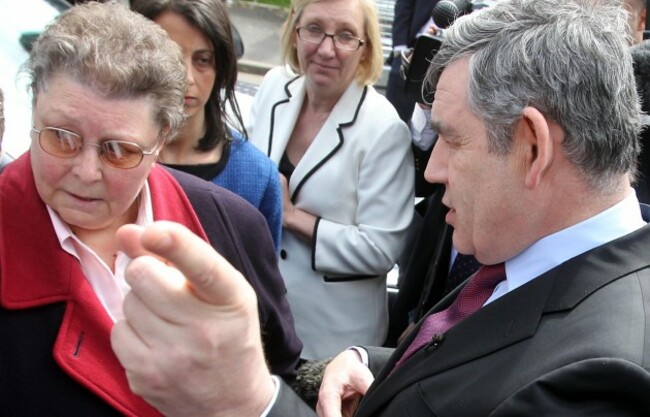
Like in 2001 when deputy prime minister John Prescott punched a protester who egged him. Or the moment five years ago that killed off any hope Gordon Brown had of remaining in Number 10.
While meeting voters in Rochdale, he was confronted by pensioner Gillian Duffy over immigration and was later caught referring to her as a “bigoted woman” after forgetting to take his mic off.
That same election also saw the first leaders’ debates, which generated a brief bout of ‘Cleggmania’ as the future deputy prime minister came out best of a series of live TV encounters with Brown and Cameron.
This time around, the TV debates were unwieldy affairs involving several smaller party leaders and only notable for Cameron’s steadfast refusal to participate in a one-on-one debate with the only man who stands a chance of replacing him in Downing Street, Miliband.
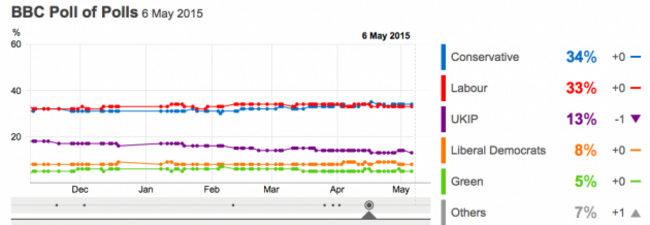
Even the opinion polls have moved little, more or less flatlining since the turn of the year:
A hung parliament is all but inevitable and most of this campaign has focussed on what happens on Friday morning and not what happens tonight. There is an inevitability to so many of the outcomes in the 650 constituencies across the UK tonight.
Nowhere is that more true than in Liverpool, a Labour stronghold, where the party will perform a clean sweep of the five Westminster constituencies in and around the city. It has taken complete control of the city in the last five years, now holding 78 of the 90 council seats.
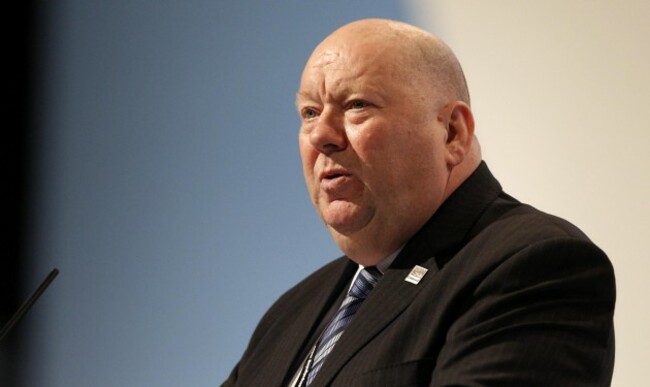
It wasn’t always this way. Going into the 2010 election, the Liberal Democrats held the balance of power in the council chamber and was even targeting a seat in the Liverpool Wavertree constituency.
Lib Dem candidate Colin Eldridge was heavily backed to take the seat ahead of Labour’s parachute candidate, Luciana Berger, who suffered the embarrassment of not knowing who Liverpool managerial legend Bill Shankly was.
Clegg even paid a visit to the constituency on his first official day of campaigning and there was literature war with various claims and counter-claims from all sides. But Eldridge bombed and Labour won by an even bigger majority than in 2005.
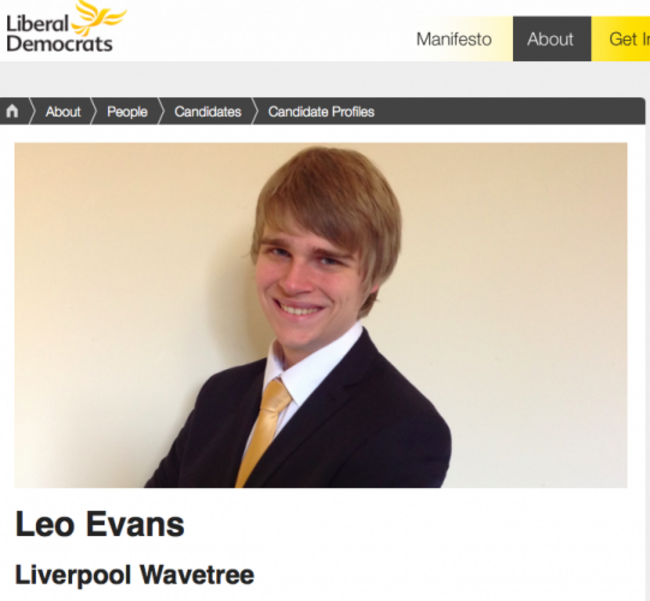
This time around the extent to which the party has given up any hope of taking the seat is underlined by its candidate. Leo Evans, a 20-year-old politics student who has lived in Liverpool all of two years, is highly unlikely to pose any threat to Berger.
The Lib Dems can’t even get the name of the constituency right on its own website:
After a final bit of canvassing, his small team arrived in a south Liverpool curry house last night to dissect a battle they are certain to lose.
The same is true for many other non-Labour candidates across the city both in the parliamentary and local elections which are also taking place today for about a third of he city council seats. Anything but a Labour a victory in the majority of races would be a shock.
The inevitability of it all in this famous British city underlines the extent to which people will not remember much if anything about the last month of the election campaign.
The real talking points will come tomorrow morning when Cameron and Miliband battle it out to form a government with some form of legitimacy. It’s the next four days, and not the last four weeks, which could prove to be more memorable.
TheJournal.ie will be bringing you overnight coverage of the UK election tonight and into the early hours of tomorrow. Follow @TJ_Politics for updates.
More from the UK election…

To embed this post, copy the code below on your site










have your say