Sign in. It’s quick, free and it’s up to you.
An account is an optional way to support the work we do. Find out more.
Sign in. It’s quick, free and it’s up to you.
An account is an optional way to support the work we do. Find out more.
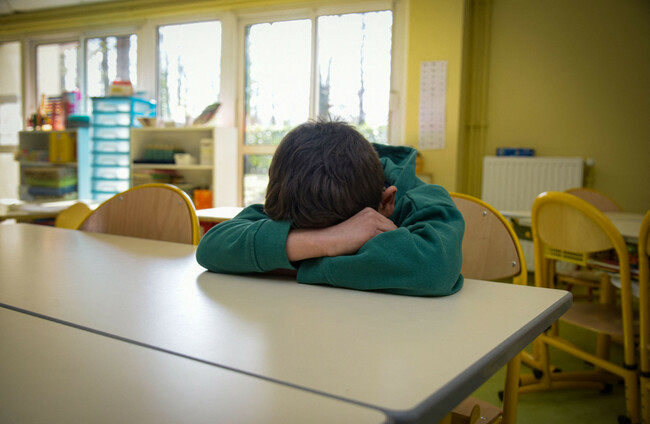
YOUNG PEOPLE ARE more likely to miss school if their parents have a “harsher” parenting style or if there is a lack of routine around bedtimes and breakfast.
They are some of the findings from an Economic and Social Research Institute (ESRI) report which has been produced in partnership with Tusla Education Support Service (TESS).
The report draws on Growing Up in Ireland data to trace patterns of school absence from 9 to 13 years of age.
The report found that several interrelated family factors are associated with school absence and that overall, maternal characteristics play a much stronger role than paternal factors.
The ESRI said absence is strongly related to “mother-child conflict”, lack of consistency, maternal depression, a harsher parenting style, and a lack of routine around bedtime and breakfast.
Major life events, such as bereavement, illness and addiction, emerge as a strong driver of school absence.
The researchers characterise a “harsh parenting style” by the frequency with which parents perform actions such as shouting or yelling at a child, sending them to their bedroom or a naughty step, taking away treats or pocket money, or grounding the child.
At age 9, these were reported by the mother, while at age 13 the young person themselves reported the frequency.
Measures of parenting style indicate that absence rates are higher where parents use harsher approaches, such as shouting at the child rather than explaining, and lower rates where mothers use a consistent parenting style.
When it comes to a lack of routine, this is mostly captured by the times at which children go to bed and how often they have breakfast.
Young people who went to bed late (at 11pm or later) have higher rates of school absence, as do those who regularly go without breakfast, either at home or school.
Elsewhere, the ESRI found that there are higher absence rates among non-employed families, those whose mothers have lower levels of education, families experiencing financial strain and lone-parent households.
Young people with a disability are also much more likely to miss school than their peers, as are those for whom a disability emerged or was identified between 9 and 13 years.
There are also higher absence rates in Deis schools, which the ESRI says it is due to the “concentration of socio-economic disadvantage in these schools”.
Absence rates meanwhile are higher among young people with negative attitudes to school, those who have poorer quality relationships with their teachers and those who experienced bullying at age 9.
Young people not liking school is now more strongly predictive of absence than it was among the same age cohort a decade previous and is significantly related to consistently high or increasing absence among 13-year-olds.
The ESRI also found that young people living in rented accommodation – either social housing or the private rented sector – are more likely to miss school.
The researchers said this could be because these areas “lack social capital, including safe facilities and strong community bonds”.
By contrast, researchers found that “living in open country or in a village appears to play a protective role in promoting school attendance”.
Meanwhile, schools that involve students to a greater extent in decision-making, such as on school uniforms, tend to have lower absence rates.
Elsewhere, the ESRI noted that there are higher rates of school absence in Ireland since the Covid-19 pandemic, something which has also been found in many other countries.
At primary level, chronic absence (missing 20 or more days in a school year) increased from around 11% in 2018/19 to 22% in 2023/24, while at post-primary level, a similar
trend is evident, increasing from 14.5% in 2018/19 to 21% in 2023/24.
The ESRI also said there are high absence levels among 13-year-olds who “gave up” on studying during Covid school closures and also among those who found it harder to settle back into school.
But while absence rates are stable at age 9 post-pandemic, they increase significantly among 13-year-olds.
Emer Smyth, co-author of the report, said that since the findings point to a “range of factors that influence school absence, so policy responses need to be multidimensional and integrated”.
She added that schools can make a difference by “fostering positive attitudes to school, greater student involvement and reducing negative teacher-student and peer interaction to enhance attendance”.
Fellow co-author Anna Moya meanwhile called for mental health and parenting support services to assist families through challenging life events.

To embed this post, copy the code below on your site















have your say