Sign in. It’s quick, free and it’s up to you.
An account is an optional way to support the work we do. Find out more.
Sign in. It’s quick, free and it’s up to you.
An account is an optional way to support the work we do. Find out more.
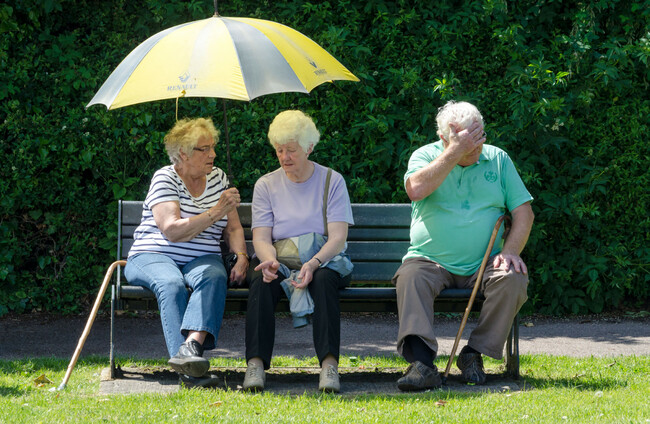
THE GOVERNMENT HAS advised older people to avoid direct sunlight as the unusually intense spell of hot weather continues.
In a statement this afternoon, Minister for Older People Kieran O’Donnell said high temperatures could lead to heat stress, heat exhaustion and heatstroke, with potentially serious consequences for vulnerable people.
“I would urge older people, and those caring for someone, to take precautions to protect themselves such as staying cool and hydrated, and to be on alert for signs of heat exhaustion and dehydration,” O’Donnell said.
O’Donnell also urged older people to avoid direct sunlight and to stay connected with friends, family or neighbours.
The advice comes as temperatures have already reached the high 20s this week, with Ireland’s all-time temperature record potentially under threat on Thursday.
A high temperature weather warning is in place nationwide until Friday.
Older people, particularly those aged over 65, are among the groups considered most vulnerable during periods of extreme heat.
Nursing Home Ireland chief Tadhg Daly said that “hydration is key” for older people.
“Residents in nursing homes need to stay hydrated, drinking fresh water regularly throughout the day, even if they don’t feel thirsty,” Daly said.
He added that residents in nursing homes should keep curtains or blinds closed, and stay indoors where possible.
“If residents wish to go out, they should be facilitated, but it should be for a very, very short period, and it should be in the shade and ideally not at the warmest part of the day,” Daly said.
People with long-term health conditions, those taking certain medications, babies and young children, and people living alone are also at greater risk.
The Department of Health has advised people to stay out of the heat between 11am and 3pm where possible, keep curtains closed during the day and open windows at night when temperatures fall.
People are also being urged to drink water regularly, even if they do not feel thirsty, and to limit alcohol and caffeine.
Those who need to go outside should seek shade, wear loose and light clothing, use sunscreen and wear a wide-brimmed hat.
The HSE said signs of heat exhaustion can include dizziness, headaches, nausea, confusion, an increased heart rate and not urinating. Anyone who becomes unwell is advised to contact their GP or seek medical help, while emergencies should be reported by calling 112 or 999.
Mary Friel, senior climate officer with the Red Cross, said the risks of extreme heat extend beyond time spent outdoors.
“We’re seeing different impacts, so being very mindful of heat exposure outside, but also the hidden risk of indoor heat,” she told RTÉ’s News at One.
She urged people to check in on family, friends and neighbours, particularly those who may be vulnerable or isolated.
The hot spell is expected to peak on Thursday before cooler and more unsettled conditions arrive over the weekend.
The hot spell is being driven by a plume of very warm air moving towards Ireland from Europe, where several countries are experiencing extreme heat.
France has recorded its highest national temperature indicator since records began in 1947, while heat alerts have been issued in parts of Italy and other countries.
Recurring heatwaves are becoming more frequent and intense as a result of global warming.
More safety information is available here.
Unsure of what exactly is happening with the earth’s climate? Check out our FactCheck Knowledge Bank for essential reads and guides to finding good information online.

To embed this post, copy the code below on your site











have your say